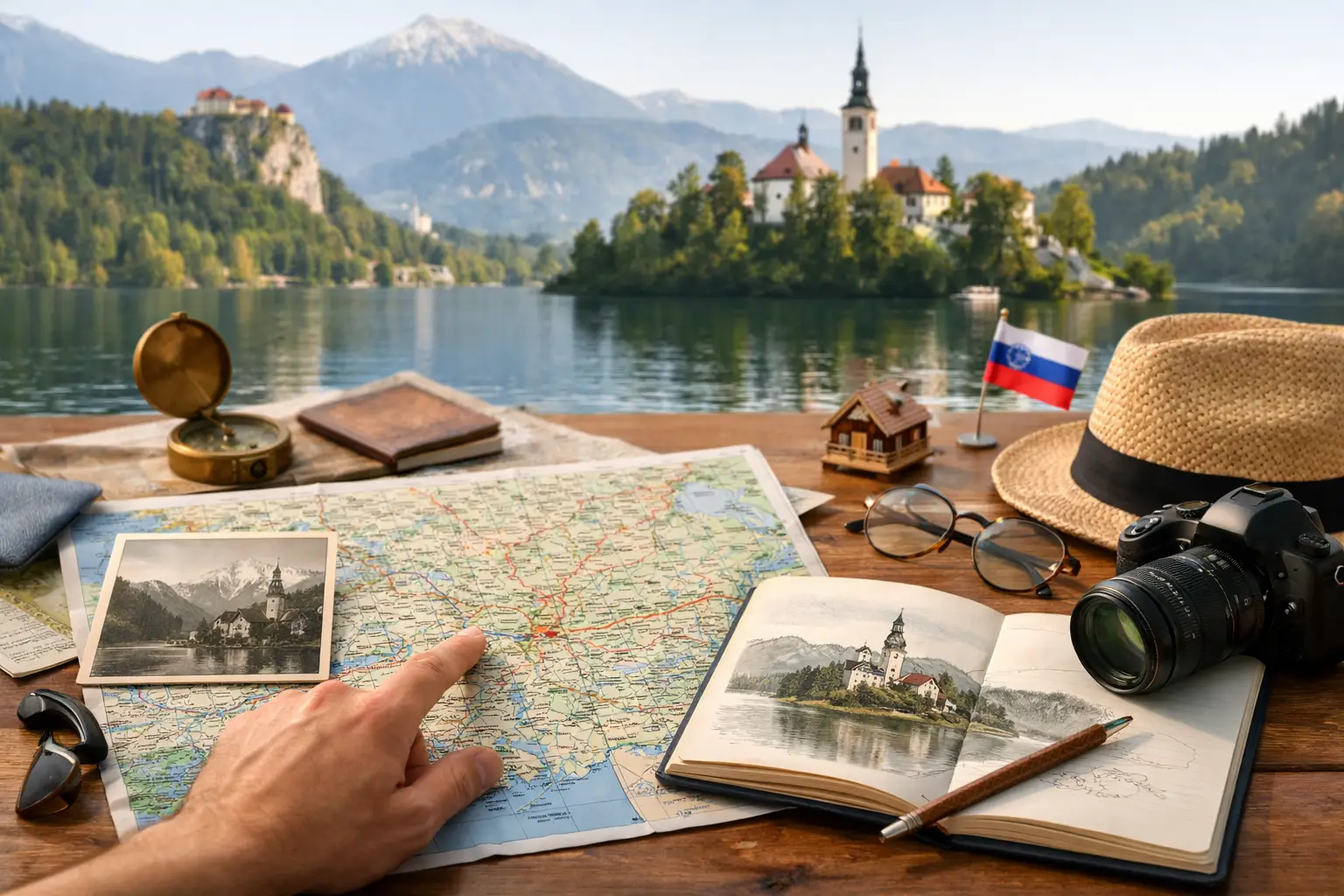


A Slovenian heritage trip is different from an ordinary vacation. You are not just choosing pretty towns or scenic roads. You are trying to stand where your family once stood, hear the names they knew, and connect paper records to real places. If you are wondering how to plan Slovenian heritage trip in a way that feels both practical and deeply personal, the best place to begin is not with flights or hotels. It is with your family story.
Start with what your family already knows
Many heritage journeys begin with incomplete details. A grandmother remembered a village name that was pronounced differently in English. An old prayer card mentions a parish. A ship manifest lists a birthplace that no longer appears on a modern map. That is normal.
Before you plan your route, gather every clue you can. Ask relatives for full names, maiden names, nicknames, dates of birth, marriage dates, military service records, immigration papers, funeral cards, and family letters. Old photographs can help too, especially if anything is written on the back. Even one surname paired with a region can be enough to move the search forward.
This early stage matters because Slovenia is small, but family geography can be very specific. Two villages with similar names may be in different regions. A parish boundary may matter more than a municipal one. The more precise your starting information, the more meaningful your trip becomes.
How to plan Slovenian heritage trip around records, not guesses
It is tempting to build an itinerary around Ljubljana, Lake Bled, and a few beautiful day trips, then hope your ancestry sites fit in. Sometimes that works. Often it leads to missed opportunities.
A stronger approach is to plan around confirmed family locations. That usually means identifying the ancestral village, parish, and cemetery first, then adding cultural stops nearby. If your ancestors came from the Karst region, your experience should feel different from a trip centered in Styria, Prekmurje, or the Soča Valley. Family origin shapes the journey.
This is where genealogy research and travel planning need to work together. Passenger lists, parish registers, civil records, draft cards, naturalization files, and old cadastral references can all help narrow a location. In some cases, a family only knows they were “from Austria” because Slovenia was part of the Austro-Hungarian Empire when their ancestors emigrated. That does not mean the trail is cold. It simply means the place must be interpreted through historical context.
If you are missing a village of origin, do not book a heritage trip too quickly. A general Slovenia visit can still be lovely, but it may not deliver the emotional clarity you are hoping for. When possible, do the research first so the travel has a true center.
Build an itinerary that leaves room for emotion
People often underestimate how moving this kind of travel can be. Visiting an ancestral church, finding a headstone, or walking a lane your great-grandparents once knew can be more intense than expected. Even joyful moments can feel heavy.
That is why a good heritage itinerary should not be packed too tightly. If your main goal is reconnection, leave breathing room between destinations. One village visit in a day may be enough, especially if it includes meeting local residents, viewing records, or spending time in a cemetery. You are not trying to check off attractions. You are giving yourself space to absorb what you find.
For many travelers, the best rhythm includes a mix of family-specific places and broader cultural experiences. After a morning in an ancestral village, you might spend the afternoon in a regional museum, local inn, or nearby town market. That balance helps the journey feel grounded rather than overwhelming.
Decide what kind of heritage trip you want
Not every traveler wants the same experience. Some want a research-heavy trip focused on archives, parishes, and village-of-origin confirmation. Others want a gentler journey centered on being present in the landscape their family left behind.
Neither approach is wrong, but they lead to different planning decisions. If you still need documentary proof, you may need extra time in archives, municipal offices, or parish settings. If your ancestry is already well documented, your trip can focus more on place-based experience: home villages, churches, cemeteries, family farms, traditional food, and conversations with locals.
It also depends on whether you are traveling alone, with siblings, or with multiple generations. A retiree with deep genealogy interest may happily spend hours discussing family records. Adult children coming along may want more cultural context and a wider mix of experiences. Planning works best when everyone understands the purpose of the trip from the start.
Timing matters more than most people expect
Slovenia is beautiful year-round, but season affects access and atmosphere. Spring and early fall are often ideal for heritage travel because the weather is mild, roads are manageable, and villages feel active without the peak summer crowds. Cemeteries, hill villages, and rural churches are easier to visit comfortably in these seasons.
Summer offers long days and lively festivals, which can be wonderful if you want to combine family history with cultural celebration. The trade-off is that popular areas are busier, and some travelers find the pace less reflective. Winter can be peaceful, but shorter days and weather conditions may make rural visits harder, especially if your ancestral area is remote or elevated.
You should also think about local calendars. Religious feast days, village events, and cemetery customs can shape the feeling of a visit. In some cases, aligning your trip with a patron saint day or family memorial date adds a layer of meaning that no standard itinerary can match.
Prepare for village visits with respect and realism
One of the most meaningful parts of a Slovenian heritage trip is visiting the exact village your family came from. But expectations need to be handled carefully.
The original family house may no longer stand. It may have been rebuilt, renumbered, or sold generations ago. The surname may still exist locally, or it may not. Some relatives may be thrilled to meet you. Others may be private or cautious, especially if contact is unexpected.
That does not make the visit less valuable. Standing in the right village, seeing the church where baptisms took place, or viewing the landscape that shaped your ancestors can still feel profoundly grounding. The goal is not to force a perfect reunion story. The goal is to come closer to the truth of where your family began.
When arranged thoughtfully, local visits can include a church, cemetery, village center, old homestead area, and conversations with residents or officials who understand the local history. This is often where professional guidance makes a difference. A heritage travel specialist such as Ancestry Slovenia can help bridge the gap between records and real places in a way that is both organized and sensitive.
Don’t overlook the value of archives and parishes
For some travelers, archives sound too academic for a meaningful trip. In reality, they can be among the most powerful stops.
There is something unforgettable about seeing a handwritten baptism, marriage, or burial entry connected to your family line. These records can confirm names, house numbers, occupations, godparents, and village ties that bring an ancestry journey into focus. Parish records are especially important in Slovenia because they often preserve the local detail that descendants abroad have lost over time.
Still, archive visits are not always simple. Access varies. Some records are digitized, some are not, and some require advance coordination. Language can also be a barrier, since older records may be in Latin, German, or old Slovenian forms. That is another reason to avoid planning everything last minute.
Make the trip personal, not generic
A heritage trip should reflect your family, not a standard tourist loop with ancestry added as decoration. If your grandfather spoke often about vineyards, include the wine region connected to his home area. If your family recipes trace back to a specific part of Slovenia, seek out that regional cuisine. If faith shaped your ancestors’ lives, spend time in the churches and shrines that defined local community life.
These details turn travel into recognition. They help descendants feel that Slovenia is not just beautiful, but familiar in a deeper way.
You may also want to document the journey as you go. Keep a notebook. Record family reflections. Photograph road signs, parish books, landscapes, and grave markers with care. Many travelers find that the trip becomes part of their family archive, something children and grandchildren return to long after they get home.
What to do if you have very little information
If you feel drawn to Slovenia but only know a surname or a story that your family was “Slovenian,” do not assume it is too late. Many people start there.
The smartest path is usually to separate the process into two parts. First, work on village-of-origin research using family records and migration clues. Then plan the travel around what is discovered. If you travel before identifying a place, frame the trip honestly as an exploratory visit rather than a full heritage return.
That distinction matters. A roots journey is most fulfilling when it is anchored in evidence, even if the evidence begins with only a few fragile clues.
The most meaningful Slovenian heritage trips are rarely the fastest or the most polished. They are the ones built with patience, care, and respect for the lives that came before yours. When you plan with that spirit, the journey becomes more than travel. It becomes a way of returning home, even if you are arriving there for the first time.