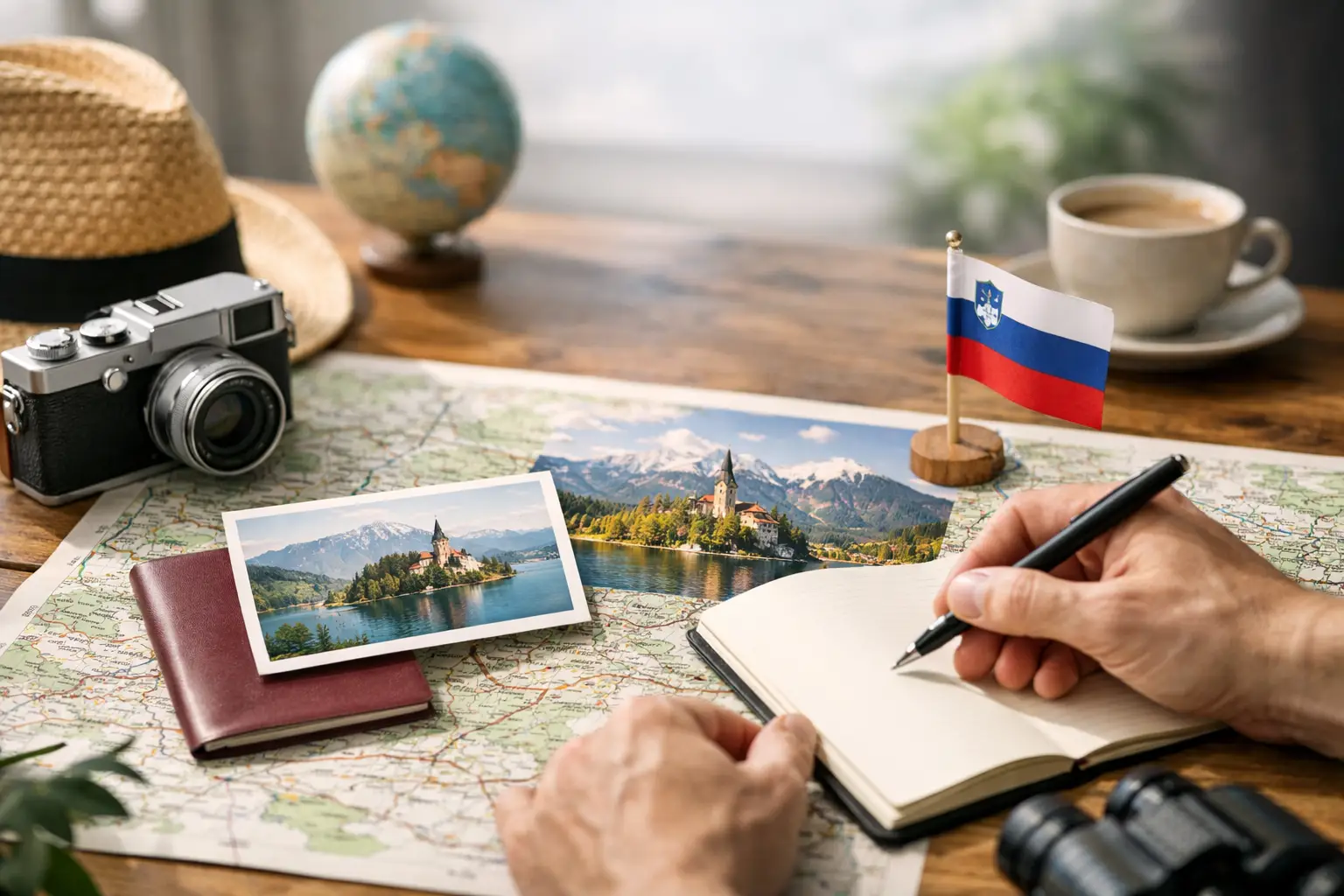


A slovenian diaspora heritage trip often begins with something small – a surname scribbled on the back of an old photograph, a baptism certificate no one can quite read, a grandmother who said, “our people came from near Ljubljana” and never had the chance to say more. For many families, those fragments carry real weight. They are not just research clues. They are the beginning of a return.
What makes this kind of journey different from an ordinary vacation is purpose. You are not simply seeing Slovenia. You are trying to understand where your family lived, what shaped their lives, why they left, and what remains in the places they once called home. That changes how you prepare, where you go, and what the experience can mean.
What a slovenian diaspora heritage trip is really about
Heritage travel is often described as a search for roots, but that phrase can sound abstract until you stand in an ancestral village and realize your family story has geography. The church is still there. The cemetery still holds familiar names. The hills your ancestors saw every day are not imagined anymore.
For descendants living in the United States, Canada, Argentina, or Australia, Slovenia can feel both deeply familiar and strangely distant. Family recipes, surnames, and holiday customs may have survived abroad, while the original places and records remained overseas. A heritage trip brings those two halves together. It turns inherited memory into lived experience.
That does not mean every traveler has the same goal. Some want to identify one specific village. Others want to trace a migration story across several regions. Some hope to visit a parish, meet distant relatives, or understand whether family stories were accurate. The right trip depends on what you know already, what you hope to find, and how much uncertainty you are willing to carry.
Start with family clues before you book anything
The most meaningful heritage journeys are usually guided by research, not guesswork. If you begin planning flights and hotels before confirming where your ancestors came from, you may end up spending precious time in the wrong part of the country. Slovenia is small, but family origins can be highly local. A single surname may appear in multiple regions, and a story passed down as “from Maribor” may actually refer to a small village in the surrounding area.
Start with what your family already has. Ask relatives for marriage records, naturalization papers, obituaries, funeral cards, military records, prayer books, old letters, and family photographs. Pay close attention to original spellings, alternate spellings, and any mention of place names, even partial ones. A village name that looks unfamiliar in English may be a phonetic version of a Slovenian place.
This stage can be emotional. Families often discover that memories are incomplete, contradictory, or tied to painful chapters such as migration, war, or separation. That is normal. A heritage trip does not require a perfect paper trail, but it does benefit from patient preparation.
Why village-of-origin research matters so much
If there is one question that shapes the whole experience, it is this: where exactly did your ancestors come from?
In ancestry-based travel, country-level knowledge is not enough. “Slovenia” is the national answer. Your family story usually lives at the village level. That is where people were baptized, married, buried, counted in records, and remembered by neighbors. Once that place is identified, the trip becomes much more personal and much more practical.
A confirmed village of origin can guide everything from archival research to route planning. It can reveal the parish your family attended, the cemetery to visit, the house area to search, and the regional customs that shaped daily life. It may also clarify whether your ancestors were from a wine region, an alpine valley, a farming settlement, or a town with strong industrial or mining history.
Sometimes the answer comes quickly. Other times it takes serious record work. Passenger lists, parish registers, emigration files, and civil documents may need to be compared carefully. This is where expert local knowledge can save time and prevent false conclusions. Ancestry Slovenia, for example, works specifically at that intersection of genealogy and travel planning, helping descendants move from clues to confirmed places.
Research changes the travel experience
A well-planned heritage trip feels different because each stop has meaning. Instead of building an itinerary around major tourist highlights alone, you build it around your family landscape.
That may include an archive appointment in a regional center, a parish visit in a small village, time in a local cemetery, or a walk through the area where your ancestors likely worked and worshipped. You may also want to include museums, historic city centers, or cultural sites that help explain the broader Slovenian story your family belonged to. The balance matters.
If the trip is only emotional and not organized, it can feel rushed or disappointing. If it is only logistical, it can feel clinical. The best heritage travel holds both. You want enough structure to make the journey productive, and enough space to absorb what it feels like to be there.
What to include in your itinerary
Most travelers do best with a trip that combines family-specific sites with cultural context. A village visit may be the emotional center, but understanding the region adds depth. A church register means more when you also understand the local customs, language patterns, and migration pressures of that era.
Try to allow time for the places that connect records to lived reality. That could mean the parish church, cemetery, village center, local municipal office, or the surrounding landscape itself. In some cases, visiting a regional archive or historical society is worthwhile. In others, the stronger experience comes from slowing down in the ancestral area rather than adding more destinations.
There are trade-offs. If you have only a few days, it may be wiser to focus on one family line rather than trying to cover every branch. If your origins are uncertain, build flexibility into the trip. If you already have strong documentation, you can be more ambitious with location-specific visits.
Prepare for emotion, not just logistics
People often spend months planning transportation and almost no time preparing for what it may feel like to stand in the place their family left behind. Yet that emotional dimension is often what stays with them.
Sometimes the experience is joyful. Sometimes it is quiet and hard to explain. You may feel immediate connection, or you may feel grief for stories that were lost. You may discover that the family home is gone, that records are incomplete, or that no living relatives remain in the area. Those outcomes can still be meaningful. Heritage travel is not only about reunion. It is also about witnessing, understanding, and honoring.
It helps to travel with realistic expectations. Not every question will be answered. Not every family legend will prove true. But even partial discoveries can be powerful when they are grounded in real places.
Why local guidance makes a difference
Slovenia rewards careful, place-based travel. Small distances on a map do not always translate into easy research or easy access. Parish jurisdictions changed. Place names shifted across languages and borders. Records may exist in Slovenian, German, Latin, or other historical forms. A village can have one common name in family memory and another in official documentation.
That is why local guidance matters so much on a slovenian diaspora heritage trip. It is not only about convenience. It is about interpretation. A guide with genealogy knowledge can help connect records, geography, language, and family history in a way that ordinary tourism services usually cannot.
This is especially valuable for descendants who feel emotionally close to their heritage but practically far from the research process. You do not need to be an experienced genealogist to make this journey meaningful. You do need enough support to avoid spending your trip trying to solve basic questions on the ground.
The trip does not end when you fly home
One of the most meaningful parts of heritage travel happens afterward. Photos taken in an ancestral village, copies of parish records, cemetery inscriptions, and local stories gathered during the trip often become part of a family’s shared archive. Children and grandchildren may engage with that material in ways they never did before.
That is one reason these journeys matter beyond the traveler alone. They help preserve memory across generations. They give shape to identity. They allow a family story to be told with more truth, more detail, and more tenderness.
If you are considering this kind of journey, start before you feel fully ready. Gather the documents. Ask the older relatives the questions you have been postponing. Save the names, the dates, the fragments, and the stories that might otherwise disappear. The road back to your family’s Slovenian origins rarely begins with certainty, but it often begins with enough.