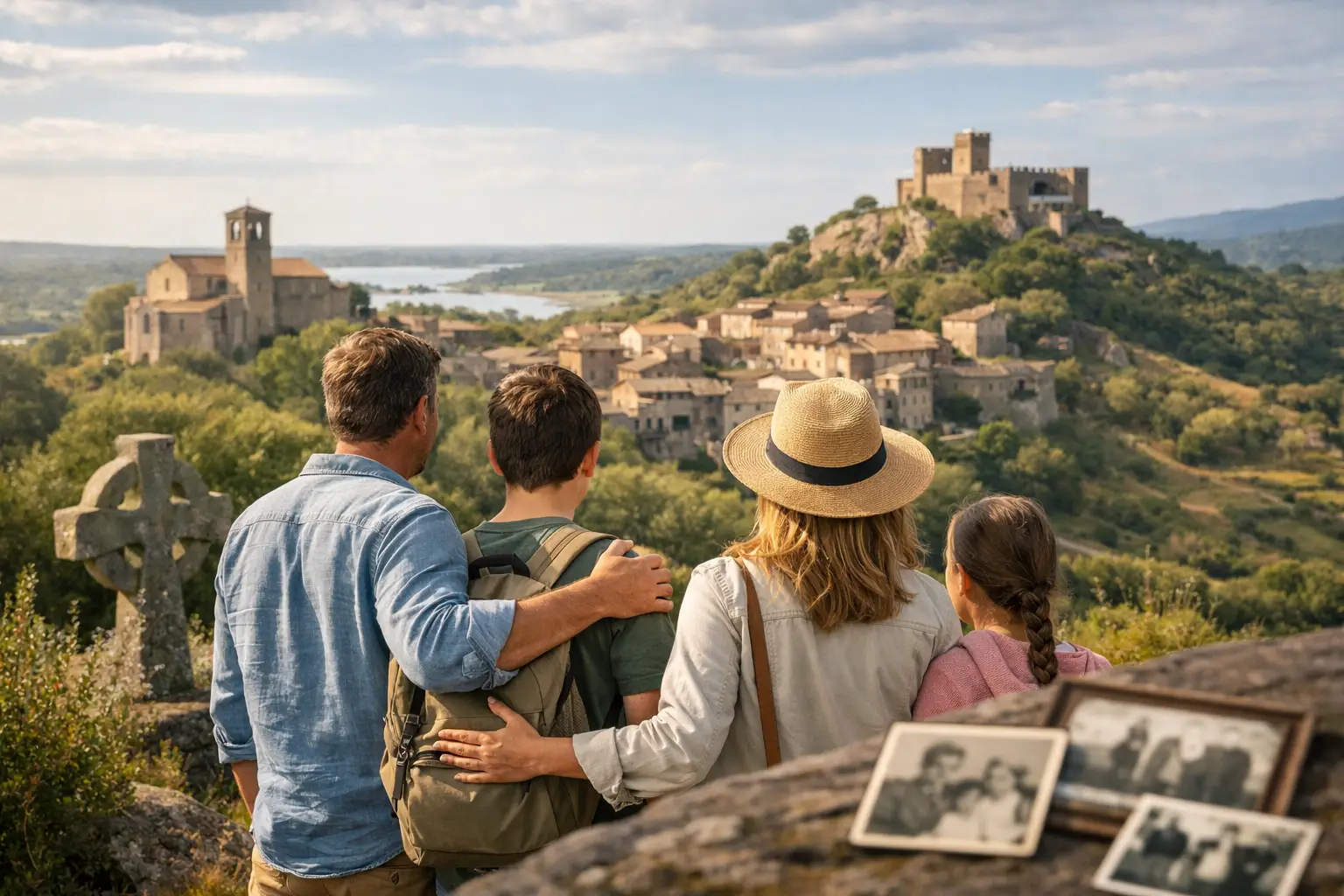


A family story can sit quietly for decades in a shoebox, a baptism record, or a half-remembered place name spoken by a grandparent. Then one day, it becomes a reason to travel. The best family history trip ideas are not simply about seeing landmarks. They are about standing where your people once stood and letting a paper trail become something real.
For many families of Slovenian descent, that kind of journey begins with a simple question: Where exactly did our relatives come from? Sometimes the answer is clear. More often, it is hidden behind changed surnames, misspelled village names, or memories shaped by immigration. A meaningful heritage trip works best when it honors both parts of the experience – the research and the return.
What makes the best family history trip ideas meaningful
A good family history trip is not measured by how many stops you can fit into a week. It is measured by how personal the experience feels. Visiting a capital city can be enjoyable, but it becomes something deeper when the trip also includes the parish where your great-grandparents married, the hillside village they left behind, or the cemetery where generations of your family are buried.
That is why the most powerful heritage trips usually combine documents with places. A passenger list might tell you when an ancestor left Europe. A church record might confirm a maiden name. But walking through the village itself can answer a different question entirely: what kind of life did they know before they emigrated?
There is also a trade-off to consider. Some travelers want a broad introduction to their ancestral country. Others want a highly focused journey centered on one village, one family line, or one surname. Neither approach is wrong. The right trip depends on how much you already know and what you hope to feel, learn, and preserve.
Best family history trip ideas that bring records to life
Visit the ancestral village, not just the nearest famous city
If you know the village or region your family came from, start there. This is often the most emotional part of the trip because it transforms genealogy from abstraction into place. You may find the family home is still standing, the church bell still rings, and the landscape still looks much as your ancestors would have known it.
In Slovenia, this can be especially powerful because many villages retain a strong sense of continuity. Parish churches, stone farmhouses, and local cemeteries often remain central to community life. Even when records have already confirmed your family line, the village visit gives those names a setting.
If you do not yet know the exact village, this should shape your planning. A sightseeing itinerary may still be worthwhile, but the deepest heritage experience often begins only after research narrows the search.
Build a trip around parish and archive visits
For travelers with a serious interest in family history, archives and parish offices can be one of the most rewarding parts of the journey. This is where dates and relationships are clarified, family branches are separated, and long-repeated stories are tested against records.
This kind of trip works best with preparation. Walking into an archive without names, approximate dates, or likely locations can lead to frustration. On the other hand, arriving with a focused research question can produce remarkable results. You may locate a birth entry, marriage record, military file, or emigration document that changes what your family thought it knew.
There is an emotional side to this too. Seeing an original handwritten record connected to your own family can feel surprisingly intimate. Ink on a page has a different weight when it carries your grandmother’s maiden name.
Plan a cemetery and memorial visit
Not every family history trip needs a dramatic discovery. Sometimes the most meaningful act is quiet: finding a gravestone, reading a family name, or placing flowers in a cemetery your relatives once tended.
This idea is especially important for travelers who want to honor ancestors rather than solve a research mystery. A cemetery visit can create a sense of closure and connection, particularly for families separated from the old country for generations.
In some cases, a memorial visit may also include war monuments, village plaques, or churches with family dedications. These places can reveal how a family fits into the larger local story.
Retrace the emigration journey
One of the best family history trip ideas for multigenerational families is to follow the path your ancestors took when they left home. That might mean beginning in the ancestral village, continuing to the regional town where papers were processed, and then visiting the port or transit route tied to emigration.
This kind of itinerary helps families understand migration as a lived experience rather than a single date on a document. It invites questions children and grandchildren can grasp immediately: How far did they travel? What did they leave behind? Why did they go when they did?
For Slovenian descendants abroad, this can be a moving way to understand both departure and belonging. The journey is not only about where the family came from. It is also about what it cost to leave.
Family history trips that work well across generations
Bring the family stories back to the table
Some heritage trips are best designed for conversation rather than constant movement. Instead of trying to see everything, choose a few meaningful locations and leave time for meals, reflection, and story sharing.
This works particularly well for siblings, cousins, or parents traveling with adult children. One person may care most about the records. Another may connect more through food, dialect, music, or local customs. A well-planned trip leaves room for all of that.
Family history is rarely just factual. It is emotional, and different generations relate to it differently. A slower itinerary often allows people to absorb what they are seeing instead of rushing from one place to the next.
Combine heritage stops with local cultural experiences
A family history journey does not lose meaning when it includes pleasure. In fact, cultural experiences often make ancestry travel feel more complete. Visiting a local market, tasting regional dishes, hearing village traditions, or attending a community event can help travelers imagine everyday life in a more immediate way.
For families with Slovenian roots, regional identity matters. Customs, architecture, and food can vary by area, and these details often help descendants feel the difference between knowing their ancestry and experiencing it.
The key is balance. If the trip becomes only tourism, the family story can fade into the background. If it becomes only document chasing, it may feel emotionally narrow. The strongest itineraries allow heritage and culture to speak to each other.
How to choose the right family history trip for your stage of research
If you are just beginning, the best trip may start before you board a plane. Gather documents, interview relatives, collect surnames, and identify likely towns or regions. Even one confirmed village can change the entire quality of the experience.
If you already have records but feel stuck, a research-guided travel plan may be the better route. That kind of support can help connect archives, churches, local geography, and family memory into one coherent journey. For many descendants, this is where a specialized heritage travel service such as Ancestry Slovenia becomes valuable – not because it replaces the emotional side of the trip, but because it helps make that emotional return possible in practical terms.
If your goal is legacy, think beyond the trip itself. Consider recording family interviews before you go. Keep a travel journal. Photograph documents, gravestones, and village landmarks carefully. The trip may begin as personal curiosity, but it often becomes something you pass to children and grandchildren.
When the best family history trip ideas are the simplest
Not every ancestry journey needs a packed itinerary or a dramatic reveal. Sometimes the most meaningful moment is sitting on a bench outside an old church and realizing your family was not just from a country, but from this particular place. This road. This view. This bell tower. This cemetery gate.
That is what makes heritage travel different from ordinary tourism. It gives geography a heartbeat. It turns records into memory, and memory into presence.
If you are considering a trip shaped by your roots, start with the question that matters most: what would it mean to return, even for the first time? Let that answer guide the journey. Often, the place your family once left is also the place where part of your story becomes clear.