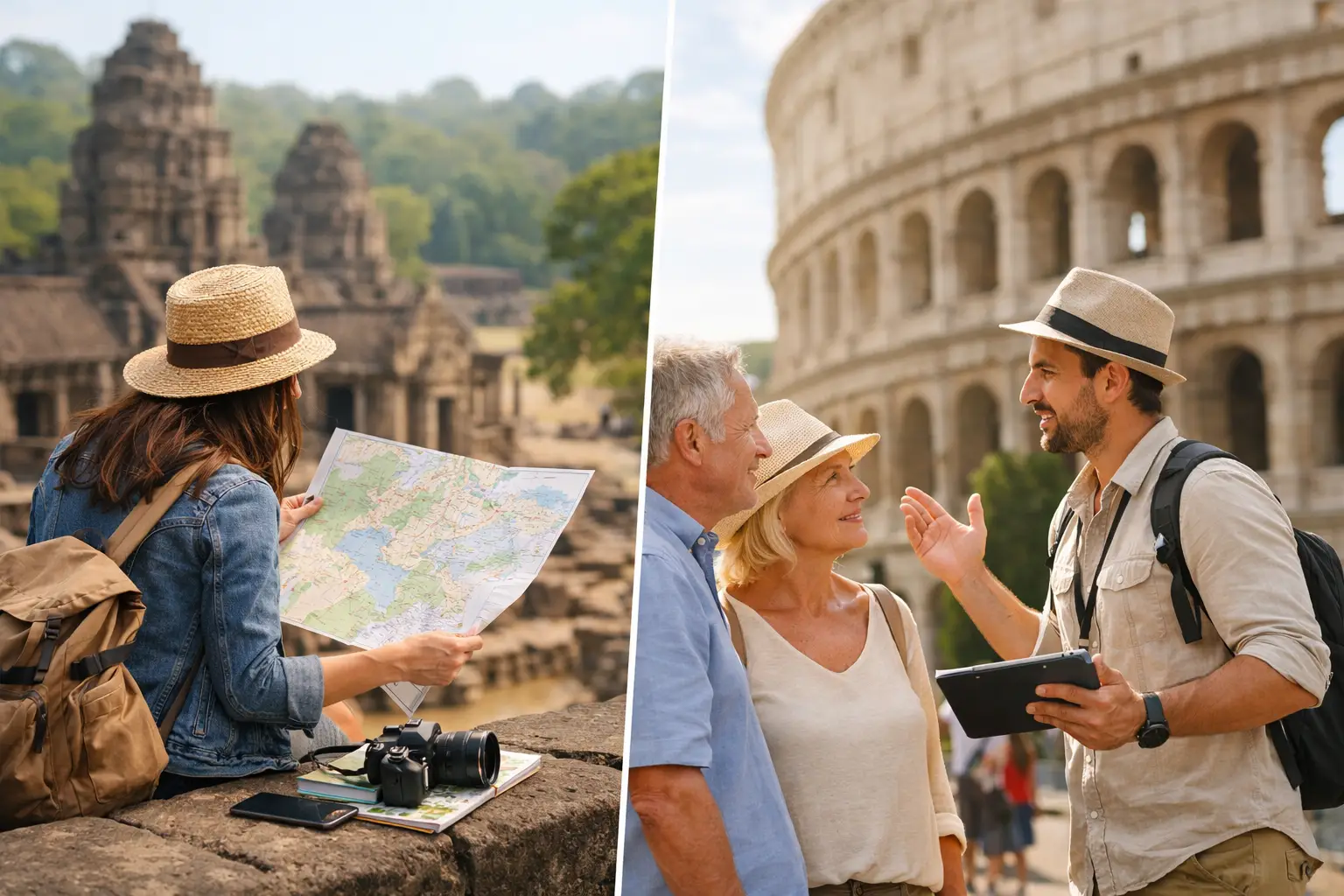


Some heritage trips begin with a passport and a hotel booking. Others begin with a baptism record, a half-remembered village name, and a question that has waited in the family for generations. If you are weighing a self planned vs guided heritage trip, the real choice is not simply independence versus convenience. It is about how deeply you want to reconnect with your Slovenian roots, and how much certainty you want before you arrive.
For many descendants of Slovenian immigrants, this kind of travel is not ordinary tourism. You are not just trying to see the country. You may be trying to stand in the parish where your great-grandparents married, find the village they left behind, or understand why one branch of your family went to Cleveland while another stayed in Europe. That makes the planning process different from a standard vacation.
What makes a heritage trip different from regular travel
A heritage trip carries emotional weight. You may be visiting places tied to loss, migration, faith, and family memory. Even when the scenery is beautiful, the purpose is often more personal than leisure. A successful trip depends not only on transportation and lodging, but on whether you can connect names, documents, places, and stories in a meaningful way.
That is why the usual travel question – should I plan this myself or hire help – becomes more nuanced here. A self-guided journey can feel deeply personal and flexible. A guided one can turn uncertainty into clarity, especially when records, language, and local geography are involved.
Self planned vs guided heritage trip: what is the real difference?
At a basic level, a self-planned trip means you organize the research, itinerary, logistics, and on-the-ground visits yourself. You decide which towns to visit, which archives to contact, how long to stay, and what family sites matter most.
A guided heritage trip involves expert support. That may include genealogical research before travel, identifying the correct ancestral village, interpreting historical records, arranging local visits, and helping you navigate the emotional side of returning to a family place for the first time.
The difference is not simply whether someone else books the car or hotel. The deeper difference is whether you are traveling with verified context or hoping to discover it as you go.
When a self-planned heritage trip can work well
A self-planned journey can be a good fit if you already have strong documentation. If you know the exact village, parish, and family line, and you are comfortable navigating maps, records, and local customs, planning your own trip may feel rewarding. Some travelers enjoy the process of piecing everything together themselves. There is satisfaction in following your own instincts and allowing space for unexpected discoveries.
This approach can also work well if your goals are broad rather than precise. If you want to experience Slovenia as the landscape of your family story, visit a general region, attend local cultural events, and spend time reflecting on your heritage, you may not need an expert involved at every step.
Budget can also play a role. A self-planned trip may appear less expensive upfront, especially if you are comfortable doing your own research and travel coordination. For some families, that flexibility matters.
Still, self-planning tends to work best when expectations are realistic. Heritage travel can be deeply moving even if you do not locate every grave, farmhouse, or archival record. If you can embrace some uncertainty, the independent route may suit you.
Where self-planning often becomes difficult
The hard part is that family history is rarely as straightforward as it looks from abroad. Village names changed. Surnames were spelled differently in old records. A family may have identified with one town while official documents point to another parish nearby. Borders shifted, records were created in different languages, and local knowledge matters more than many travelers expect.
This is where people often lose time. They arrive with a family story that sounds specific, only to discover that there are several places with similar names, or that the church they hoped to visit is not in the village they thought. A day that was meant to feel like homecoming can turn into a day of driving, guessing, and second-guessing.
There is also the emotional cost. When a trip carries decades of meaning, uncertainty can feel heavier than it would on a normal vacation. If you have come all the way from the United States, Canada, Argentina, or Australia, you may not want to spend your limited time wondering whether you are in the right place.
Why guided heritage travel offers a different kind of value
A guided heritage trip is valuable because it starts before the trip itself. Instead of treating Slovenia as a destination to explore first and understand later, it builds the journey around your family history from the beginning.
That can mean identifying the correct village of origin, reviewing parish or archival records, tracing migration clues, and understanding what your ancestors’ world may have looked like. Once that foundation is in place, the travel experience becomes more than movement between places. It becomes recognition.
When you arrive at the village church with confidence that this is where your ancestors were baptized, or walk through a cemetery knowing which family names to look for, the experience changes. It is no longer vague heritage tourism. It becomes personal, grounded, and emotionally true.
Guided travel also helps with practical barriers. Language, regional geography, archive access, and local customs can all shape what is possible. A knowledgeable guide can help translate not only words, but context. That matters in Slovenia, where family stories are often tied to small villages, parish boundaries, and local history that are not obvious to visitors.
For many travelers, expert support also creates room to be present. Instead of spending your day solving logistics, you can focus on what it feels like to stand where your family once stood.
Self planned vs guided heritage trip for Slovenia specifically
Slovenia is compact, but heritage research here is rarely simple in a superficial way. Small distances can hide important distinctions between villages, municipalities, and parishes. A name on an old US document may not match the official place name you need today. Even when records exist, understanding where to look is its own skill.
That is why the self planned vs guided heritage trip question matters so much for Slovenian descendants. If your family came from a small rural area, the place may still exist much as it did generations ago, but reaching it meaningfully often requires careful preparation. The reward can be extraordinary. So can the frustration if the groundwork is missing.
A guided approach tends to be especially helpful if you have partial information, conflicting records, or a strong desire to visit exact family sites rather than only the broader region. If your goal is to transform family history into a lived experience, precision matters.
How to decide which path fits you
Start with your goals, not your budget alone. Ask yourself whether this trip is mainly about seeing Slovenia through the lens of family history, or whether it is about confirming specific ancestral facts and visiting exact places connected to your relatives.
If you are comfortable with ambiguity, enjoy research, and already have reliable information, self-planning may serve you well. If this is a once-in-a-lifetime journey, if your records are incomplete, or if the emotional significance feels high, guided support may protect both your time and the meaning of the trip.
It also depends on who is traveling. A solo researcher may enjoy the detective work. A couple or multigenerational family often benefits from having the experience structured with care, so that everyone can participate without one person carrying the full burden of planning and interpretation.
Many travelers find that a middle path works best. They want enough expert help to identify the right villages and family sites, but still want personal time to absorb the country on their own. For heritage travel, that balance is often wiser than treating the choice as all or nothing.
At Ancestry Slovenia, this is where the work becomes deeply meaningful – helping descendants move from scattered clues to real places, and from old records to a sense of belonging that can be felt in the landscape itself.
The best heritage trip is not the one that looks most efficient on paper. It is the one that lets you come home to your family story with clarity, care, and enough space to feel what the journey means.