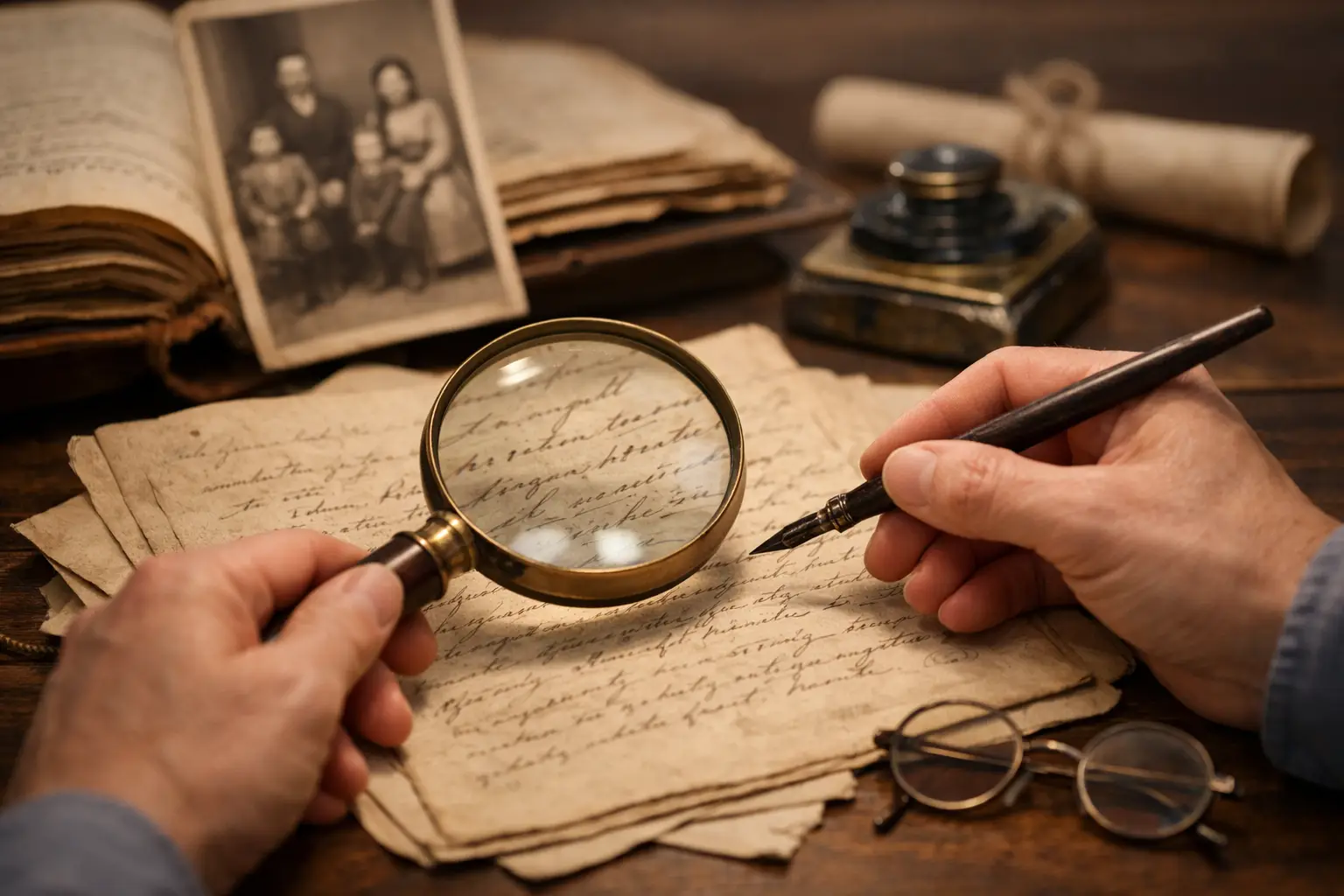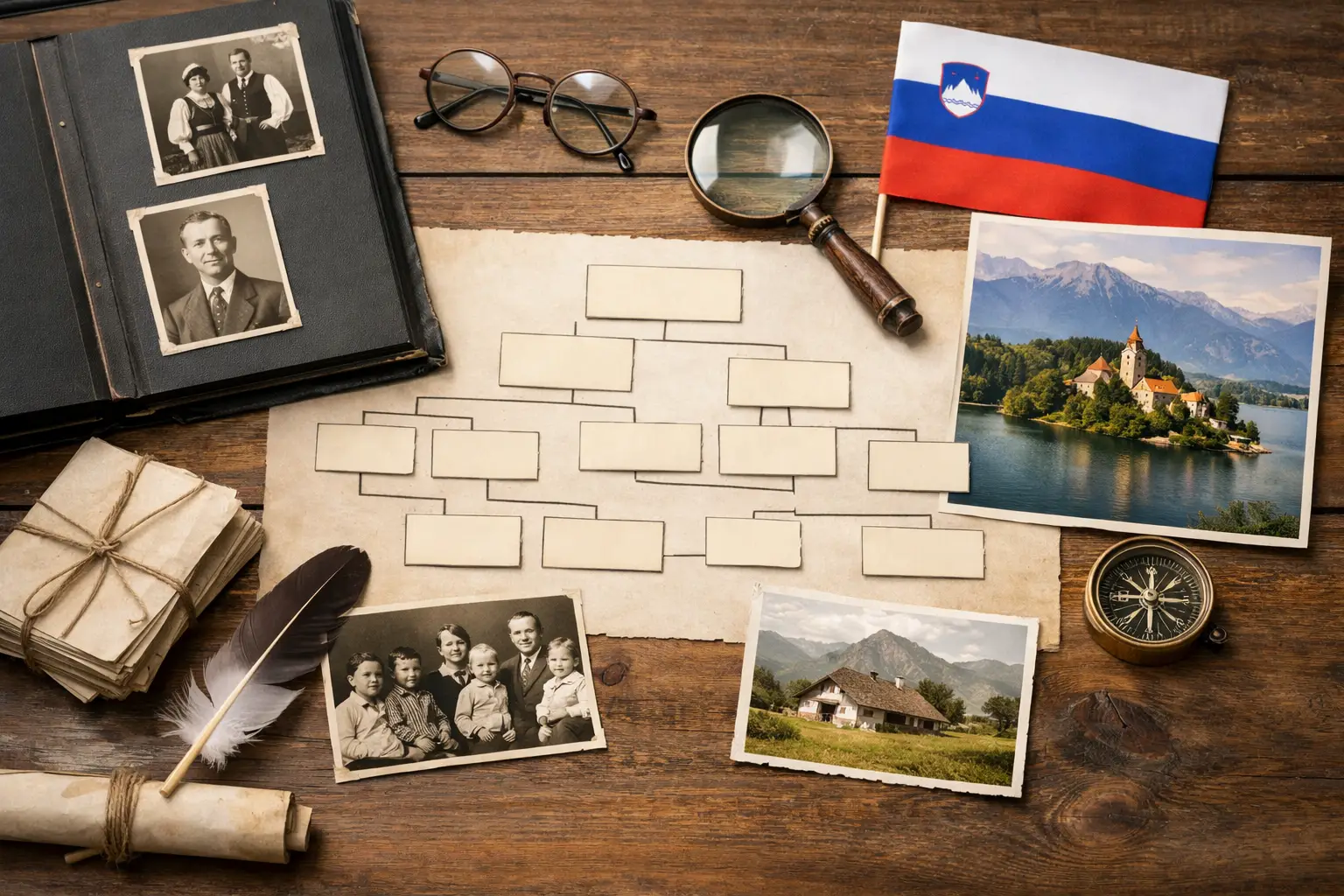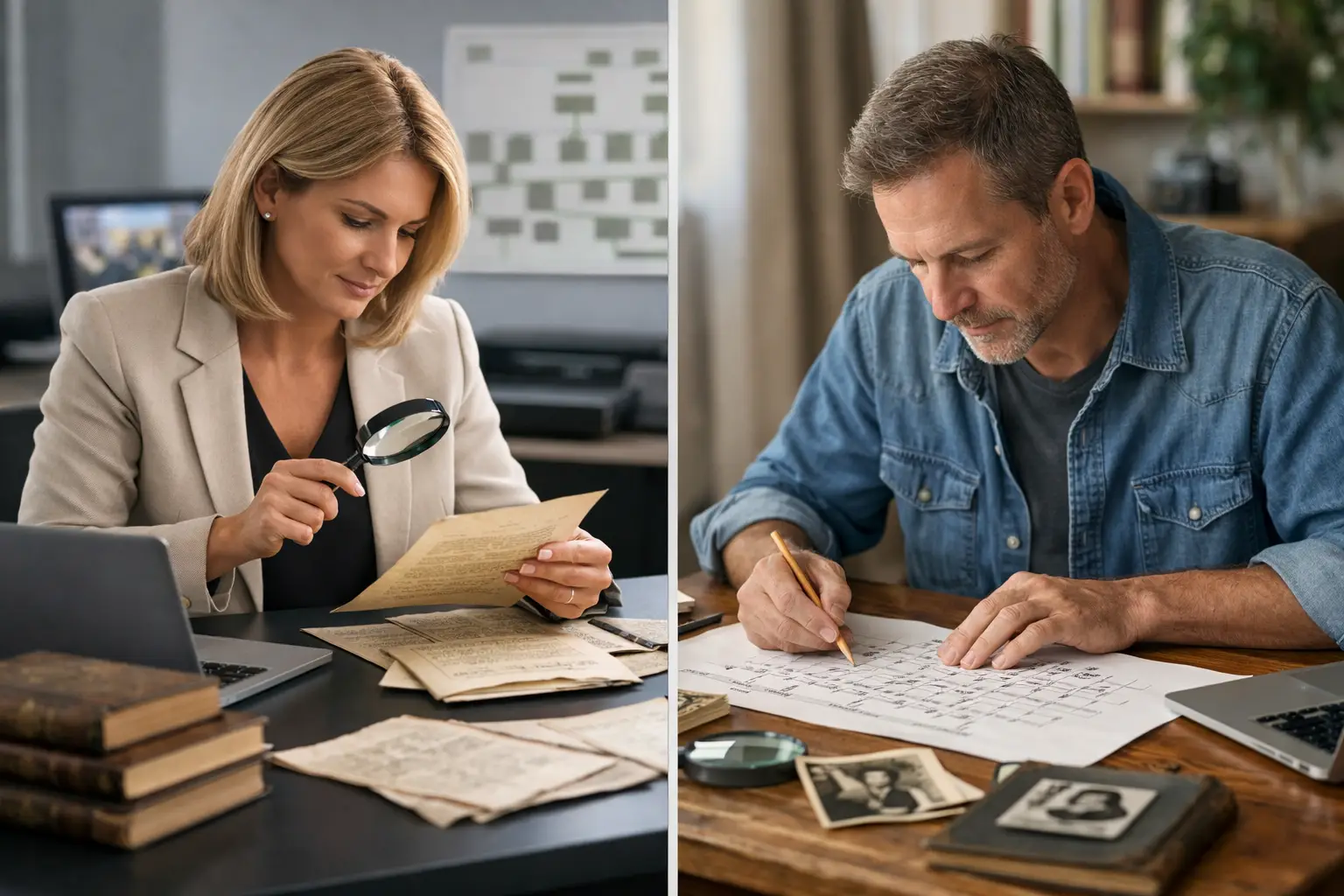
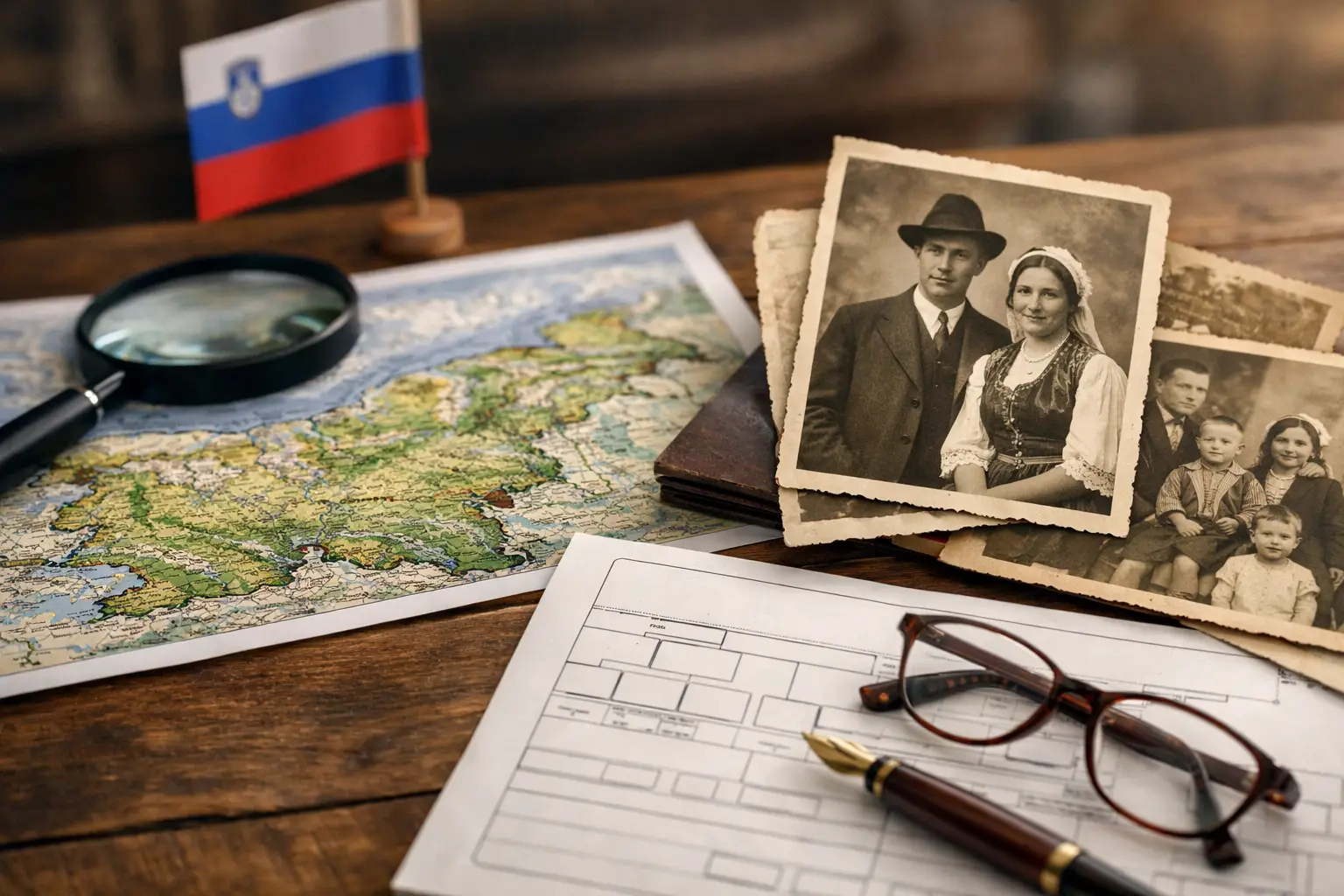


A handwritten surname, a faded photo outside a village church, or a family story about “the old country” can be enough to begin. But turning those clues into a real connection takes more than a standard vacation itinerary. Slovenian genealogy package options help descendants move from scattered memories and documents toward the places, records, and family stories that shaped their lives.
For many families abroad, Slovenia is both familiar and distant. A grandparent may have spoken Slovenian at home, yet the ancestral village name was shortened, misspelled, or lost after immigration. The right level of genealogy support can bring that missing place back into focus, then make a visit feel less like sightseeing and more like a meaningful return.
Why genealogy packages are not one-size-fits-all
No two Slovenian family histories begin with the same evidence. One person may have an exact village, birth date, and copies of parish records. Another may know only that a great-grandfather came from “Austria” or “Yugoslavia,” even though his birthplace is now in Slovenia. Some families want help identifying a single ancestral home; others are planning a multigenerational journey that includes several regions, cemeteries, churches, and relatives.
That is why a useful package should be based on the stage of your search, not simply the number of travel days. Research and travel work best when they are connected, but they do not always need to begin at the same time. In some cases, the wisest first step is focused archival research. In others, enough has already been found to begin planning a deeply personal visit.
A thoughtful provider will also be honest about uncertainty. Records may be incomplete, written in Latin, German, Italian, or older forms of Slovenian, or held in archives outside Slovenia because borders changed over time. A package should offer skilled guidance and a clear research process, not promises that every family question will have an immediate answer.
Slovenian genealogy package options by starting point
A family-clue assessment
This is often the best entry point for descendants who are just beginning. It starts with what you already have: names, immigration papers, naturalization documents, obituaries, family trees, baptismal certificates, photographs, letters, and oral history. Even a vague place name can matter.
The goal is to organize the evidence, identify the strongest clues, and determine where Slovenian research should begin. A surname alone is rarely enough because the same name may appear in many villages. A date, a spouse’s name, a U.S. residence, a godparent listed on a record, or a reference to a nearby town can narrow the search considerably.
This option is especially helpful before committing to heritage travel. It can prevent a common disappointment: arriving in Slovenia with a family story but no reliable connection to a specific place. Instead, you can travel with a clearer sense of whose footsteps you are following.
Village-of-origin research
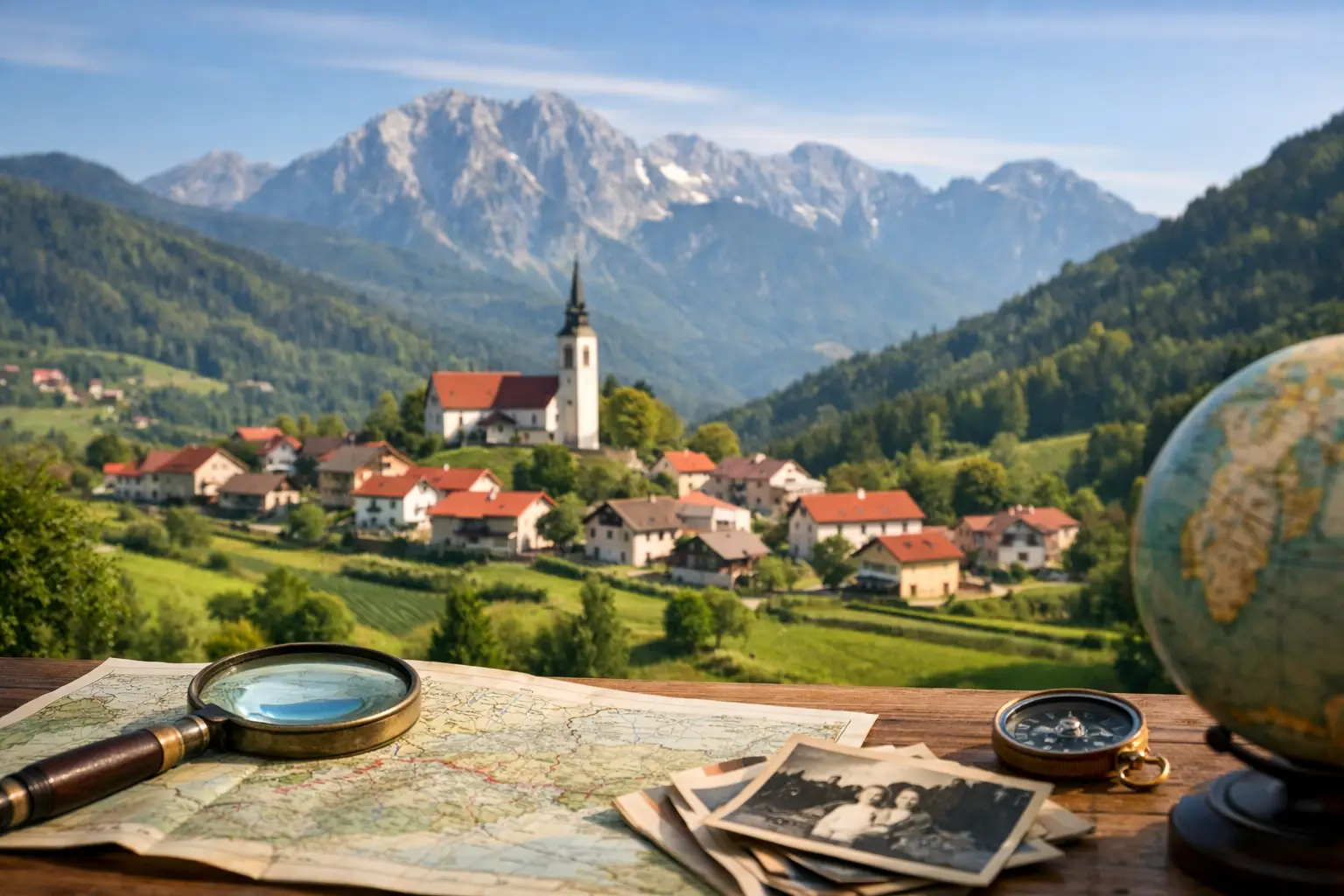
For many descendants, finding the ancestral village is the turning point. Slovenia’s identity is deeply local. A family may have come from a tiny settlement rather than the better-known town listed on an American document. Locating that village changes the research from broad and uncertain to personal and place-based.
Village-of-origin research may draw on civil records, parish registers, historical maps, immigration sources, household information, and local knowledge. The work often involves separating families with similar names and confirming that the person in a passenger list is truly the same person who was baptized in a particular parish.
This package fits those who have a promising lead but need verification. It is also valuable for travelers who want to stand in the right village, rather than simply visit the region their ancestors may have left.
Archival and parish record research
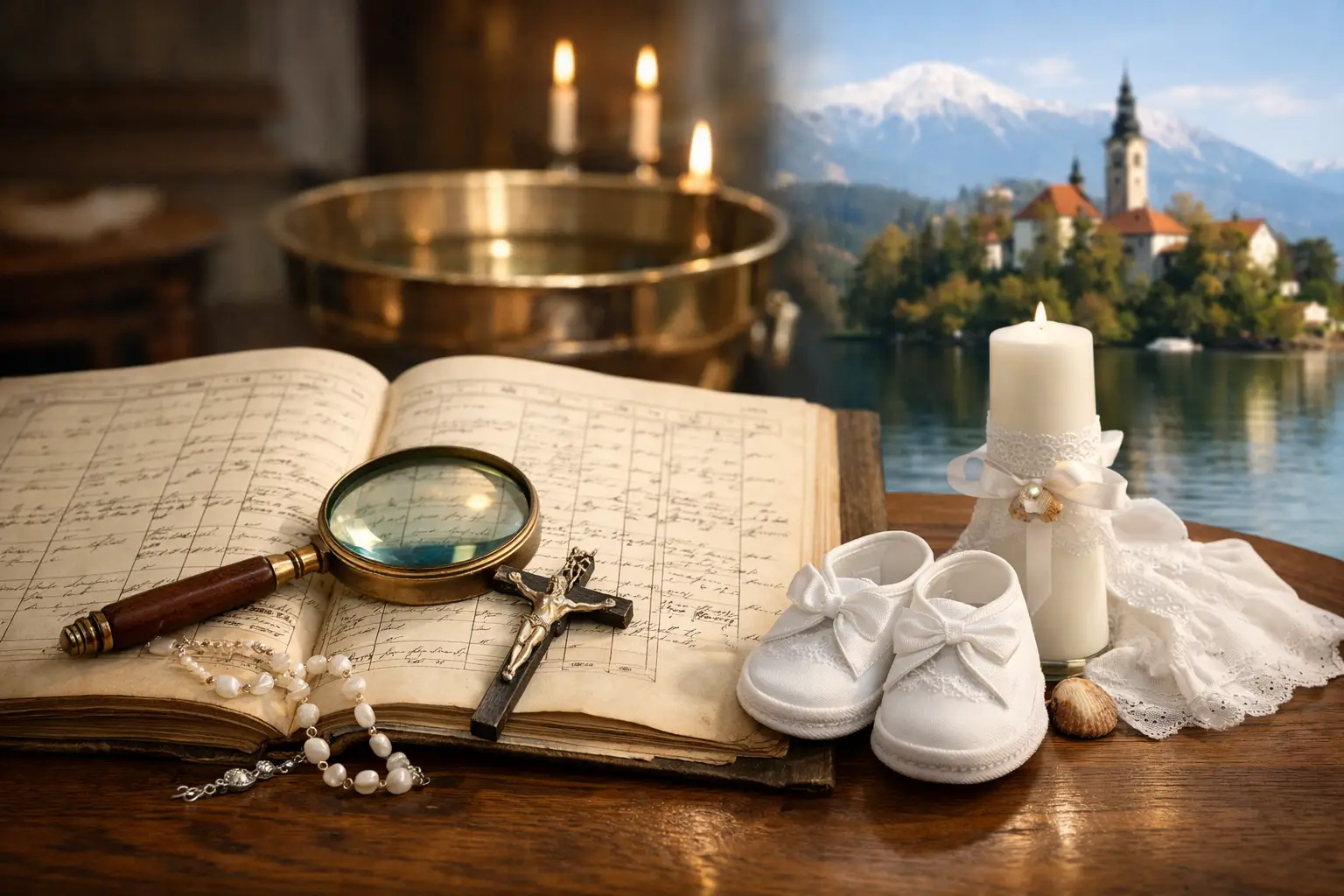
If you already know the parish or village, a deeper research package can extend a family line and add texture to the names in your tree. Baptism, marriage, and burial records may reveal parents, witnesses, occupations, house numbers, causes of death, and patterns of movement between nearby communities.
The emotional value of this work is often found in the details. A marriage entry can identify the village where two family lines joined. A baptismal record may preserve the names of godparents who were relatives or close neighbors. A burial entry can place an ancestor within the rhythm of a parish community that still exists today.
Research depth depends on the family’s goals. Some clients want a documented lineage for one immigrant ancestor. Others want to trace several branches back through the 1800s or earlier where records allow. A carefully defined scope matters here, since earlier generations can require more time, interpretation, and verification.
Research-guided heritage travel planning
Once a family place has been identified, travel planning can turn documented history into a living experience. This option centers the journey on meaningful locations: an ancestral village, parish church, cemetery, local museum, former homestead area, or the landscape that surrounded a family’s daily life.
A research-guided itinerary should leave room for both discovery and reflection. It may include time to meet local contacts when appropriate, visit archives or parish sites, walk through a village slowly, and enjoy the regional food, traditions, and scenery that give context to the family story. The experience is not about rushing from landmark to landmark. It is about understanding what it meant to come from that place.
This is often the right choice for couples, siblings, or families who want a meaningful trip without having to coordinate the research and local logistics themselves. With Ancestry Slovenia, the purpose is to connect the evidence gathered before the trip with the places you experience in person.
A private multigenerational roots journey
When parents, adult children, and grandchildren travel together, the package needs to serve different expectations. One person may be eager to examine records, while another wants to understand the migration story in a way that feels immediate and memorable. A private roots journey can balance both.
The best plans combine family-history moments with enough flexibility to enjoy Slovenia as a present-day country. A day in an ancestral village can be paired with a regional cultural experience, time in Ljubljana, or a visit to a landscape that helps younger relatives see why their ancestors called this land home. This approach preserves the seriousness of the research without making every moment feel like a history lesson.
What to ask before choosing a package
Before selecting among Slovenian genealogy package options, ask what is included before, during, and after the work. The answer should be specific. Will someone review your existing documents? Is the objective to identify a village, extend a lineage, plan a trip, or combine all three? How will findings be documented and explained?
It is also wise to ask about the practical limits of the search. Some records are restricted by privacy rules. Some parishes have gaps due to war, fire, or administrative change. A provider familiar with Slovenian history can explain these realities without diminishing the value of the journey.
Finally, consider the pace that feels right for your family. A short research consultation may be enough when you want direction. A full heritage journey may be more fitting when you are ready to visit, bring relatives together, and create a shared memory. There is no lesser starting point. A single confirmed village can be as profound as a large completed family tree.
Choosing the path that honors your family story
The most meaningful package is not necessarily the largest one. It is the one that meets you where your family history stands today and gives you a trustworthy next step. Perhaps that means identifying a great-grandmother’s birthplace before you book a flight. Perhaps it means finally visiting the church where generations of your family were baptized and married.
Family history becomes more than dates and surnames when you can place it in a real landscape, hear the language, and understand the distance your ancestors crossed. Begin with the clues you carry. They may be small, but they can still lead you home.