
A family reunion can be joyful anywhere. But when it happens in the country your grandparents or great-grandparents left behind, it becomes something else entirely. Slovenian family reunion travel is not just about gathering relatives in one place. It is about returning to the landscapes, churches, cemeteries, and village roads that shaped your family story long before it crossed an ocean.
For many Slovenian descendants in the United States, Canada, Argentina, or Australia, the idea begins with a few fragments – a surname, an old baptism certificate, a faded photograph, or a story about a village no one can quite spell. That is often enough to begin. The most meaningful reunion trips do not start with hotel bookings. They start with family memory, careful research, and a clear understanding of what makes this journey different from a standard vacation.
Why slovenian family reunion travel feels different
A typical reunion asks, “Where can everyone meet?” A heritage reunion asks, “Where did we begin?” That small shift changes the entire experience. Instead of choosing a destination for convenience alone, families choose a place with emotional weight.
In Slovenia, that might mean gathering in the exact region where an ancestor was born, visiting the parish where relatives were baptized or married, or walking through the cemetery where generations of family members are buried. Even families who have been abroad for a century often feel an immediate sense of recognition when they arrive in an ancestral village. The names on road signs, the church bells, the hills, and the food can bring family history out of abstraction and into the present.
That emotional impact is powerful, but it also comes with practical questions. Not every family has enough information to identify the right town. Not every village has modern tourism infrastructure. Not every relative wants the same kind of trip. This is where thoughtful planning matters.
Start with the family story before the itinerary
The strongest reunion trips are built around evidence, not assumptions. Many descendants know they are Slovenian but are less certain about where in Slovenia the family came from. Since historical borders shifted and old records may use German, Latin, or Italian place names, relying only on family lore can lead you to the wrong location.
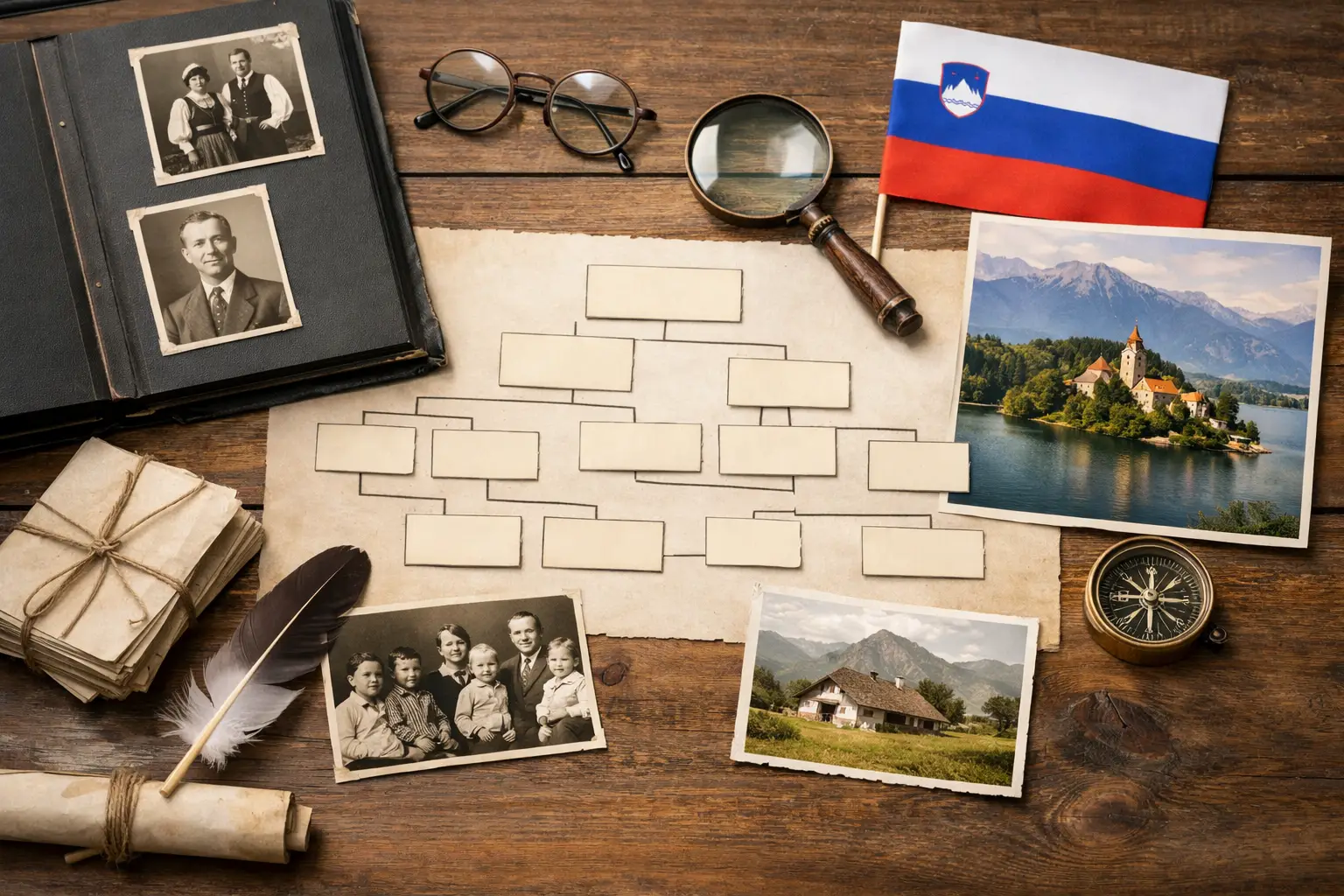
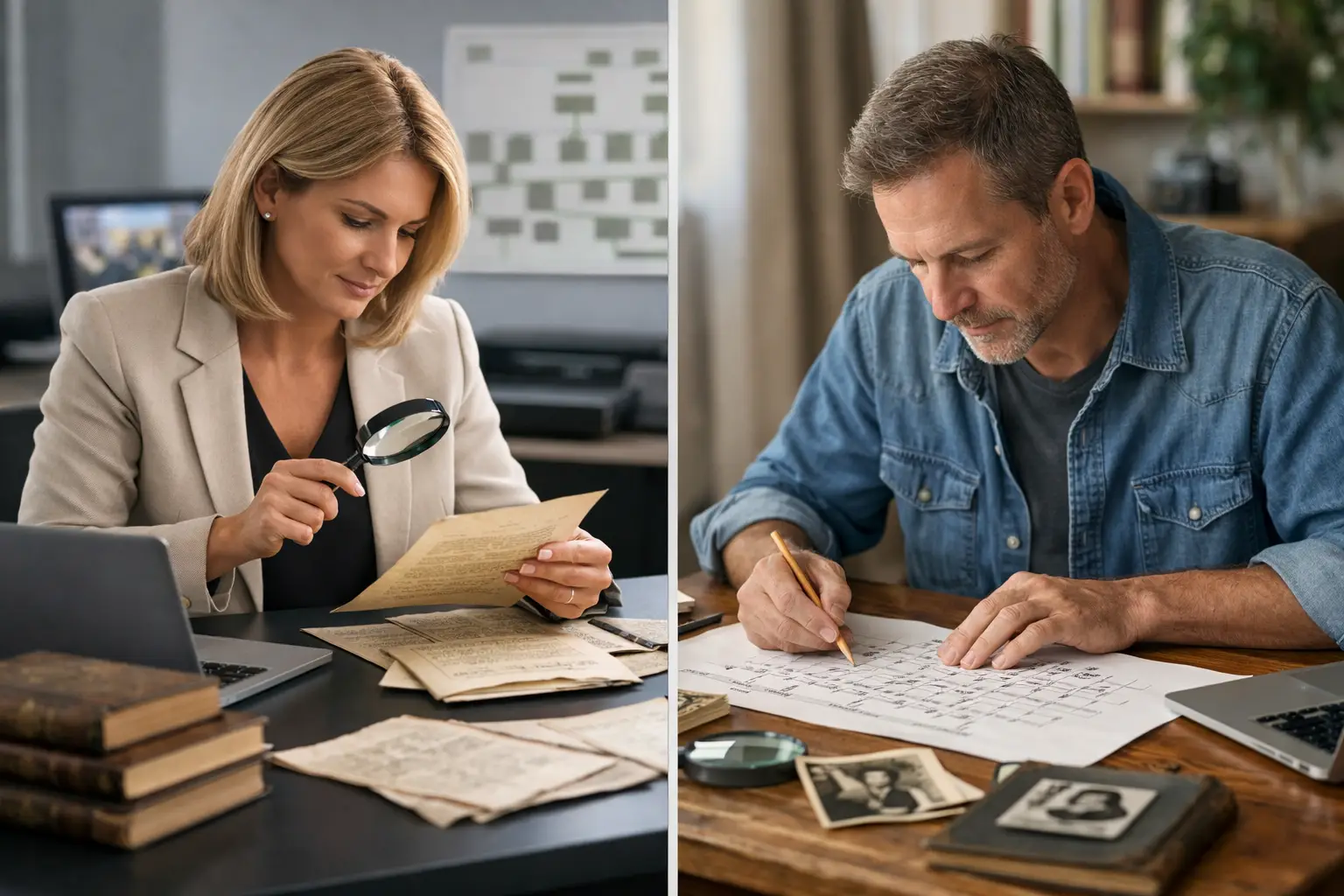
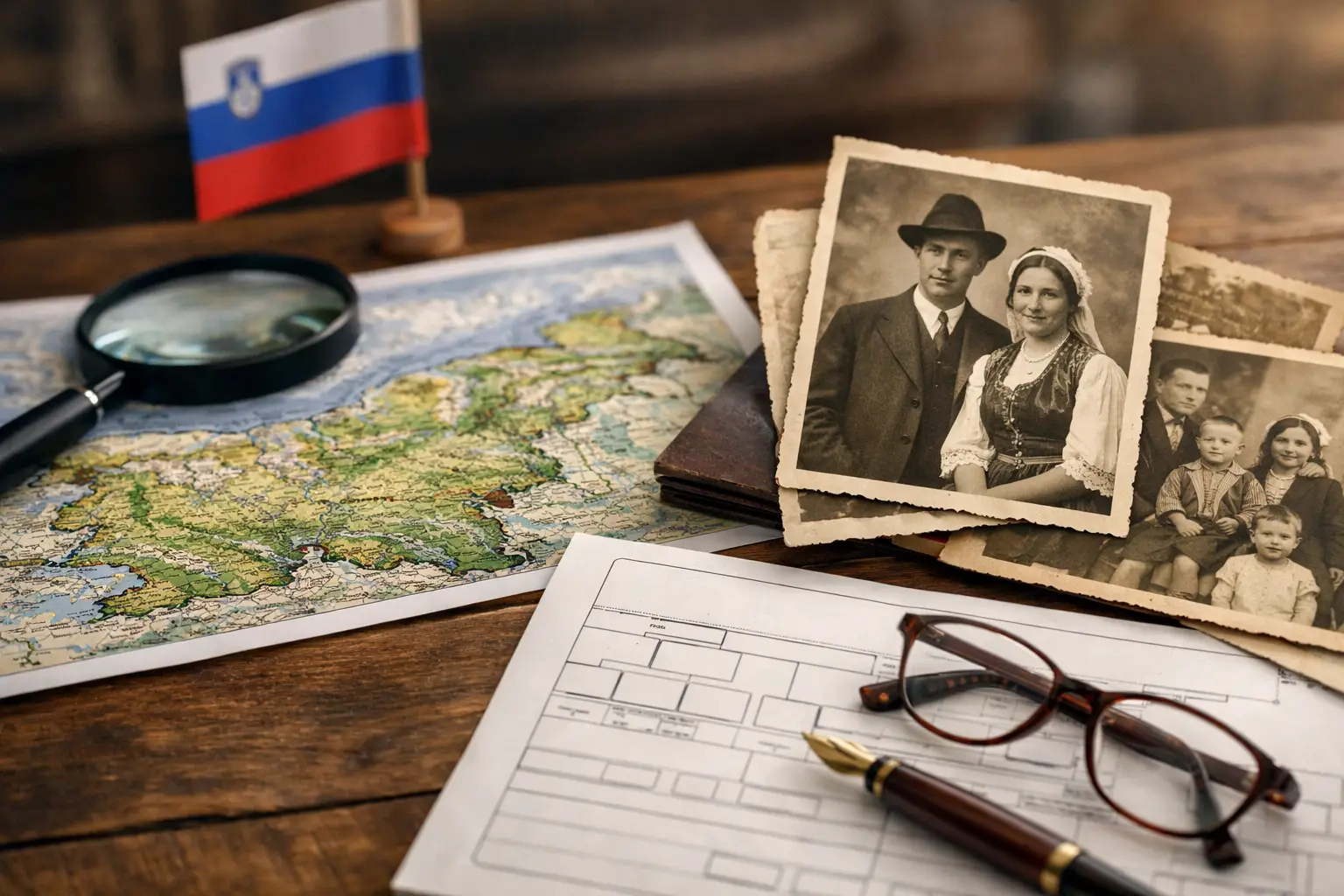
Before anyone books flights, it helps to gather what the family already has. That can include naturalization papers, ship manifests, obituaries, marriage records, prayer cards, military records, cemetery inscriptions, and letters. Even the smallest clue can matter. A witness name on a marriage certificate or a godparent listed in a baptism register may point back to the right parish or village.
This is also the stage where family conversations become part of the journey. Ask older relatives what they remember hearing as children. Record pronunciations of surnames and place names. Note stories that seem inconsistent rather than dismissing them. Family memory is not always exact, but it often preserves the emotional truth of migration – who left, who stayed, and what was lost along the way.
Heritage travel works best when the destination is specific
One common mistake in Slovenian family reunion travel is planning around the country in general rather than the family’s actual place of origin. Slovenia is small, but its regions are distinct in dialect, architecture, food traditions, and history. A reunion in Ljubljana may be convenient, but if your people came from the Karst, Prekmurje, Bela krajina, or the Gorenjska countryside, the most meaningful moments are likely to happen there.
Specificity matters because ancestry is local. A village, a parish, a nearby market town, and a family farm tell a richer story than a national overview ever can. That does not mean every trip should stay in one place. It means the itinerary should be anchored by the places that belong to your family history.
Once the village of origin is identified, the reunion can take shape around it. Families may choose to attend Mass in the ancestral parish, meet local residents who remember the family name, visit a cemetery, or share a meal featuring regional dishes tied to family tradition. These moments often become the heart of the trip.
Research and reunion planning should happen together
Genealogy and travel are often treated as separate projects. In reality, they work best when planned side by side. Research tells you where to go and why it matters. Travel planning turns those findings into lived experience.
For example, if archival work confirms the ancestral village, that affects where the family should stay, which churches or archives to contact in advance, and whether a local interpreter or guide may be useful. If records reveal several branches from nearby villages, the reunion can be designed to include all of them rather than centering only one line of the family.
This is especially helpful for multigenerational groups. Some relatives may want a deeply emotional roots experience. Others may be more interested in scenery, food, and culture. A well-planned heritage reunion makes room for both. One day may focus on archival and village visits, while another includes lighter regional experiences that still connect to family identity.
What a meaningful family reunion in Slovenia can include
Not every reunion needs the same structure, but the most memorable ones usually combine personal history with time to simply be together. A visit to an ancestral church can be followed by lunch in the village. A cemetery visit might lead to storytelling among cousins who have never met before. A drive through the countryside can become a conversation about why an ancestor left and what kind of life they hoped to build abroad.
Some families choose to create a reunion around a milestone anniversary, such as a grandparent’s centennial or the anniversary of emigration. Others use the trip to reconnect living relatives across countries. In some cases, local cousins in Slovenia are still there, and a reunion becomes an introduction, not just a remembrance.
There are also trade-offs. A highly personalized heritage trip takes more preparation than a standard group vacation. Rural areas may require more driving and more flexibility. Records may confirm some family stories while disproving others. Yet that is part of what makes the journey honest and worthwhile. Reconnection is not about forcing the past into a perfect narrative. It is about meeting it with care.
When records are incomplete, the trip can still matter
Many people hesitate because they feel they do not know enough. They may only have a surname or a broad region, and they worry that without certainty the trip will be disappointing. Sometimes more research is needed before travel. But uncertainty does not always mean you must wait indefinitely.
A reunion can still be meaningful if it is framed correctly. Instead of promising a final answer, the trip can be approached as part of the discovery itself. Visiting regional archives, speaking with parish staff, and seeing the landscape firsthand often reveals clues that were impossible to find from abroad. Place has a way of clarifying history.
This is where expert guidance can make a real difference. A heritage-focused approach, like the kind Ancestry Slovenia provides, helps families connect archival research with on-the-ground planning so the trip is rooted in evidence rather than guesswork. That support can be especially valuable for descendants who feel emotionally close to their heritage but practically unsure where to begin.
The reunion is not only about the past
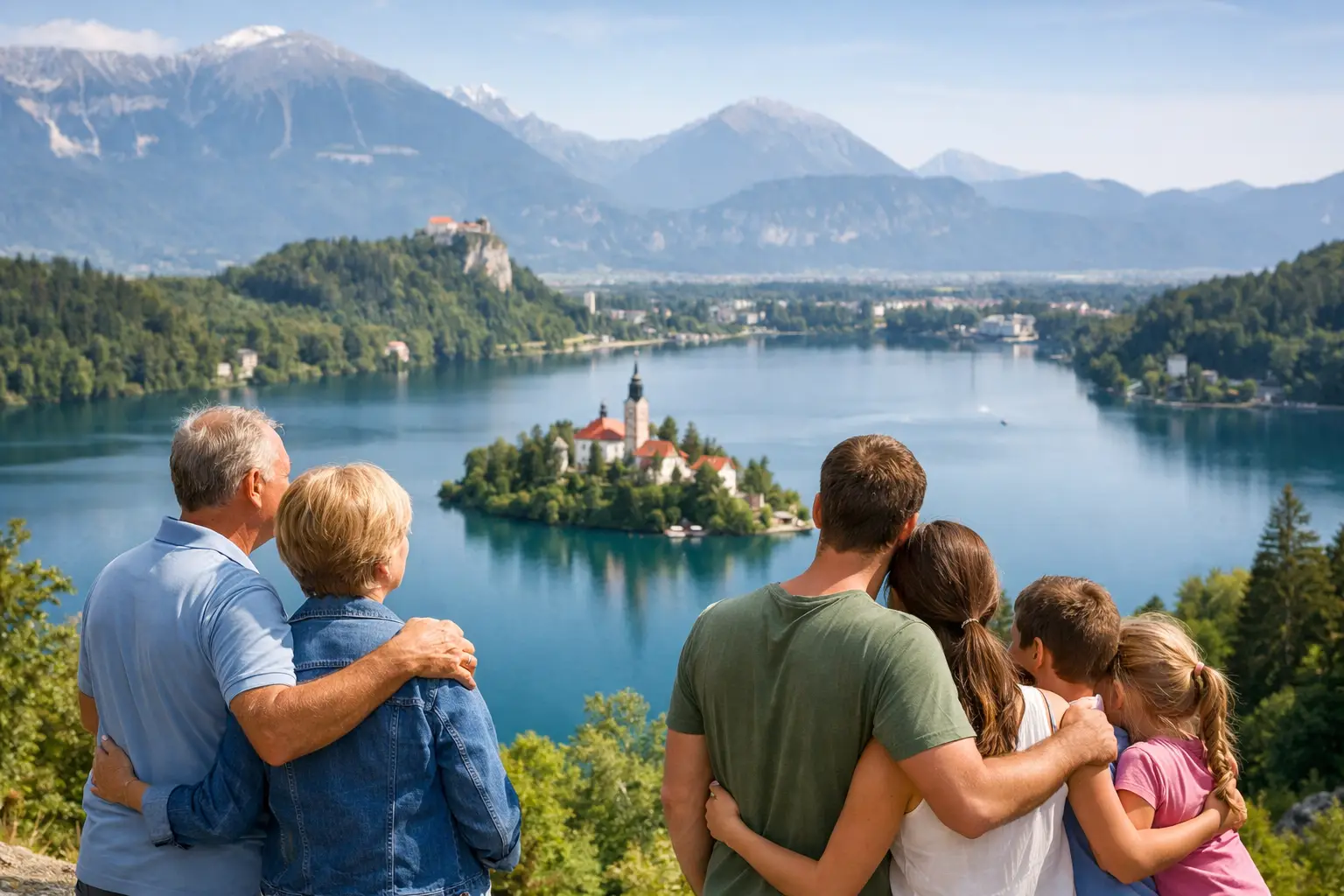
The deepest value of slovenian family reunion travel is not nostalgia alone. It is continuity. When children and grandchildren stand where earlier generations once lived, family history stops being a collection of names and dates. It becomes something embodied and shared.
That matters for families trying to preserve identity across generations. Assimilation often erases details quickly. Language fades. Recipes change. Stories shrink to a few repeated lines. A heritage reunion can interrupt that process. It gives younger relatives a setting in which questions make sense and family memory has a physical home.
It also gives older relatives something rare – the chance to see the family story carried forward. For many, that is deeply moving. A return to Slovenia is not only an act of remembrance for those who left. It is a gift to those who come after them.
If your family has talked for years about going “someday,” someday usually becomes real when one person decides to gather the names, ask the questions, and take the first step. You do not need a perfect family tree to begin. You need a willingness to honor where your story started and let the journey bring the rest into focus.