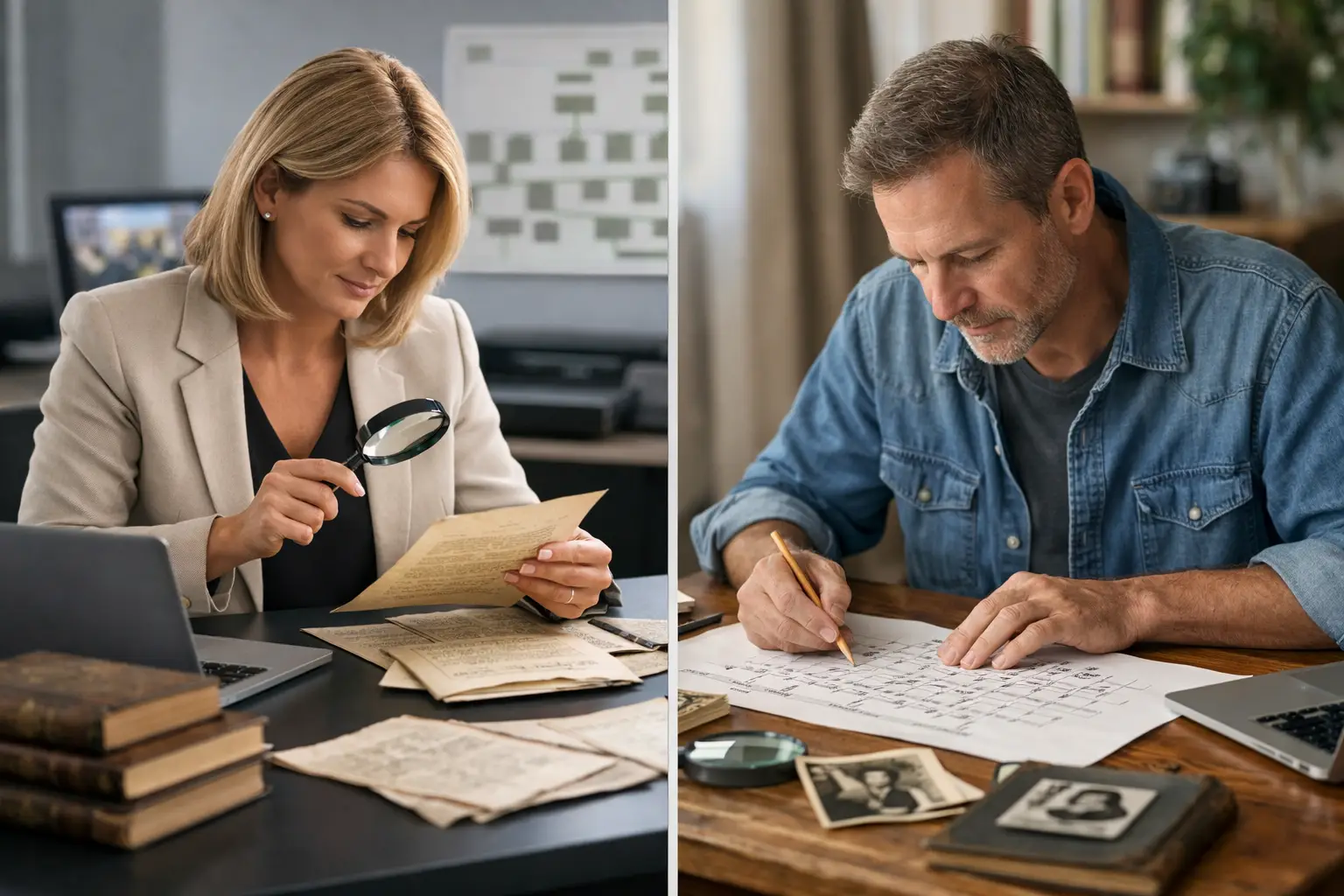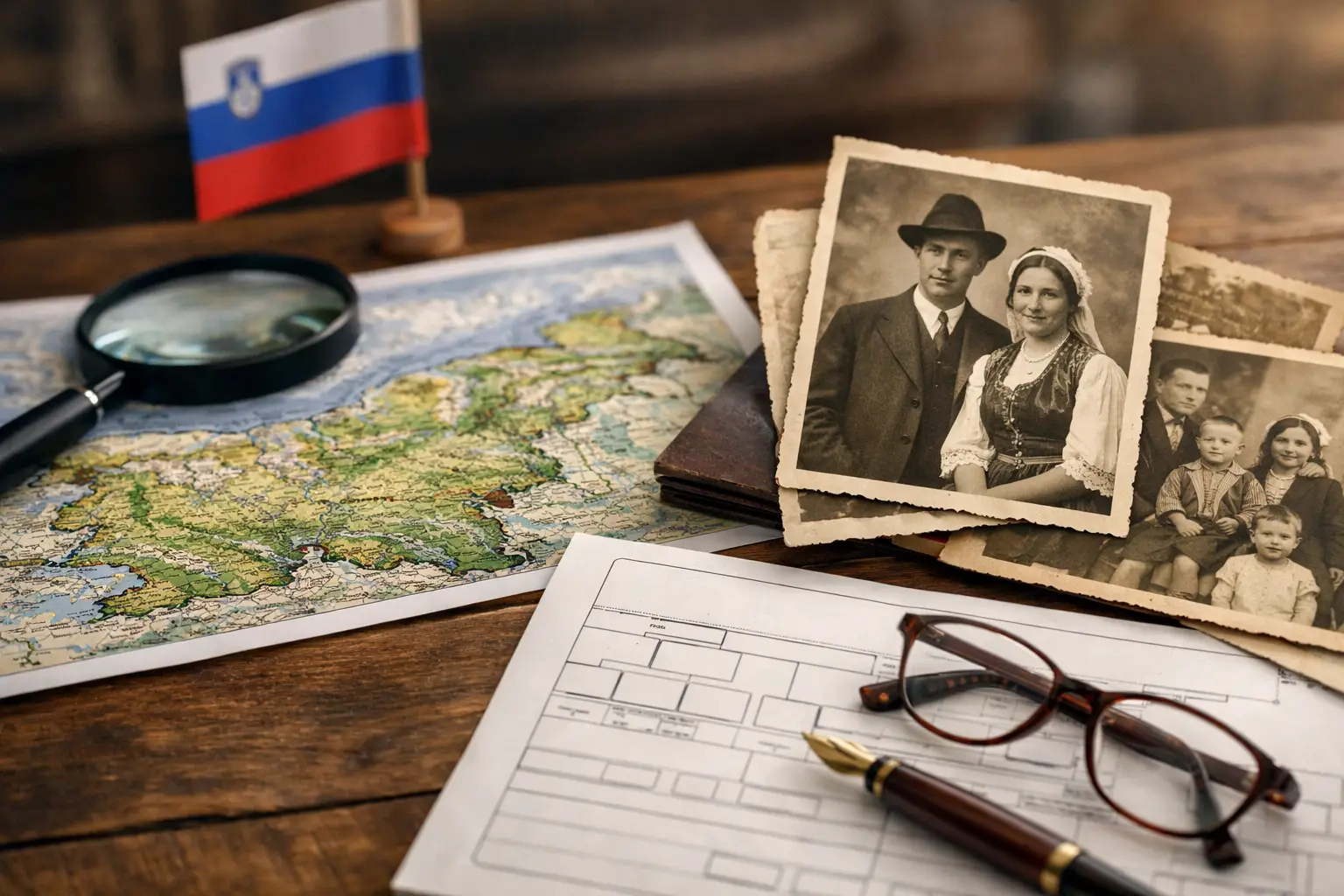
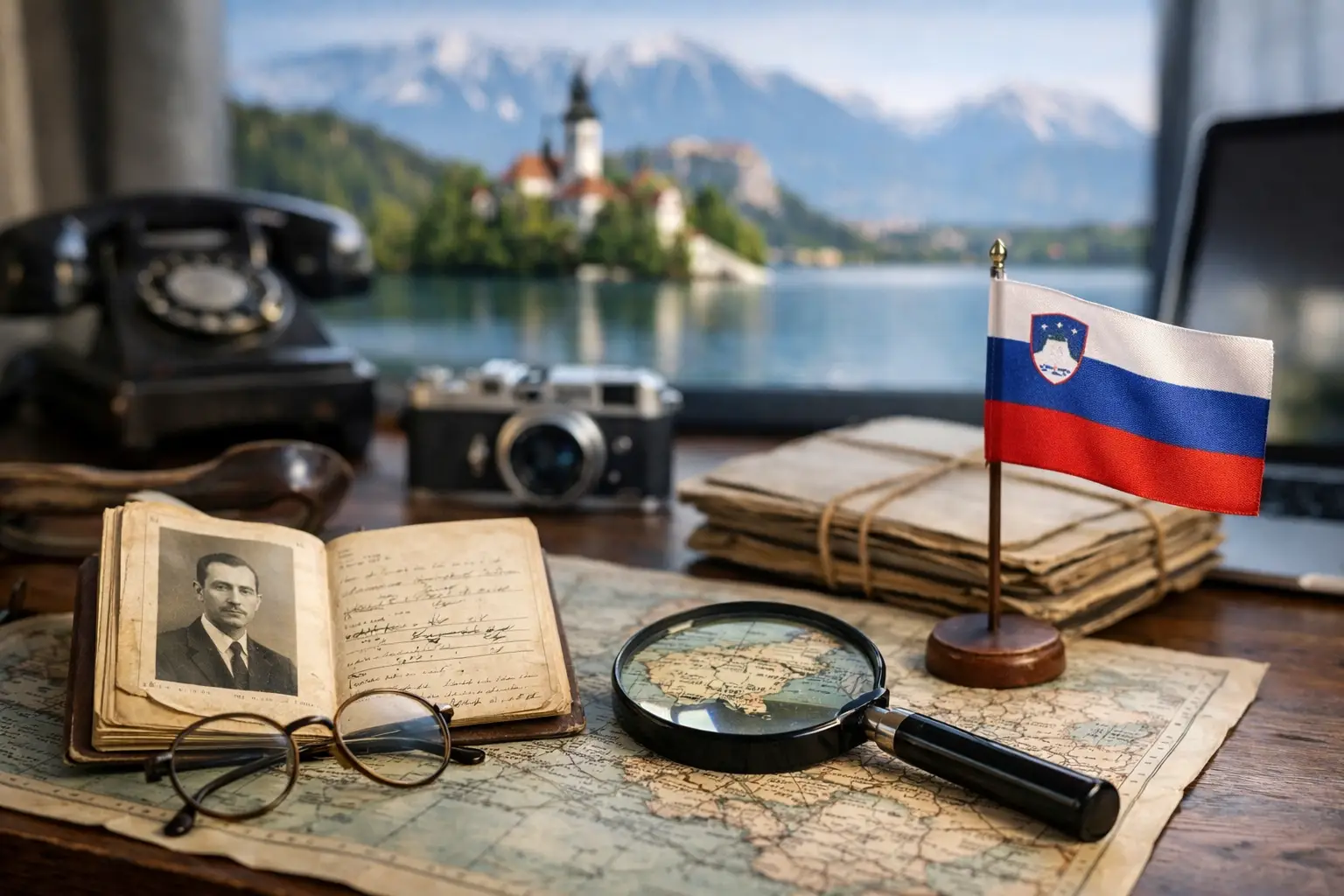

A family name scribbled on the back of an old photograph can be enough to start. So can a church memory, a story about “coming from near Ljubljana,” or a passenger list with a place that no longer appears on modern maps. Finding Slovenian immigration records often begins this way – with fragments, not certainty. The good news is that those fragments can lead much farther than many families expect, especially when you know how Slovenian history shaped the records your ancestors left behind.
Why Slovenian records can be tricky to identify
One of the first challenges is that your ancestor may not have been recorded as “Slovenian” at all. Before Slovenia became an independent country in 1991, the people who left Slovenian lands were often documented under larger political entities such as Austria-Hungary, the Austro-Hungarian Empire, Yugoslavia, or Austria. On US records, they may simply appear as Austrian, Slavonian, Yugoslav, or even with a broad regional label that does not reflect their actual home village.
That means successful research depends on flexibility. If you search only for “Slovenia,” you may miss the very records you need. It helps to think in terms of historical geography. A person born in what is now Slovenia in 1885 may have departed under one country name, arrived under another, and been naturalized under a third.
Spelling also shifts constantly. Slovenian surnames were often simplified, altered by immigration officials, adapted by English-speaking communities, or changed by the family itself. Village names can appear in Slovenian, German, Italian, or older regional forms. What looks like a dead end is often just a spelling problem.
Finding Slovenian immigration records step by step
The strongest approach is to work backward from what your family already knows. Start in the country where your ancestor settled, not in Slovenia. Immigration records make the most sense when you connect them to census entries, death certificates, obituaries, church records, and naturalization files.
Begin with the immigrant’s full name, approximate birth year, and place of settlement in the United States, Canada, Argentina, or Australia. Then look for records that narrow the arrival window. A census may tell you an immigration year. A naturalization file may name a port and arrival date. A parish marriage record may mention the home parish in Europe. Each small detail makes the search more precise.
Passenger arrival records are often the first major breakthrough. For families who came to the United States, these lists may include age, marital status, last residence, nearest relative in the old country, final destination, and the name of the person they were joining in America. For Slovenian families, the most valuable detail is often the last residence or birthplace, even if it is misspelled. A distorted village name can still point you to the right region.
Naturalization records are equally important because they may confirm both arrival details and birthplace. Earlier naturalizations can be brief, while later files are usually richer. If your ancestor became a citizen after 1906 in the United States, the paperwork often contains more identifying detail than earlier records. That difference matters.
What records matter most
When people think about immigration research, they often focus only on ship manifests. In practice, the story is broader. Census records can place a person in a neighborhood of other Slovenian families. Draft registrations can confirm a precise date of birth. Death records may list a town of origin provided by a spouse or child. Church burial records sometimes preserve the old village name long after the family stopped speaking Slovenian at home.
If your ancestor belonged to a Slovenian parish or fraternal community abroad, those records can be especially revealing. Slovenian immigrant communities were often tightly connected. Priests, lodge secretaries, and community leaders sometimes recorded details that civil authorities never captured. A baptism sponsor with the same village surname cluster can become a clue to the ancestral hometown.
This is where patience pays off. One document rarely answers everything. But several records, each incomplete on its own, can align into a clear migration path.
How to spot a Slovenian place of origin
The most meaningful result in finding Slovenian immigration records is usually not just the arrival date. It is the village. Once you identify the ancestral village or parish, your family’s story begins to move from migration history into home-place history.
But village identification takes care. Some place names are common. Some were written phonetically by English speakers unfamiliar with Slovenian sounds. Others were recorded in German forms during the Habsburg period or Italian forms near the western border. The same village may appear under multiple names across different records.
Regional awareness helps. Places near Maribor may appear differently than places in Primorska or Lower Carniola. Borderland families may have records shaped by shifting administrations and languages. If your ancestor said they were from “Carniola” or “Styria,” that is not vague trivia – it is a historical breadcrumb.
Sometimes the family memory is partly right but not exact. “Near Ljubljana” may really mean an hour away. “From Trieste” may mean they departed from a port there, not that they were born there. Rather than dismiss family stories, use them gently. They often preserve a truth, even when the details have blurred over generations.
Common obstacles in Slovenian immigration research
The most common obstacle is assuming the first matching name is the right person. Slovenian surnames can cluster heavily in certain regions, and many given names repeat within families. A record is only useful if the age, destination, relatives, and timeline fit together.
Another challenge is missing or inconsistent dates. People adjusted their ages, forgot exact years, or answered questions differently across decades. That does not mean the record is wrong. It means identity has to be built from a pattern, not a single line.
Women can be especially difficult to trace because maiden names are often lost in later records. If you are searching for a Slovenian grandmother or great-grandmother, marriage records, children’s baptisms, and obituary notices may be just as important as passenger lists.
There is also the emotional challenge. Many descendants hope for a quick, direct path and instead find fragments, ambiguity, and long pauses. That can be discouraging. Yet this is often the real shape of family recovery. You are not just gathering documents. You are piecing together a life that crossed languages, borders, and generations.
When immigration records lead you back to Slovenia
Once you have a probable village, parish, or district, the search changes. Immigration records are no longer the end goal. They become the bridge back to Slovenian civil, parish, and local historical records.
This is often the moment when family history becomes deeply personal. A village is not just a research result. It is a place with a church bell, a hillside cemetery, a dialect, a landscape your ancestors knew by heart. For many descendants, seeing that place in person transforms the entire journey. What was once a line on a manifest becomes a home, however distant in time.
That is why careful documentation matters. If you hope to visit Slovenia one day, gather every place clue now, even uncertain ones. Save alternate spellings. Keep copies of records with handwritten annotations. Note witnesses, godparents, and traveling companions. Those details may later help identify the right parish, farmstead, or family branch.
For some families, this stage is where expert guidance makes the difference. Slovenia’s local history, archival structure, and historic place names can be complex, especially for descendants researching from abroad. A heritage-centered approach, like the kind we value at Ancestry Slovenia, helps connect document-based research with the lived geography of ancestral places.
A practical starting point for your search
If you are just beginning, focus on building one reliable immigrant profile. Choose one ancestor and gather their census entries, death record, obituary, church affiliation, naturalization papers, and passenger arrival record. Compare every birthplace clue across those sources. Do not worry if they conflict at first. Patterns usually emerge.
If you are further along, revisit your earlier records with fresh eyes. Many researchers already have the answer hidden in plain sight – a witness from the same village, an old-country contact on a manifest, or a regional name they once dismissed as too broad.
Finding Slovenian immigration records is rarely about a single spectacular discovery. More often, it is a quiet process of listening carefully to documents until a place begins to speak. And when it does, you may find that your family’s story was never lost at all. It was waiting for you to follow it home.