
A single line on a naturalization record can change the whole direction of your family search. For many descendants of Slovenian immigrants, naturalization papers family clues are the first solid bridge between family memory in America and a real place in the old country.
Maybe your grandfather always said he was “from Austria,” while your great-aunt insisted the family was Slovene. Maybe a passenger list gives only a broad region, or a census changes the answer from one decade to the next. Naturalization records often sit right in the middle of that confusion. They were created during a legal process, not as family keepsakes, which is exactly why they can be so useful. They tend to capture facts a person had to state formally, sometimes more than once, and those details can point toward a village, a former empire, a spouse, or the chain of relatives who came before and after.
Why naturalization papers family clues are so valuable
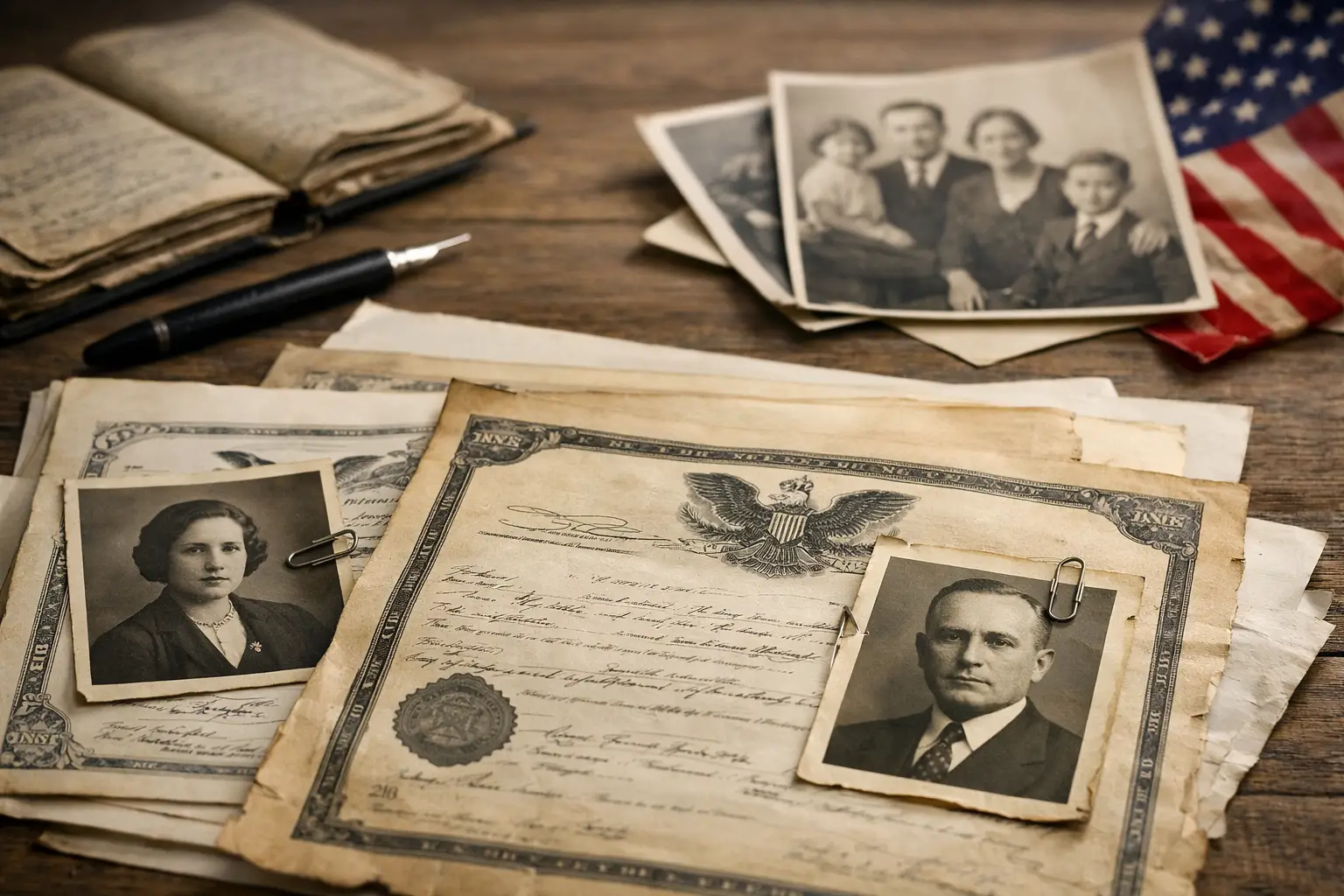
Naturalization records matter because they were created across time, not in a single moment. A person might file a declaration of intention, later submit a petition for naturalization, and finally receive a certificate. Each stage can hold slightly different details. Those differences are not always mistakes. Sometimes they reflect changing borders, shifting identities, language barriers, or a clerk writing down what he thought he heard.
For Slovenian families, this matters more than many people realize. An ancestor may have identified with a village, a parish, a province, the Austro-Hungarian Empire, Yugoslavia, or simply “Austria,” depending on the year and the official asking the question. If you only look for the word “Slovenia,” you may miss the record entirely. If you read the full naturalization file closely, though, you may find a birthplace, an arrival date, or a witness whose identity opens the next door.
Naturalization papers can also help resolve one of the most common family-history frustrations – knowing the surname, but not the exact place of origin. In Slovenian research, village-level identification is often the turning point. Parish records, local archives, and cemetery research become much more realistic once you can narrow the search to a specific community.
What clues to look for in naturalization papers
The obvious detail is birthplace, but even that requires careful reading. Some records name only a country. Others include a town, province, or older political unit. If you see Carniola, Styria, Gorizia, or a place ending in -ica, -je, or -nik, do not skip past it. Even a partial place-name can be enough to begin matching the family to a region in present-day Slovenia.
Dates are just as important. An arrival date may help you locate a passenger list. A naturalization date can place the person in a county court, federal court, or local jurisdiction where more records might survive. Sometimes the petition includes the exact ship name and port of arrival, which can connect the American story to the migration journey itself.
Names deserve extra patience. Many Slovenian surnames were reshaped in American records. Diacritics disappeared. Endings changed. A clerk may have written what sounded familiar in English rather than what was correct in Slovene. Given names often shifted too. Franc became Frank, Jozef became Joseph, Marija became Mary. In some cases, a naturalization file preserves both versions, which is incredibly helpful when comparing US and Slovenian records.
Witnesses are another overlooked clue. The witnesses on a petition were often relatives, in-laws, friends from the same village, or neighbors from the same immigrant community. If the witness has a surname that appears elsewhere in your family tree, pay attention. Even if the name is unfamiliar, researching that person may lead you back to the same parish or region.
Later forms can be especially rich. Twentieth-century petitions often asked for spouse, children, birth dates, addresses, occupation, and sometimes a more precise birthplace than earlier records did. A woman’s maiden name, a child’s place of birth, or a family address can help confirm that you have the right person when several men with the same surname appear in the same city.
The hidden context behind the record
Naturalization records do not speak for themselves. They make the most sense when read alongside history.
Many Slovenian immigrants left before Slovenia existed as an independent country. A person born in what is now Slovenia might appear as Austrian, Austro-Hungarian, Yugoslav, or even Italian, depending on the location and the period. Borderlands add another layer. A family from western Slovenian areas may show ties to Italian administration. Families from Prekmurje may be tangled with Hungarian forms and spellings. Without that context, a record can look contradictory when it is actually consistent with the history of the region.
This is also why spelling should never be treated too rigidly. Clerks wrote down place names phonetically. Immigrants adapted their answers. Some intentionally simplified details to fit what officials would understand. What looks like a wrong answer may be a clue filtered through accent, memory, and politics.
How to use naturalization papers family clues well
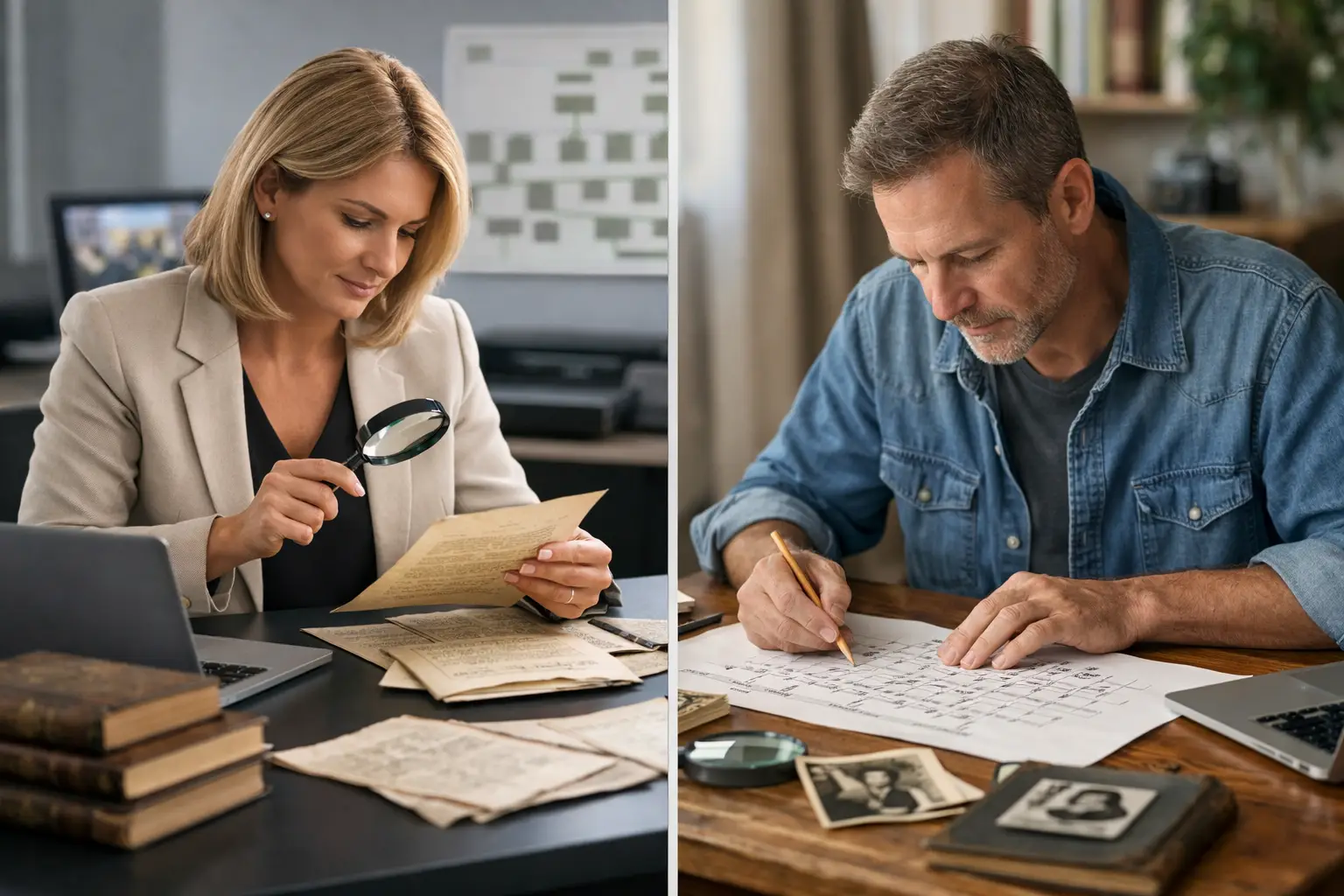
Start by gathering the full set of records, not just an index entry. Indexes are useful, but they flatten the story. You want the declaration, petition, and any supporting documents if they survive. Compare every version line by line.
Once you have the papers, build a small fact grid. Write down every date, spelling, address, witness, occupation, and place reference exactly as it appears. Then mark what repeats and what changes. Repeated details often point to the strongest evidence. Changes, however, can be just as meaningful. A shift from “Austria” to a named town may reflect a later form asking better questions.
Next, connect the naturalization record to other sources. Census records can show immigration year and citizenship status. Passenger lists may confirm the last residence or the nearest relative back home. Death certificates and obituaries sometimes preserve birthplaces that align with what appears in the naturalization file. Church records in the US can also be surprisingly helpful, especially in Slovenian parishes where the priest knew the family’s place of origin.
It also helps to research the cluster around your ancestor. Slovenian immigrants rarely moved in isolation. They followed cousins, neighbors, and people from the same village. If your ancestor’s papers are vague, the naturalization records of a brother, brother-in-law, or witness may be more precise.
Common problems and what they usually mean
If the birthplace is too broad, do not assume the search has stalled. “Austria” or “Yugoslavia” may simply mean the official form did not ask for more. Look at later petitions, family members, and passenger lists before giving up.
If the name seems wrong, think in terms of sound rather than spelling. A place that looks unfamiliar in English may be a recognizable Slovenian village once the spelling is normalized. The same is true for surnames.
If dates do not match exactly, allow some room. Immigrants did not always know the formal arrival date years later, and clerks introduced errors. One wrong digit does not cancel out the record. What matters is whether the broader pattern fits.
If a woman seems missing, remember that married women’s citizenship status historically followed different legal rules depending on the period. Her paper trail may not mirror her husband’s in a straightforward way. Children can also appear indirectly, through a father’s petition or later records.
From a document to a village
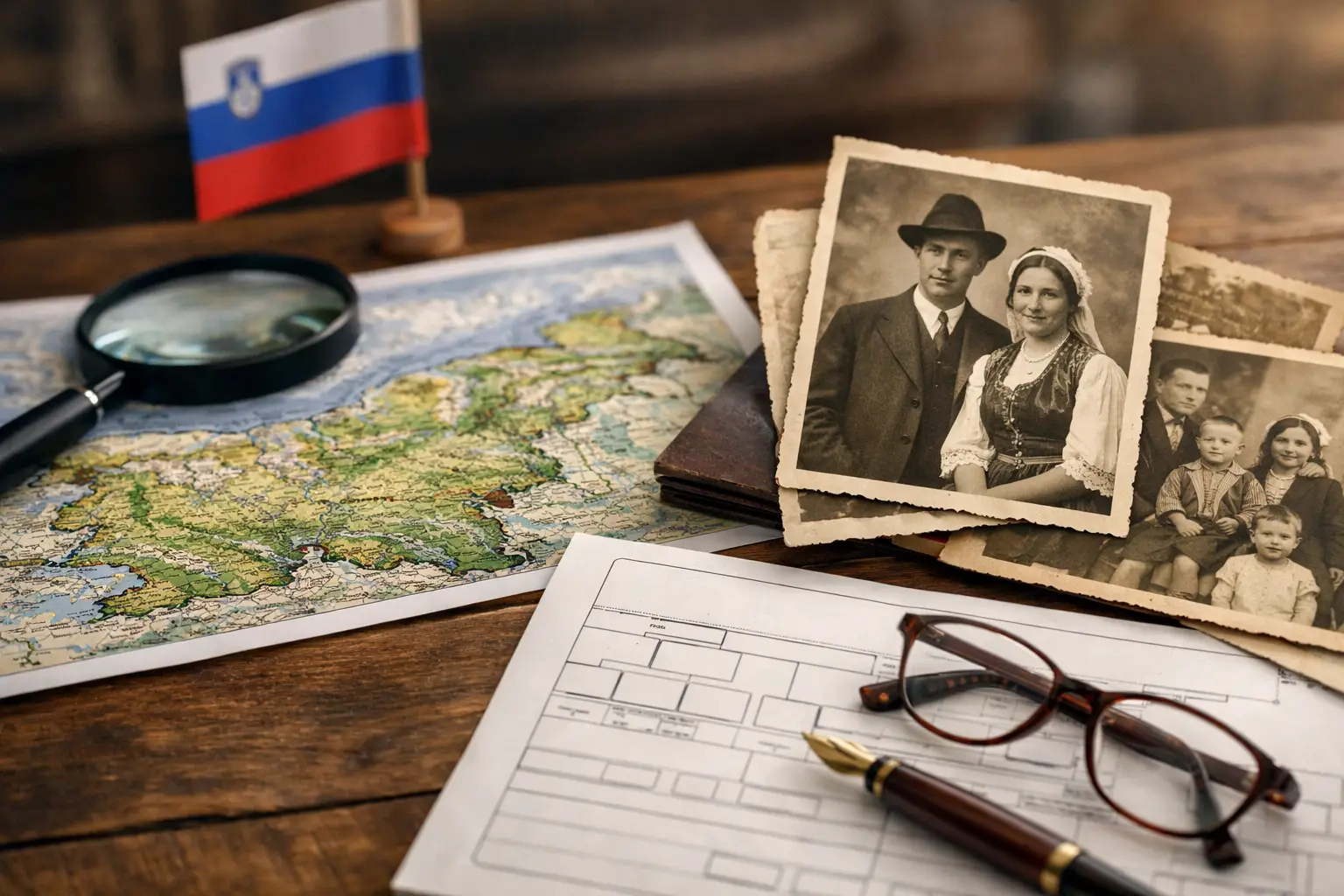
This is where the record becomes personal. Once a naturalization file points to a specific place, family history starts to move from abstraction to geography. A village name can lead to a parish register. A parish can lead to generations of baptisms, marriages, and burials. A house number or nearby town can turn into a real road, a hillside church, a cemetery gate, a landscape your ancestors once knew by heart.
For many families, that moment is emotional because it changes the question from “Where were they from?” to “Can we go there?” This is the heart of heritage travel. Research is not separate from the journey. It is what makes the journey meaningful.
At Ancestry Slovenia, we often see how one overlooked clue in a naturalization paper becomes the key to reconnecting a family with its place of origin. Not every record gives a complete answer, and some require patient cross-checking. Still, even partial clues can be enough to trace a path back to the right region, parish, or village.
If you have naturalization records in a folder and have never studied them closely, now is a good time to return to them with gentler eyes and better questions. The paper may not tell the whole story, but it may be holding the first honest direction home.