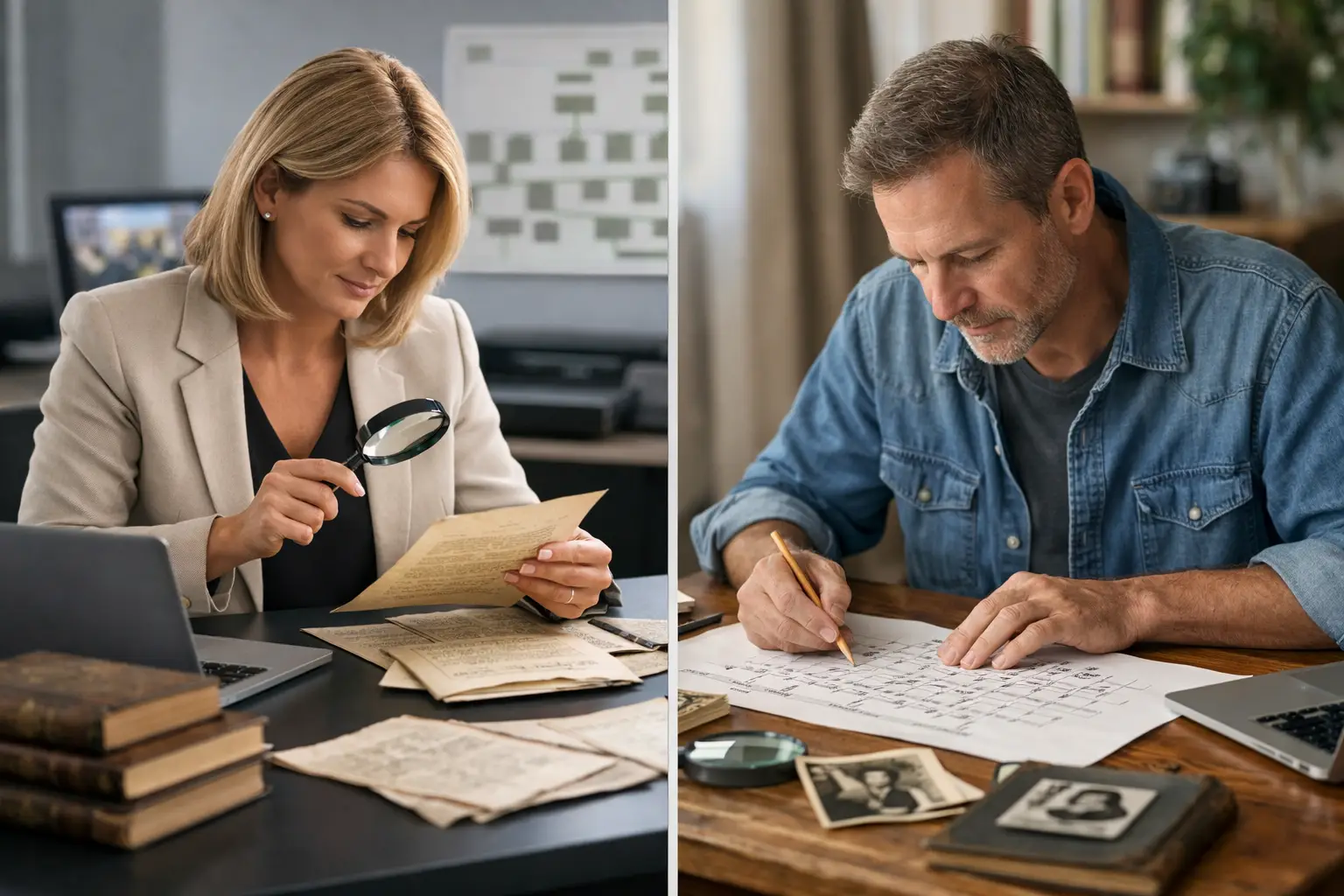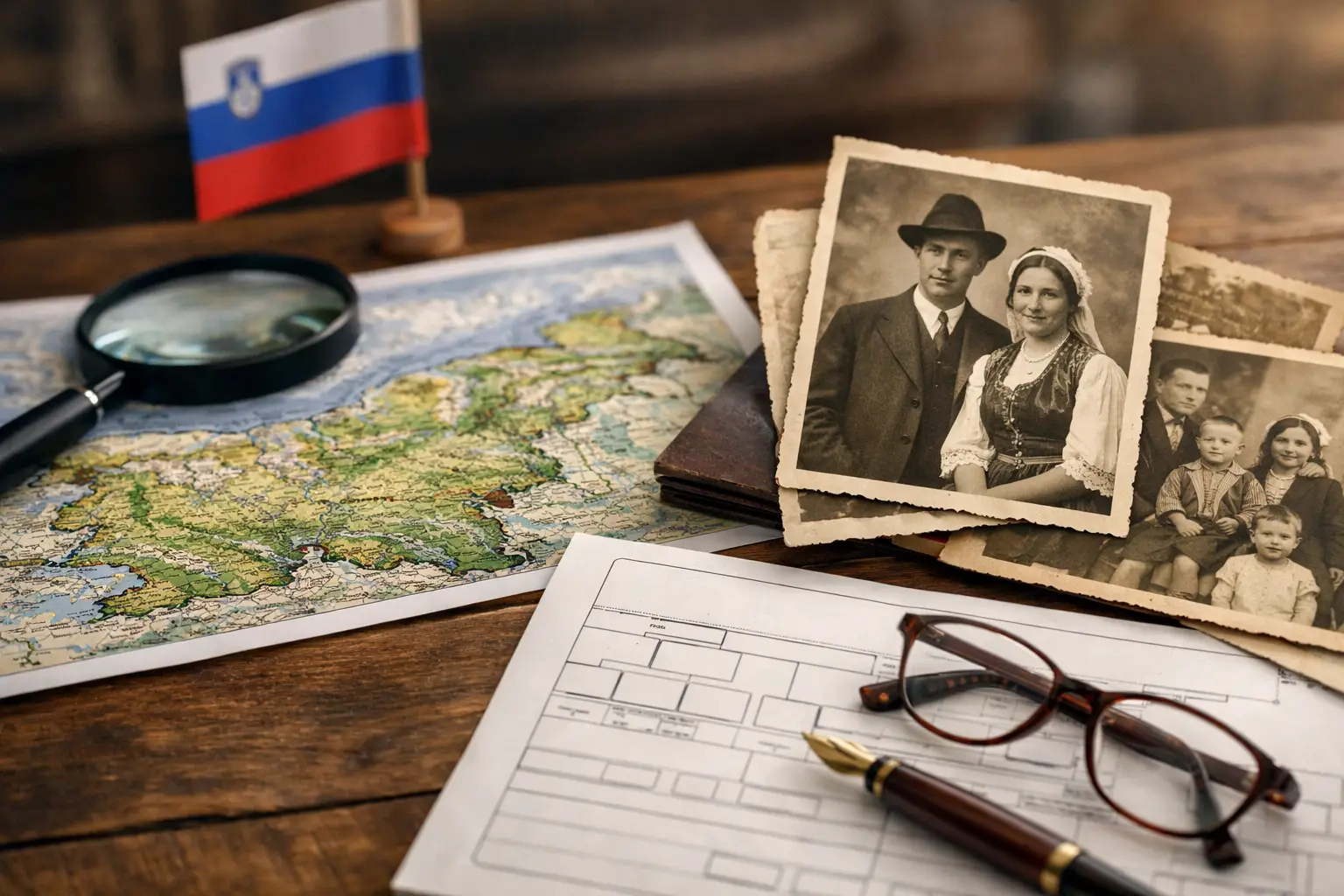
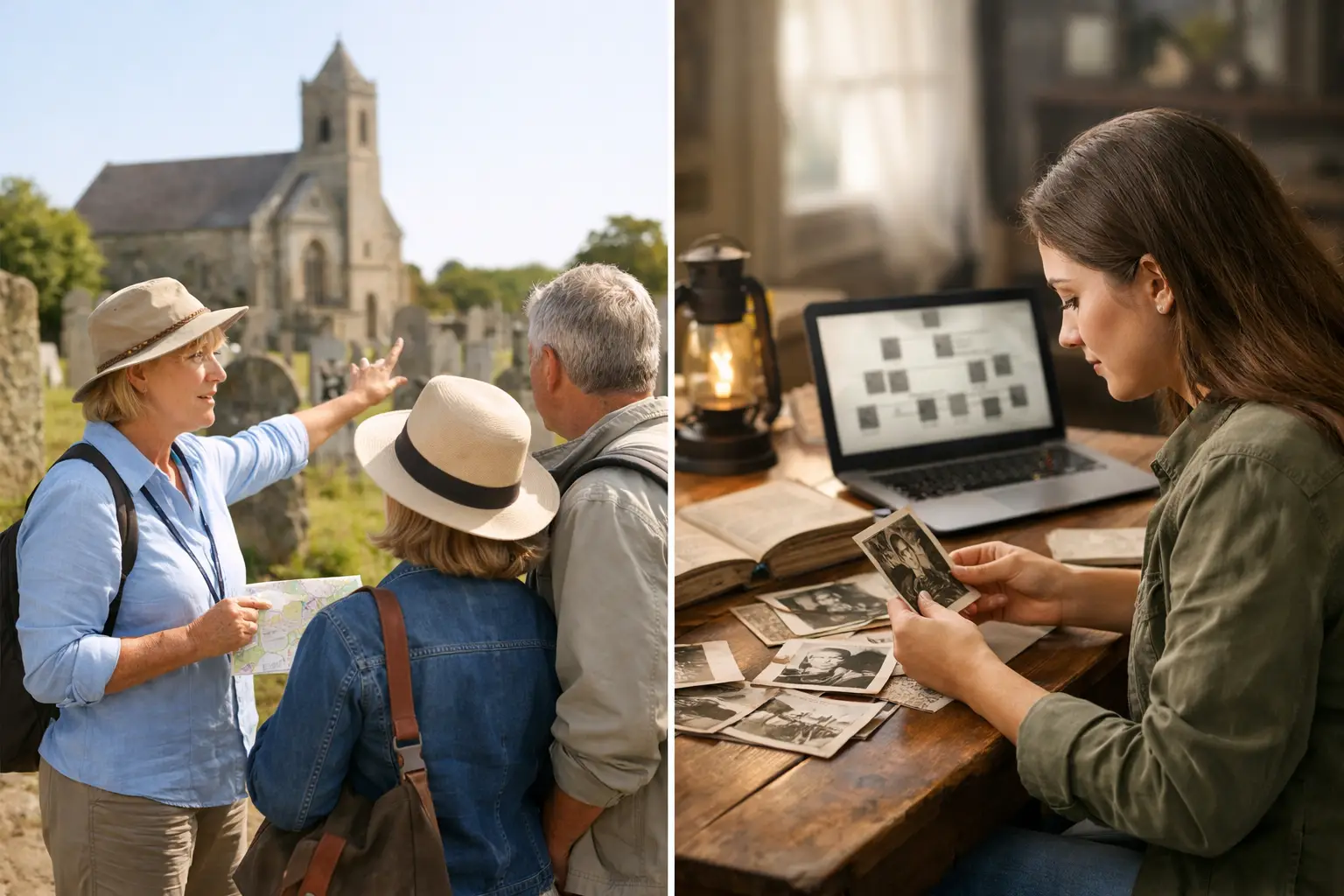


You may already have a faded baptism record, a family surname no one can quite pronounce the same way twice, or a story about “the old village” that has been passed down for generations. That is usually where the question begins: should this be a guided ancestry trip or solo research? For many descendants of Slovenian families abroad, the choice is not simply about travel style. It is about how much certainty, support, and personal connection you want as you try to return to a place your family once called home.
A heritage journey is different from a regular vacation. It carries emotion, memory, and expectation. You are not just deciding how to spend your time in Slovenia. You are deciding how to approach your family story, and whether you want to carry that process on your own or with experienced help.
What a guided ancestry trip or solo research really means
Solo research usually begins at home. You gather family papers, search passenger lists, look through immigration records, build a tree, and try to match names to Slovenian places that may have changed spelling over time. If you eventually travel, you create your own itinerary and hope the clues you found will lead you to the right parish, village, cemetery, or archive.
A guided ancestry trip is more layered. Research and travel are connected from the start. Instead of visiting Slovenia first and asking questions later, the trip is shaped around known facts, likely records, local geography, and the family places that matter most. That may include village-of-origin identification, help interpreting old records, planning visits to churches or cemeteries, and making sure the journey reflects your own family line rather than a generic sightseeing route.
Neither path is wrong. The better choice depends on your goals, your confidence with genealogy, and how important it is to make the most of your time on the ground.
When solo research makes sense
If you enjoy archival puzzles, patience-heavy searches, and building evidence one piece at a time, solo research can be deeply rewarding. Many people feel a real sense of accomplishment when they identify an ancestral village on their own or connect a family story to a document they found after weeks of work.
Solo research can also be a practical starting point if you are early in the process and not yet ready to travel. You might begin with what your family already has, interview older relatives, and collect names, dates, and migration stories. That kind of preparation is valuable no matter what you do later.
It may also suit travelers who are comfortable with ambiguity. Not every family trail is clear. Slovenian records can involve old handwriting, shifting borders, historic place names, and linguistic variations that are easy to misread from abroad. If you are willing to accept false starts and spend time testing possibilities, the independent route may feel worthwhile.
The trade-off is that solo work can become scattered. A name that looks familiar may lead to the wrong village. A parish might not match the civil district you expected. A traveler can spend precious days in Slovenia visiting beautiful places that are meaningful in a broad cultural sense, but not actually connected to the family line they came to follow.
When a guided ancestry trip becomes invaluable
There is a particular kind of disappointment that comes from crossing an ocean and realizing you still do not know exactly where your ancestors were from. That is often when guidance matters most.
A guided ancestry trip is especially helpful if your information is incomplete, if your family left generations ago, or if the records involve language and locality issues you cannot easily solve from the United States, Canada, Argentina, or Australia. Slovenian genealogy often turns on details that look small from a distance but matter enormously on the ground. One village name can exist in several places. One surname can appear across neighboring parishes. One handwritten record can change the whole direction of your search.
Guidance also matters because heritage travel is emotional. Many descendants arrive with hopes they have carried for years. They want to stand where a great-grandparent stood, understand why the family left, and feel something more grounded than a tourist experience. A research-guided journey makes that more likely because it centers the trip on family evidence and local knowledge.
This is where a specialized service can change the experience. Ancestry Slovenia, for example, brings together genealogy support and in-country heritage planning so travelers are not left trying to translate family memory into a route by guesswork. The value is not only efficiency. It is the feeling that someone is helping safeguard the story with care.
Cost is only one part of the decision
Some people assume solo research is always the less expensive option. On paper, that can be true. You may avoid professional fees and control every part of the process yourself.
But cost should be measured against outcomes. If independent research leads to the wrong village, missed records, or a trip built around uncertain assumptions, the cheaper route may become the more expensive one in practice. International travel is a major investment. Time in Slovenia is limited. If this is a once-in-a-lifetime journey, clarity matters.
A guided ancestry trip costs more because it includes expertise, preparation, and local insight. For many families, that investment is justified not by convenience alone, but by confidence. You are paying for a stronger chance of visiting the right places, asking better questions, and turning family history into something tangible.
The emotional difference between researching and returning
This is where the decision becomes personal.
Solo research can be intellectually satisfying. It gives you ownership of the search. You follow the paper trail yourself, make your own discoveries, and shape your own interpretation of what happened.
A guided ancestry trip often creates a different kind of experience. It allows you to be more present. Instead of spending your travel days troubleshooting logistics or wondering whether you are in the right parish, you can absorb what it means to be there. You can notice the landscape, hear the church bells, walk the village road, and let the place itself speak to you.
For many descendants, that emotional space matters. They are not only trying to solve a genealogical question. They are trying to understand who they are, what their family carried with them, and what was left behind when they emigrated. That is not easy to do when your attention is split between navigation, translation, and uncertainty.
A practical way to decide
If you are choosing between a guided ancestry trip or solo research, ask yourself a few honest questions.
Do you already have a confirmed village of origin, or are you still working from family stories? Are you comfortable reading old records and sorting through conflicting details? Do you want to spend your limited travel time investigating, or would you rather arrive with a plan shaped around your ancestry? And perhaps most important, how much does this journey mean to you emotionally?
If your goal is casual cultural exploration, solo research may be enough. If your goal is to reconnect with a specific family place and preserve that story for children and grandchildren, support often becomes more valuable.
There is also a middle path. Some travelers begin independently, gather what they can, and then seek guidance once they are ready to move from research to travel. That approach can work very well. It honors your own curiosity while making sure the in-country experience is grounded, personal, and well prepared.
The best choice is the one that protects the story
Family history deserves more than haste. Whether you choose to work on your own or with guidance, the real aim is not to collect facts for a chart. It is to reconnect names, places, and memory in a way that feels true.
If you love the chase and have time to test every clue, solo research may be a meaningful part of your journey. If you want the strongest bridge between records and real places, a guided ancestry trip can bring a level of clarity and depth that is hard to create alone.
The right path is the one that helps you arrive not just in Slovenia, but in your family story with confidence, tenderness, and the feeling that something long carried forward has finally been brought home.