

There is a moment many descendants never forget. It happens when a village name stops being a half-pronounced word in an old family story and becomes a real place – a church on a hill, a stone house, a cemetery path, a landscape your ancestors once knew by heart. That is what ancestry travel Slovenia can make possible. It turns scattered clues, surnames, and memories into a personal journey back to the places that shaped your family.
For many Slovenian descendants living in the United States, Canada, Argentina, or Australia, heritage travel is not ordinary tourism. You are not simply choosing scenic stops or famous landmarks. You are trying to answer deeper questions. Where did my family come from? Why did they leave? What remains of their story in Slovenia today? Those questions deserve more than a generic itinerary.
What makes ancestry travel Slovenia different
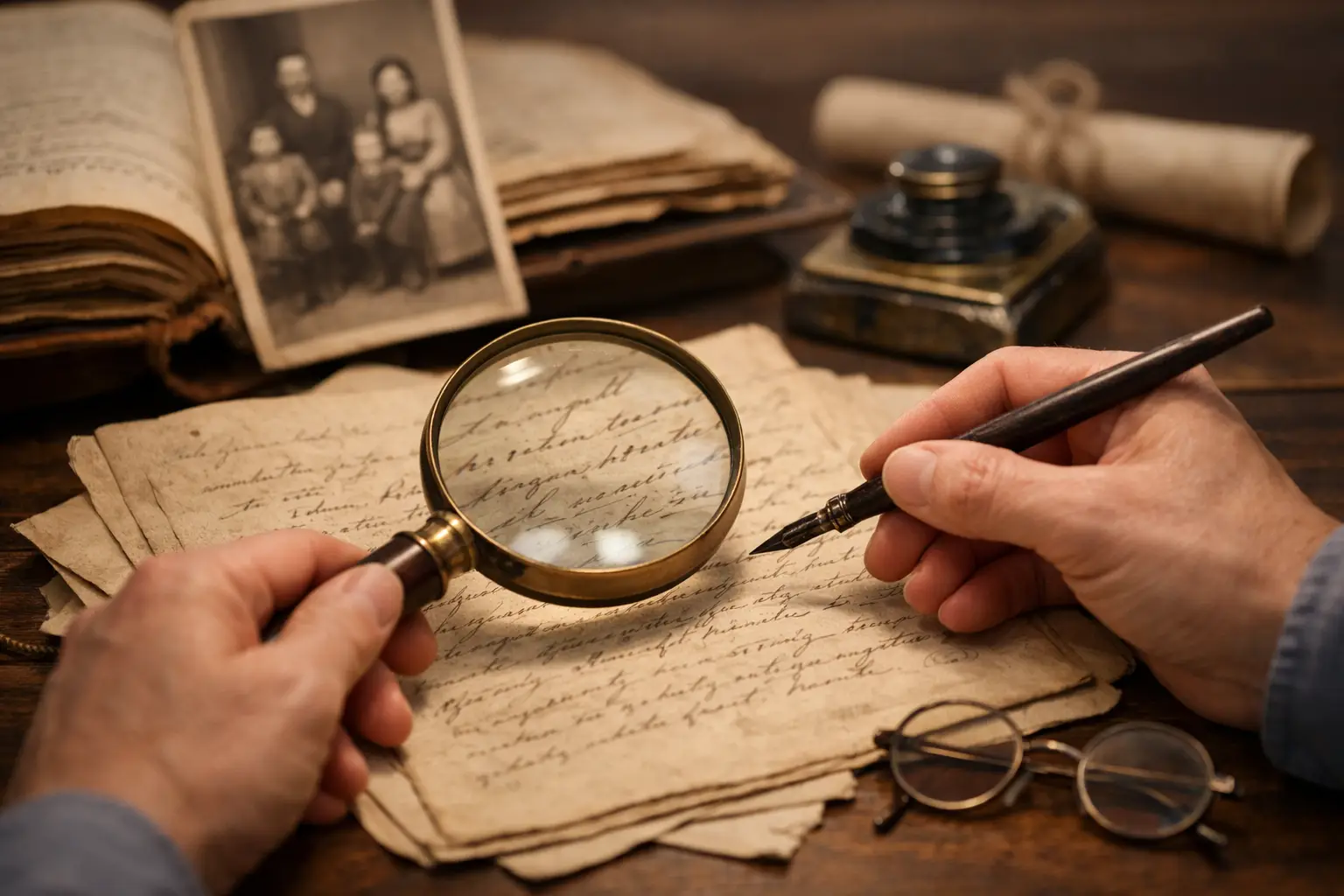
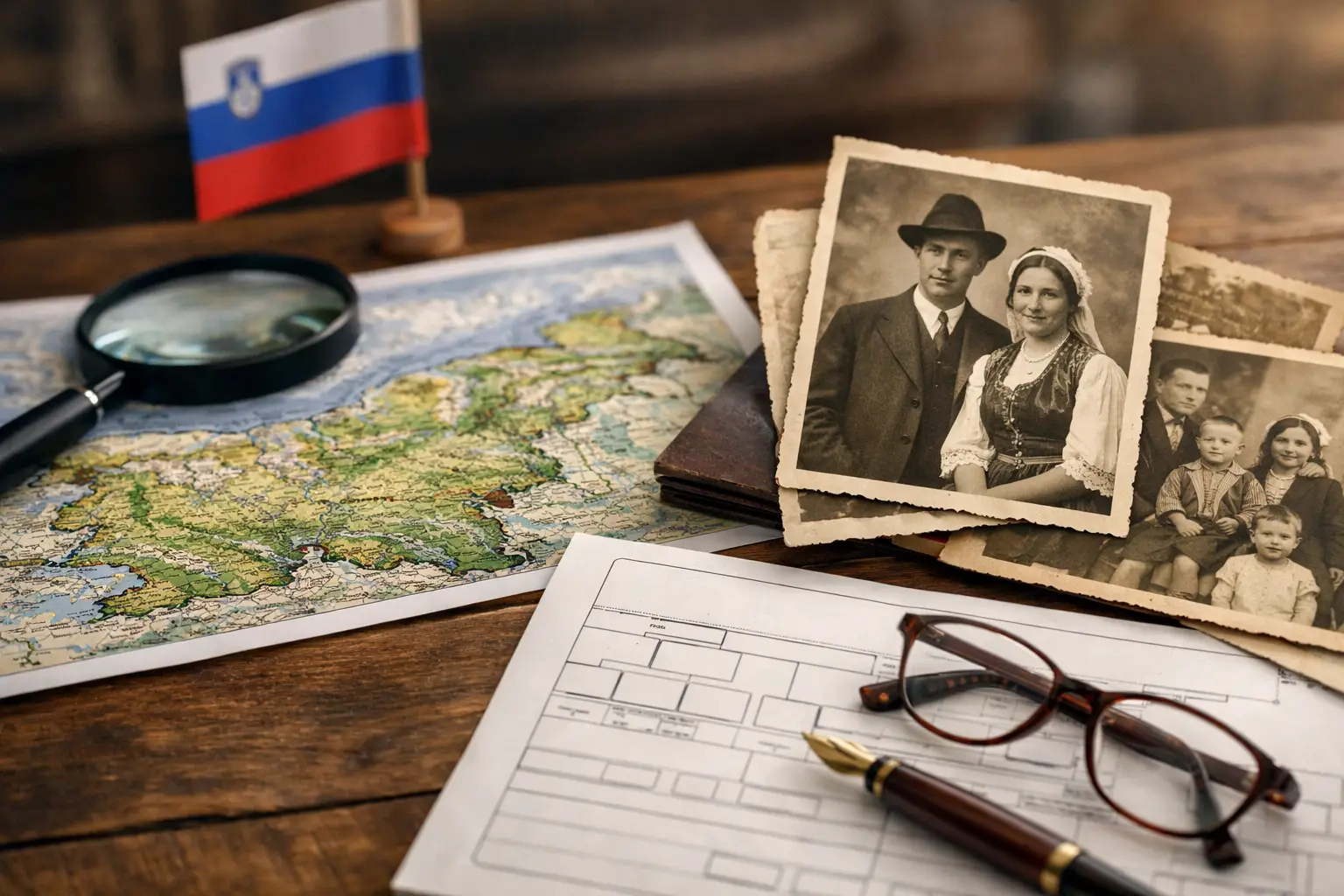
A heritage journey begins long before you board a plane. In many cases, the most meaningful part of the experience starts with research. Family stories may offer fragments – a surname, a saint’s name, a rumor about a region, an immigration year, or a photograph with unfamiliar handwriting on the back. Those fragments matter, but they rarely tell the whole story.
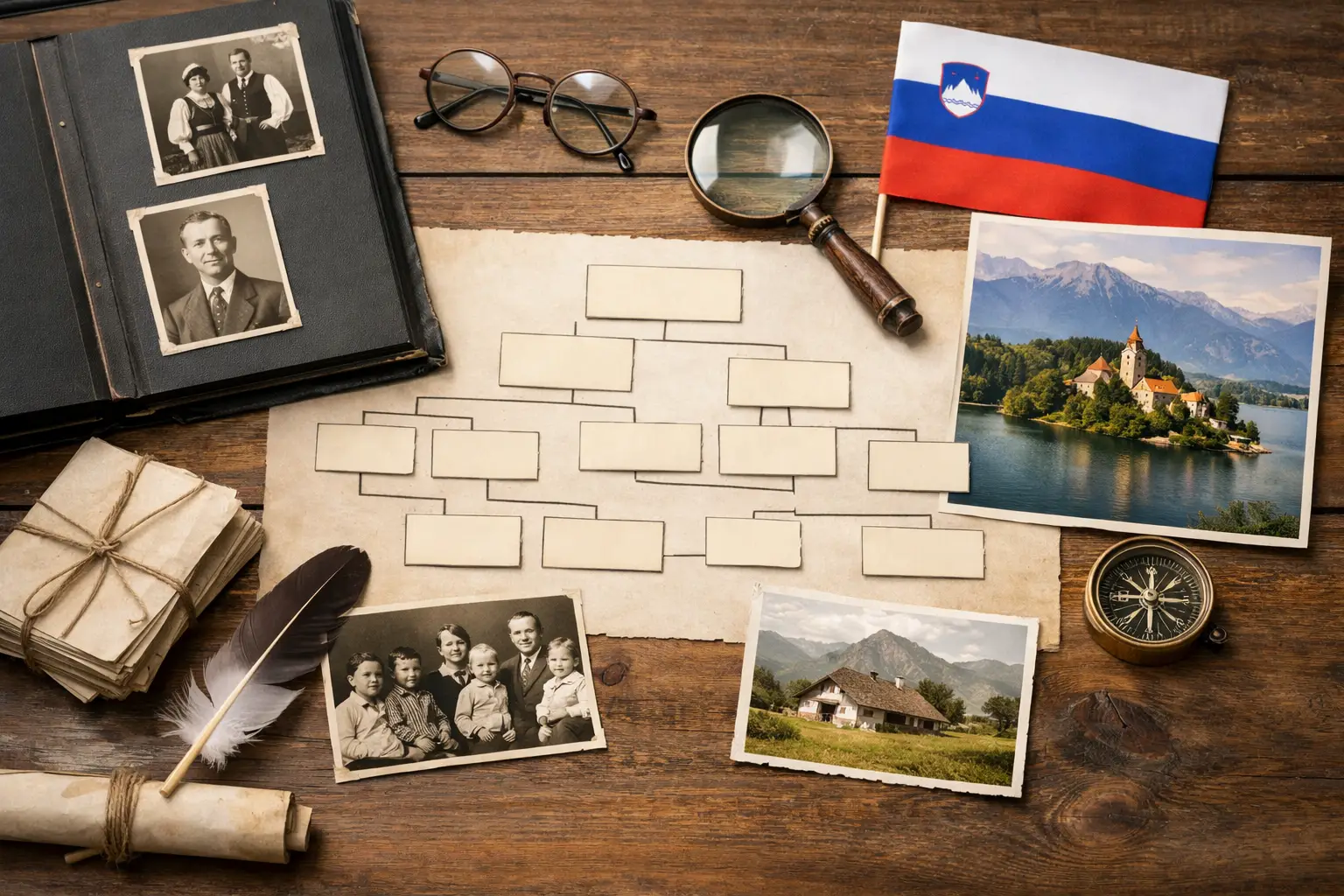
That is where genealogy and travel need to work together. When research identifies a village of origin, a parish, a historical region, or even a family house location, travel becomes far more personal. Instead of seeing Slovenia as a beautiful country in general, you begin to encounter your Slovenia – the exact community where your ancestors were baptized, married, farmed, worshipped, or were laid to rest.
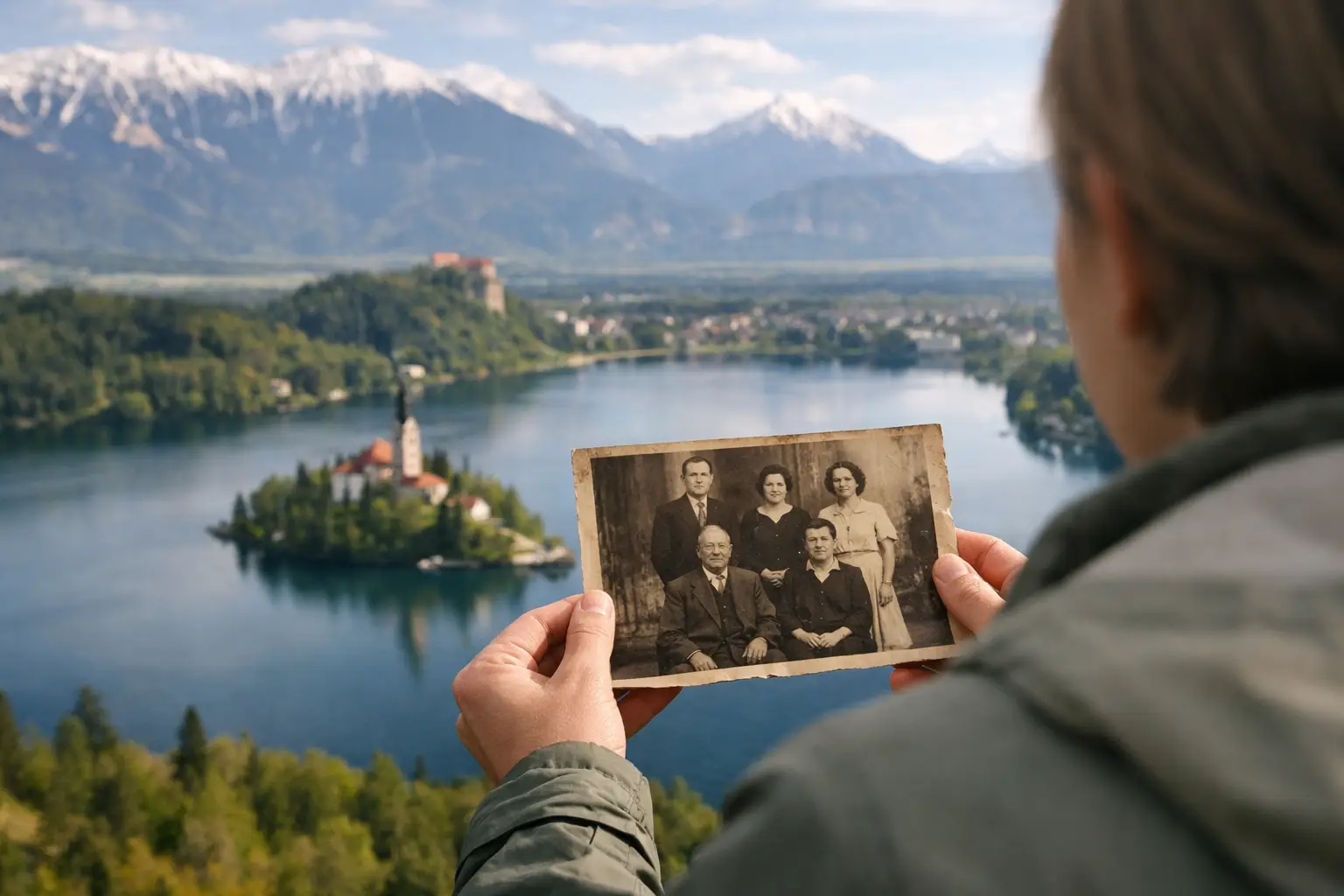
This is also why heritage travel can feel emotional in ways people do not always expect. Even travelers who arrive with limited information often feel a strong sense of recognition. A landscape can resemble an old family photo. A church register can confirm a story passed down for generations. Standing in an ancestral village can bring both joy and grief – joy at finding connection, grief for what was lost through migration, language change, or time. Both responses are natural.
Start with family records before you travel to Slovenia
The strongest ancestry trips are built on preparation. If you already know your family’s village, you are ahead of the process, but many people do not. They may only know that a grandparent “came from Slovenia,” or that the family once used a German, Italian, or Anglicized version of a Slovenian name.
Before planning travel, gather what you can from home sources. Naturalization papers, passenger lists, old passports, baptismal certificates, obituaries, funeral cards, military records, family letters, and inscriptions on photographs can all provide useful clues. Even a family recipe notebook or a prayer card can point to a patron saint, parish tradition, or regional connection.
Talk to relatives while you still can. Ask not only for names and dates, but for details that seem small. Did the family mention a nearby town? Did they speak of vineyards, mountains, forests, or the sea? Were there stories about working in mines, farming, beekeeping, or seasonal labor? These details can help distinguish one location from another, especially when surnames appear in several parts of Slovenia.
Still, research is not always straightforward. Borders shifted. Place names changed. Records may appear in Slovenian, German, Latin, or Italian, depending on the period and region. Some travelers arrive with strong evidence, while others begin with uncertainty. That does not make the journey less worthwhile. It simply means the path should be shaped carefully.
How ancestry travel Slovenia comes to life on the ground
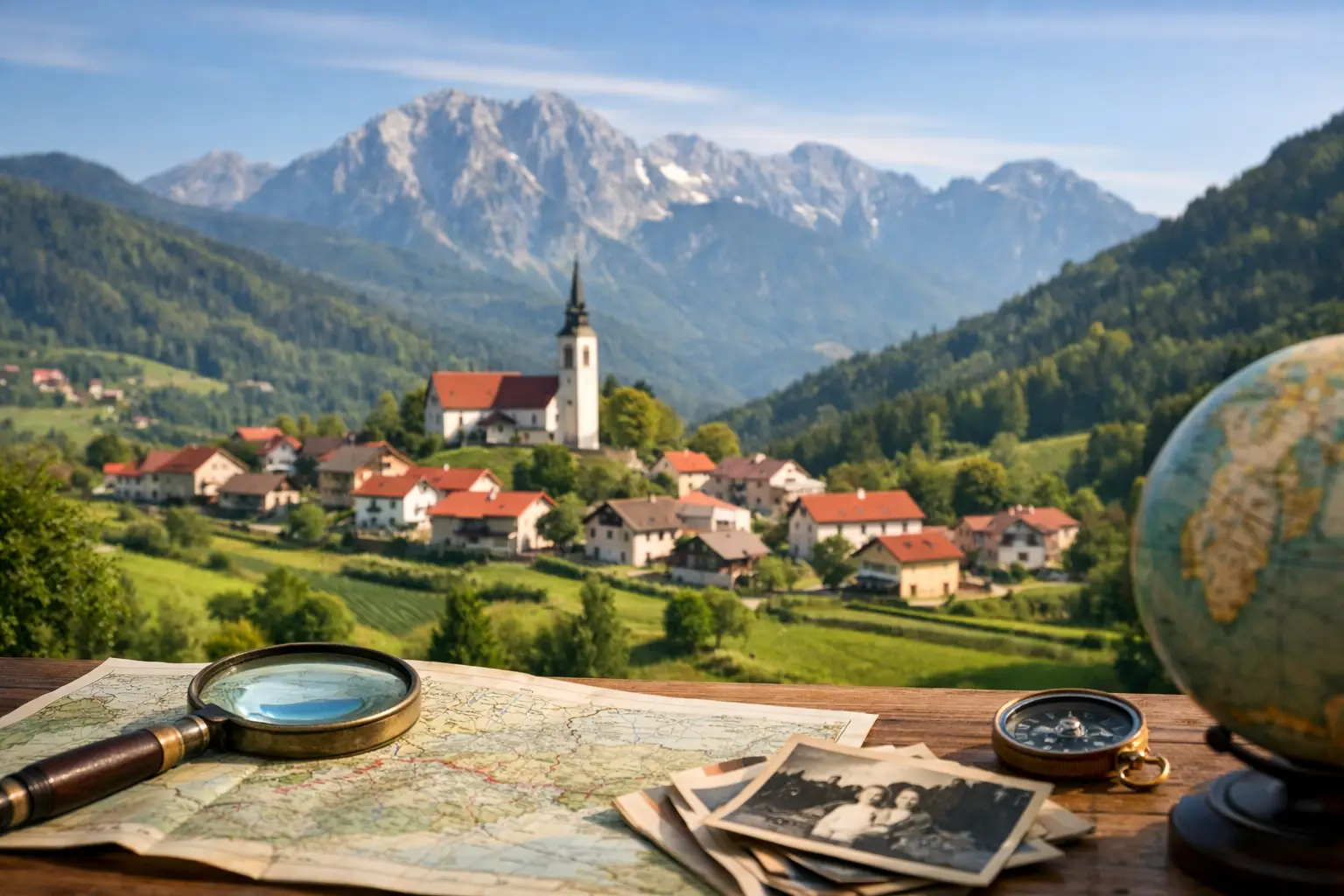
Once your ancestral location is identified, the experience changes. A visit can be designed around the real geography of your family history rather than around generic sightseeing. That might include an ancestral village, a parish church, a cemetery, a regional archive, or a local museum that explains the world your ancestors knew.
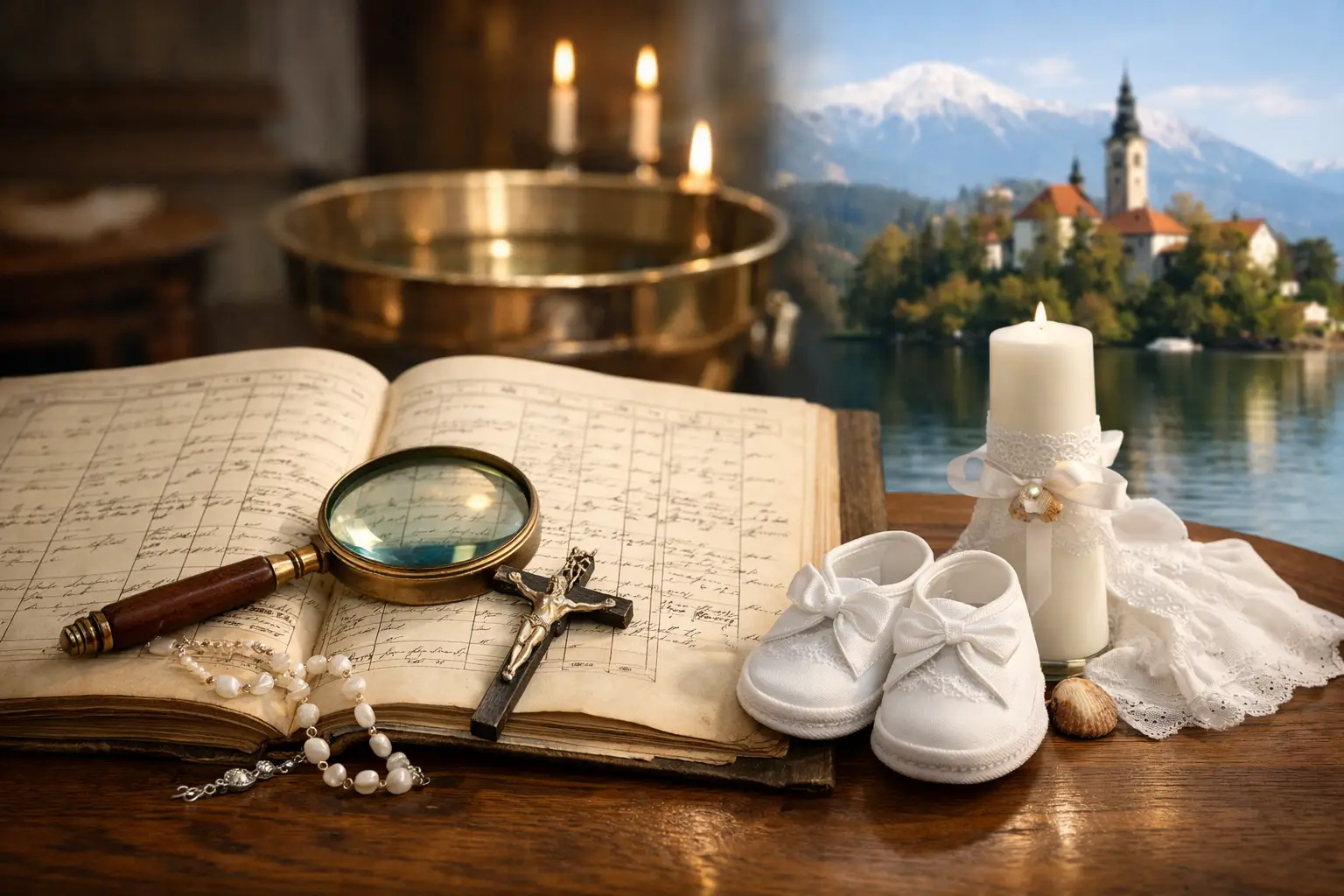
For some families, the key moment is finding a baptism or marriage record in the parish that confirms generations of connection to one place. For others, it is standing in front of a family home that still exists, even if it has changed hands many times. Sometimes the most moving experience is simpler – hearing the church bells, walking the roads between neighboring villages, or seeing how close the family lived to fields, forests, or rivers mentioned in oral history.
This kind of travel is not about filling every hour. It is about making room for recognition. A rushed schedule can weaken the experience. Heritage travel often works best when there is time to pause, ask questions, revisit a location, and let the emotional meaning settle.
Why village-of-origin matters so much
Slovenian family history is often deeply local. Two families with the same surname may come from entirely different regions, dialects, and traditions. Knowing the country is helpful, but knowing the village can change everything.
A village of origin gives context to your ancestors’ lives. It can reveal whether they came from a farming area, an alpine valley, a wine-growing district, or a coastal region with mixed cultural influences. It can explain naming patterns, occupations, religious customs, and migration routes. It can also help clarify why your family left when they did.
This matters because many descendants inherit a broad identity without the local story that once sustained it. They know they are Slovenian, but not whether their people came from Lower Carniola, Styria, Prekmurje, Primorska, or another historic region. Reclaiming that local connection often makes family history feel real for the first time.
Research and travel work best together
Some people ask whether they should complete all research before visiting Slovenia. Others wonder if they should travel first and see what happens. In truth, it depends on your goals.
If your main hope is to stand in the exact place your ancestors lived, advance research is essential. If your goal is broader reconnection – understanding Slovenian culture, hearing the language, and experiencing the landscape your family left behind – travel can still be meaningful even while research is ongoing. The best approach is usually a blend of both.
That is why a research-guided journey is so valuable. It allows documentary evidence and lived experience to support each other. A record found in advance can shape the itinerary. A conversation in a village may open a new research path. A cemetery inscription may confirm a family line. A church visit may finally explain the feast day traditions your grandparents kept abroad.
For descendants who feel overwhelmed by old handwriting, foreign-language records, or uncertain geography, guidance can save not just time, but heartache. It helps set realistic expectations while preserving the emotional purpose of the journey.
The emotional value of returning to ancestral Slovenia
People often begin this journey for practical reasons. They want names, dates, places, and documents. Those things matter. But what many remember most is the feeling of returning to a place they have never personally known.
That feeling can be hard to describe. It is not always dramatic. Sometimes it arrives quietly, in the realization that your family story did not begin with immigration. It began in a real community with its own rhythm, language, faith, and landscape. Seeing that with your own eyes can restore a sense of continuity that was interrupted across generations.
This is especially meaningful for families whose Slovenian heritage was softened or lost after migration. Names were changed. Language faded. Customs were simplified. Children and grandchildren grew up with fragments. Heritage travel gives those fragments a home again.
For some, the journey is also an act of preservation. They travel not only for themselves, but for their children and grandchildren. They want to bring back photographs, records, maps, and stories that can be passed forward. In that way, ancestry travel is not only about looking back. It is about giving future generations something solid to hold.
Planning a trip that honors your family story
A meaningful ancestry trip does not need to be extravagant. It needs to be intentional. Build around the places that matter most and leave room for both research and reflection. If records point to one village, spend time there rather than trying to cover the whole country. If your family came from multiple regions, decide whether this trip is for confirmation, reconnection, or a deeper multi-stop family history journey.
It also helps to travel with the understanding that not every answer will appear. Some records are missing. Some houses are gone. Some relatives cannot be traced. Heritage travel is powerful not because it guarantees perfection, but because it brings you as close as possible to the truth of your family’s past.
At Ancestry Slovenia, that work is treated with the care it deserves – as both research and remembrance. When done well, ancestry travel is more than a trip to Slovenia. It is a return to names, places, and relationships that still shape who you are. And sometimes the most meaningful part of going back is realizing that your family’s story was never truly lost. It was waiting for you to come find it.