
For many families, the search for slovenian citizenship by descent records begins with a single fragile clue – a baptism certificate tucked into a drawer, a surname passed down with pride, or a story about a grandparent who left a small Slovenian village for America. What looks like a legal paperwork question is often something more personal. It is a search for proof, yes, but also for place, identity, and the family line that connects you to Slovenia.
If you are exploring citizenship through ancestry, records matter because they do the quiet work of linking one generation to the next. The challenge is that Slovenian family history was not always recorded in one neat national system. Borders shifted, empires changed, names were written in different languages, and families often adapted surnames after immigration. That means the record trail is usually possible to rebuild, but rarely simple.
Why slovenian citizenship by descent records matter
At the heart of any descent-based citizenship case is documented lineage. You are not just proving that an ancestor once lived in Slovenian territory. You are usually trying to show a verifiable relationship between yourself and that ancestor through official records such as birth, marriage, and death certificates, along with evidence of identity, residence, or nationality where relevant.
This is where many descendants run into frustration. A family may say, “Our grandfather was Slovenian,” and that may be completely true in cultural and historical terms. But government authorities typically need documentary evidence that connects each generation in a clear chain. Oral history gives you direction. Records give you proof.
It also helps to understand that not every family line will fit the same legal path. Eligibility can depend on when your ancestors left, whether they retained ties to Slovenia, how citizenship laws changed over time, and what documentation still exists. The research process is rarely one-size-fits-all.
The records that usually matter most
In practice, the most useful records are those that establish direct family connections. Civil birth records are often central because they identify parents and place of birth. Marriage records can bridge surname changes and connect households. Death records may confirm dates, places, and family relationships when earlier documents are missing.
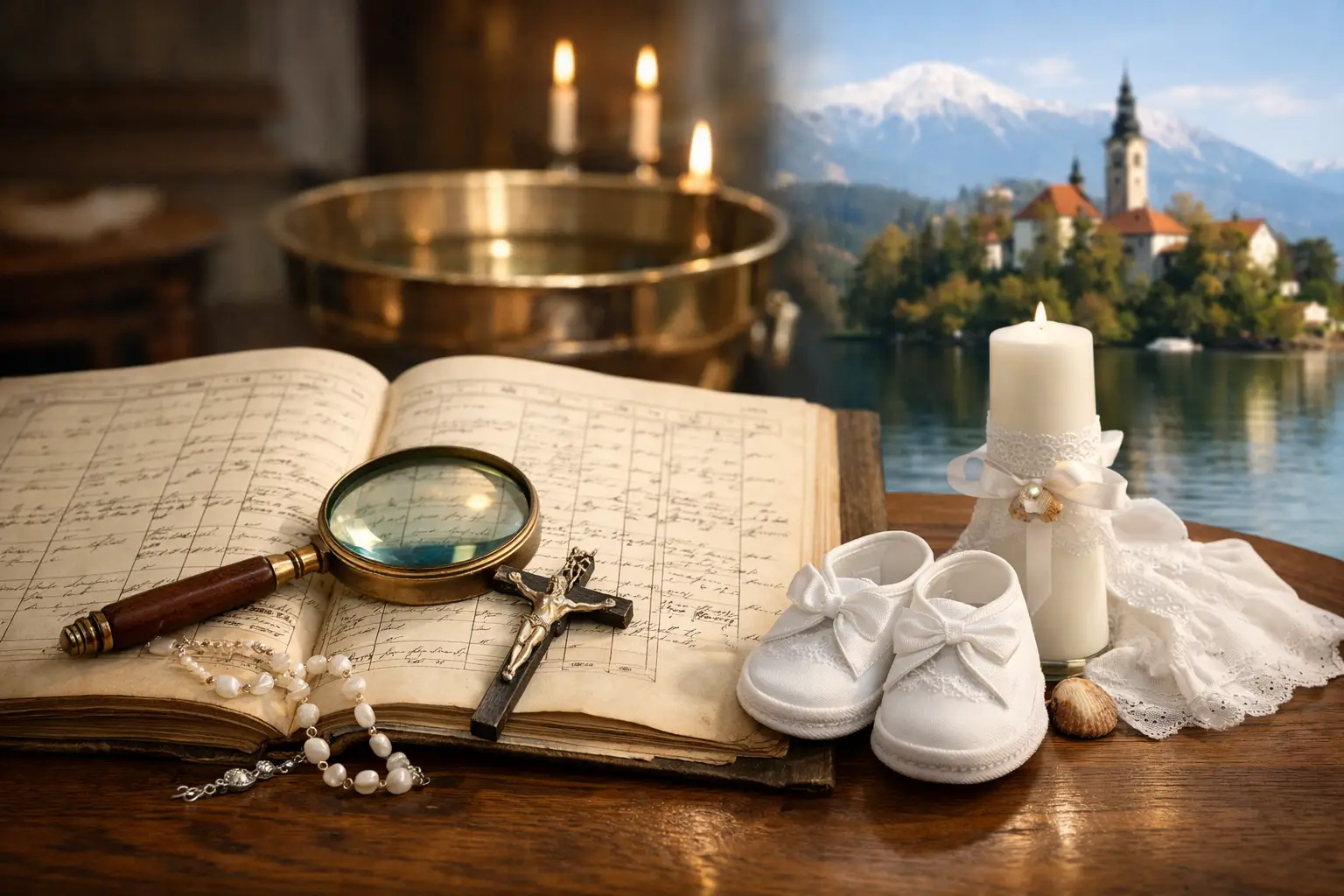
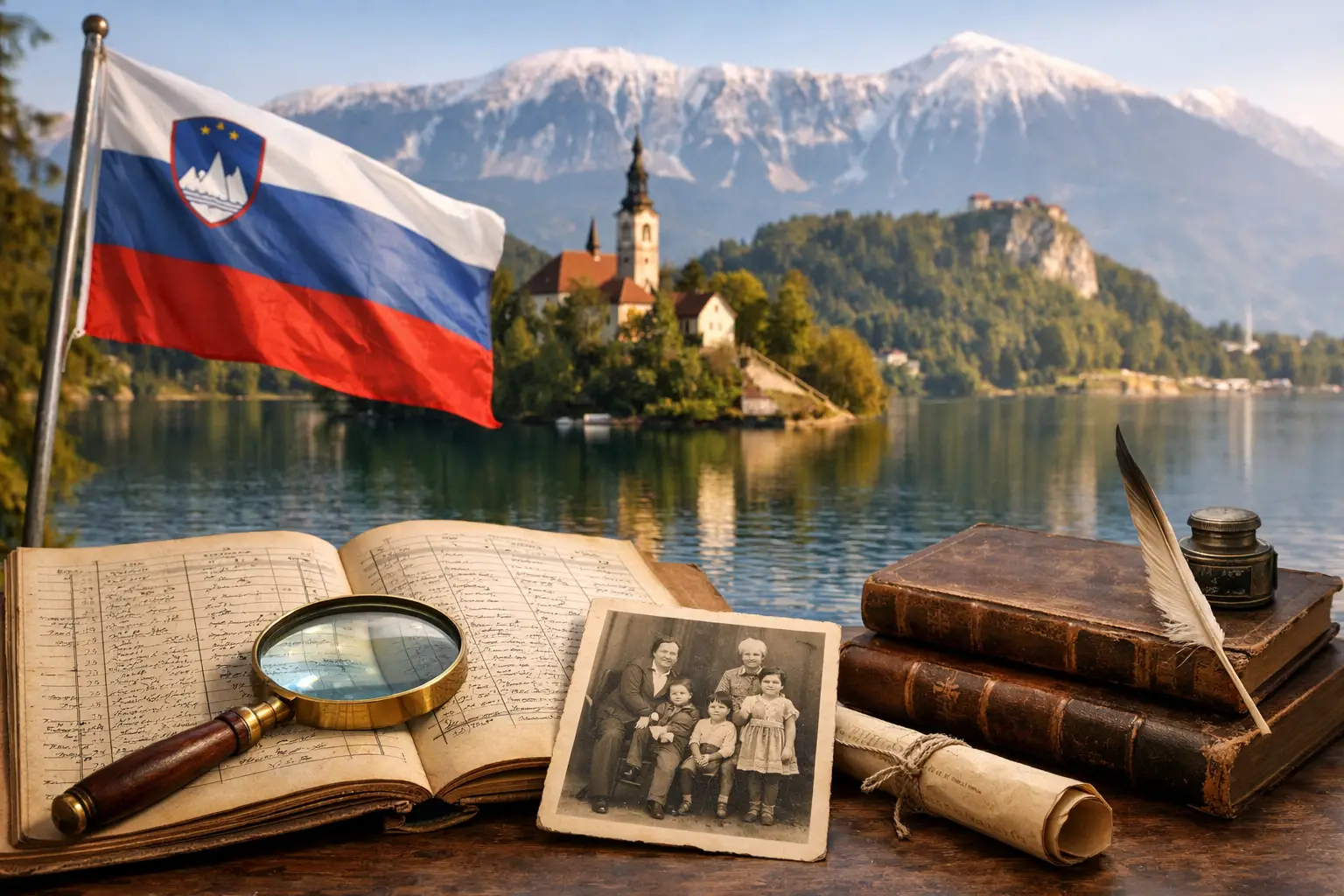
For older Slovenian ancestry, parish registers are often essential. Before civil registration became standard, baptisms, marriages, and burials were commonly recorded by the local parish. These church books can be invaluable for tracing families back to a specific village or town. They may also be the only surviving source for a key generation.
Naturalization records from the United States or another destination country can matter too. They may show how an ancestor identified their birthplace, when they emigrated, and whether they changed citizenship status. Passenger lists, military draft registrations, cemetery records, and old passports can all help fill gaps when the main line of evidence is incomplete.
Still, there is a difference between helpful records and required records. A ship manifest may support the story, but a certified birth or marriage record usually carries more weight in formal applications. That is why a careful record strategy matters from the start.
Where to look for Slovenian records
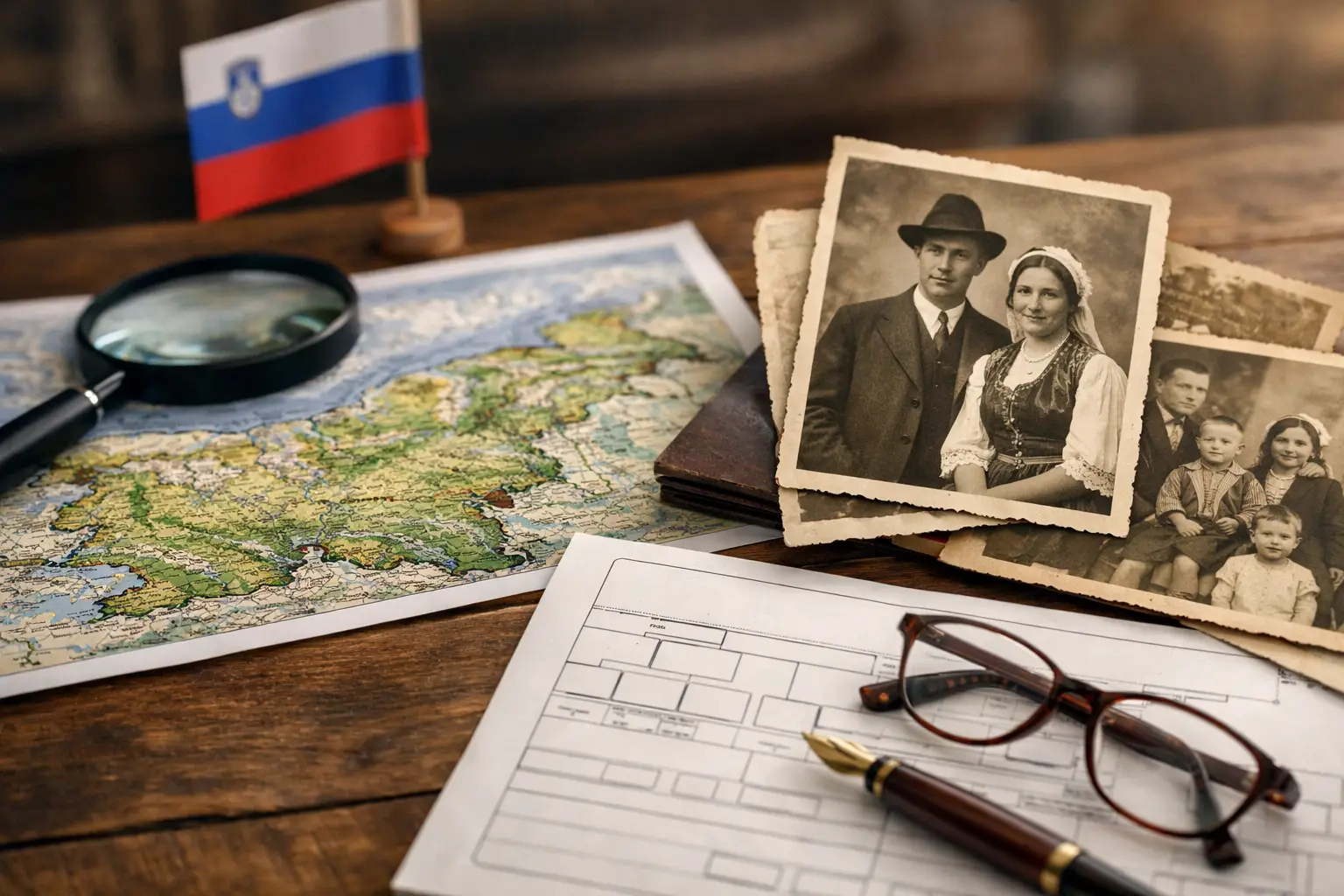
Most families begin at home, and that is often the right first step. Old certificates, prayer cards, funeral notices, family Bibles, immigration papers, and even inscriptions on the back of photographs can point to a village of origin. One correct village name can change everything, because Slovenian research becomes far more precise once you know the exact place.
After that, the search often expands to civil registries, parish archives, regional archives, and emigration-country sources. Slovenia’s historical records may be held locally rather than in a single easy database. Some are digitized, some are not, and some require requests in the right place with the right details.
This is also where historical geography matters. An ancestor may have considered themselves Slovenian, but their records could have been created under Austro-Hungarian administration, in German or Latin, or filed under a place-name spelling that no longer appears on modern maps. Families from border regions can be especially complicated. A modern national identity and a historical record trail do not always use the same language.
Common problems with slovenian citizenship by descent records
The most common obstacle is not that records are gone forever. It is that the family is searching under the wrong name, the wrong year, or the wrong place. Slovenian surnames often appear in multiple spellings, especially after immigration. Given names also shift. Franc may become Frank, Jozef may become Joseph, Marija may appear as Mary. A village may be written in German, Italian, or an older regional form.
Another difficulty is incomplete chains of documentation. You may have your grandfather’s death certificate and your own birth certificate, but nothing that directly connects the two generations in between. That missing marriage or birth record can stall the process until it is found.
There are also cases where family lore and legal evidence diverge. A person may have been ethnically Slovenian, spoken Slovene at home, and belonged fully to the Slovenian community abroad, but the documents may show residence in a territory administered differently at the time. That does not always end the search, but it does mean the case needs careful interpretation rather than assumptions.
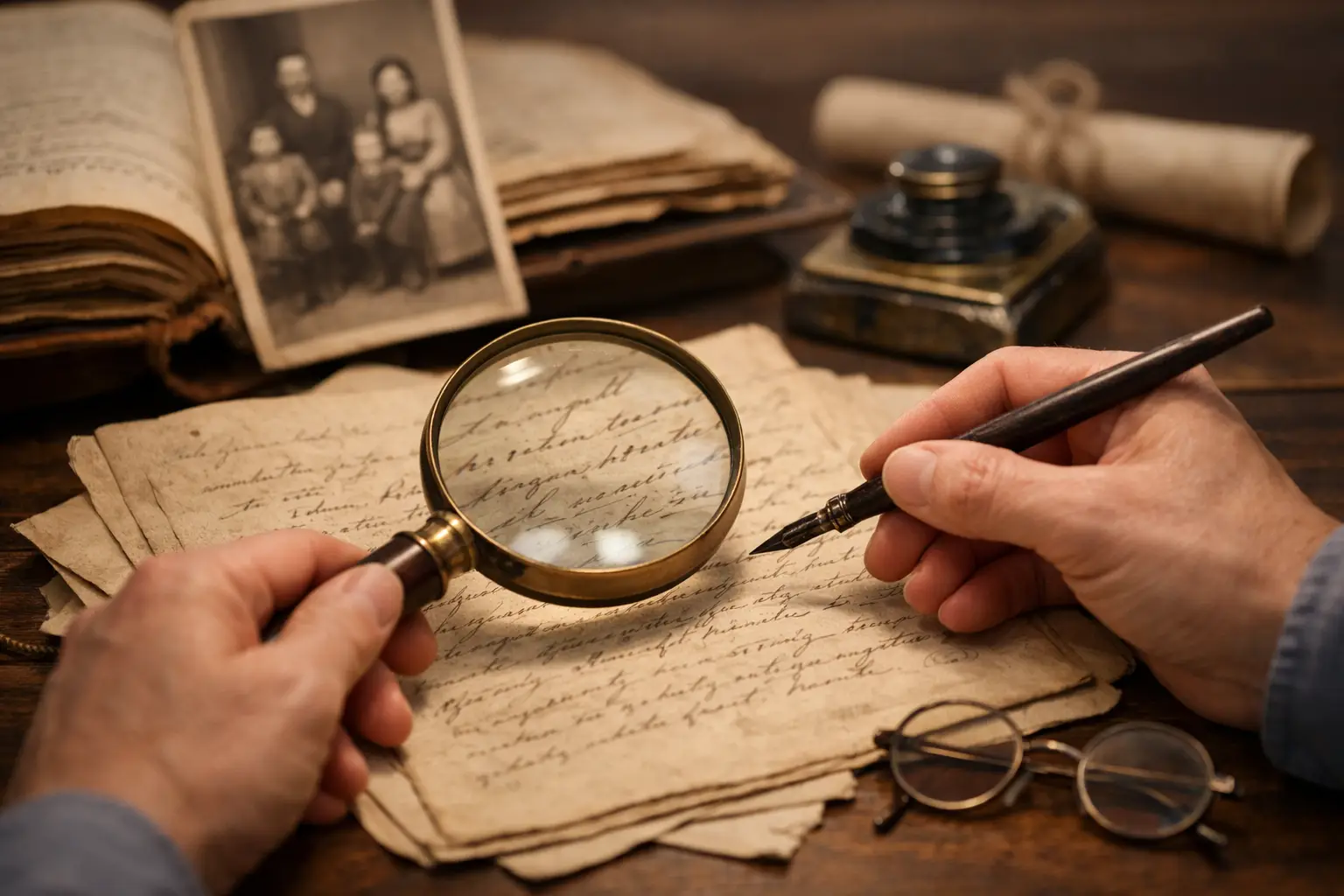
Privacy rules, access restrictions, and the condition of original records can create delays as well. More recent civil records may require proof of relationship or formal requests. Older handwritten entries may be difficult to read even when you have found the correct book.
How to build a usable record trail
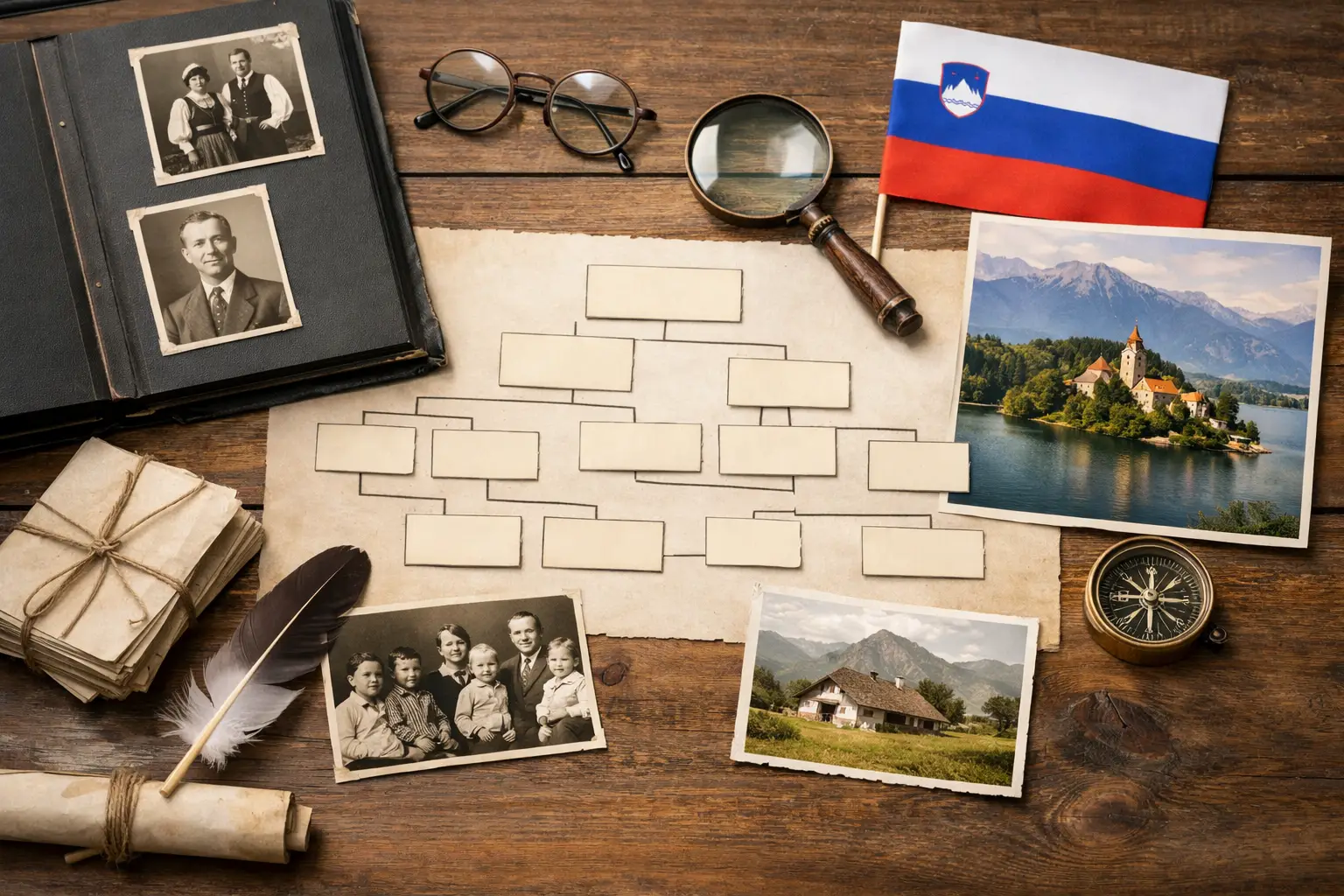
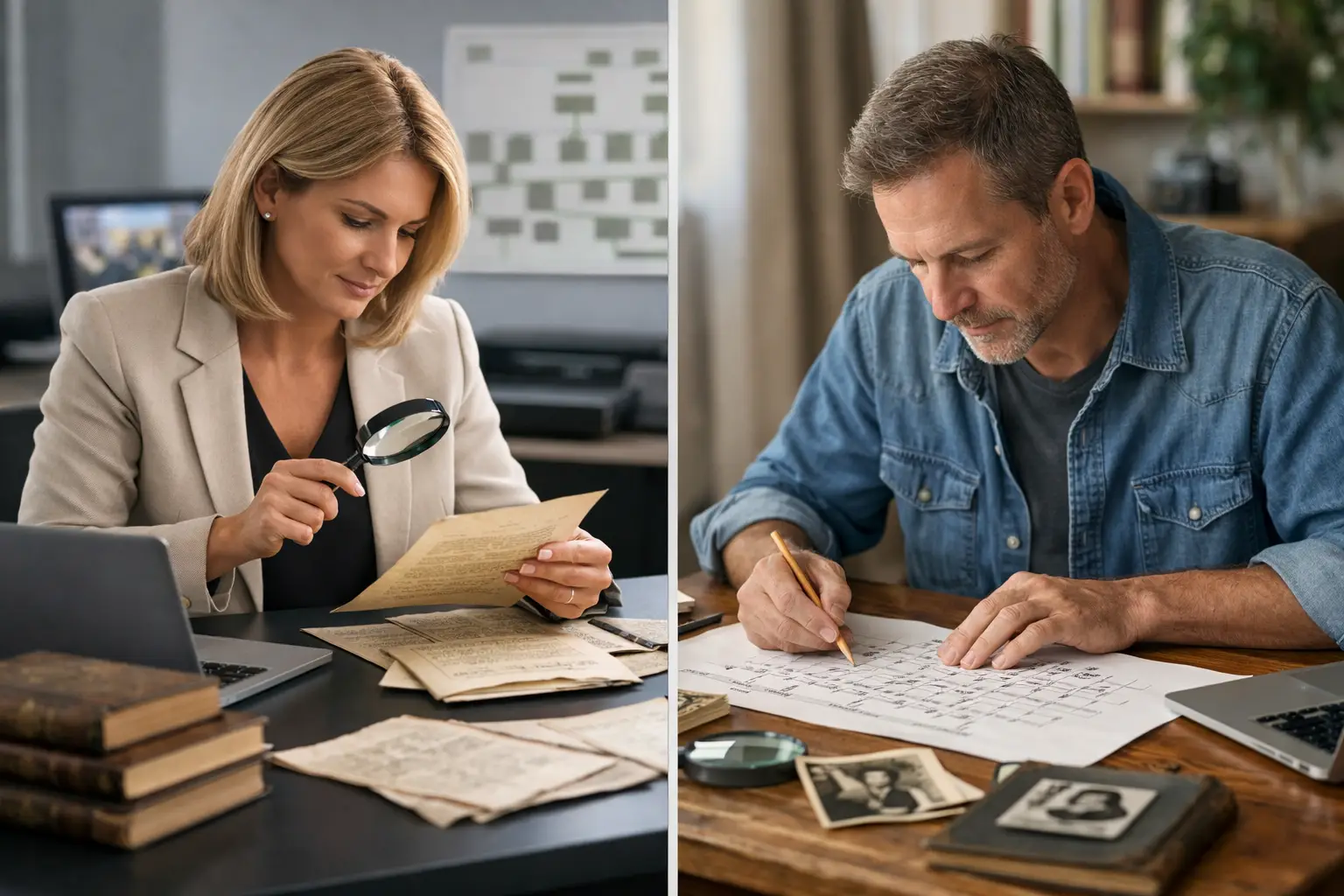
The best approach is usually to work backward from yourself to the ancestor in question, rather than jumping straight to a ship list or a village rumor. Start with your own birth record, then your parents’, then grandparents’, and so on. Each document should confirm the next generation. This method sounds slow, but it prevents costly mistakes and keeps the lineage clear.
As you gather documents, pay attention to small details. Witness names, occupations, addresses, and godparents can all help confirm that two similar-looking records belong to the same family. In Slovenian villages, the same surnames may appear repeatedly, so context matters.
It is also wise to keep two goals in mind at once. One goal is legal documentation for a citizenship path. The other is deeper family reconstruction. Sometimes the record you need for proof is different from the record that tells the fuller human story. Ideally, your search does both.
For many descendants, this is the moment when genealogy becomes something more than administration. A dry line on a parish register can suddenly reveal the church where your ancestors worshipped, the hamlet where they married, or the cemetery where generations were buried. Research stops being abstract and starts to feel like a return.
When research becomes a heritage journey
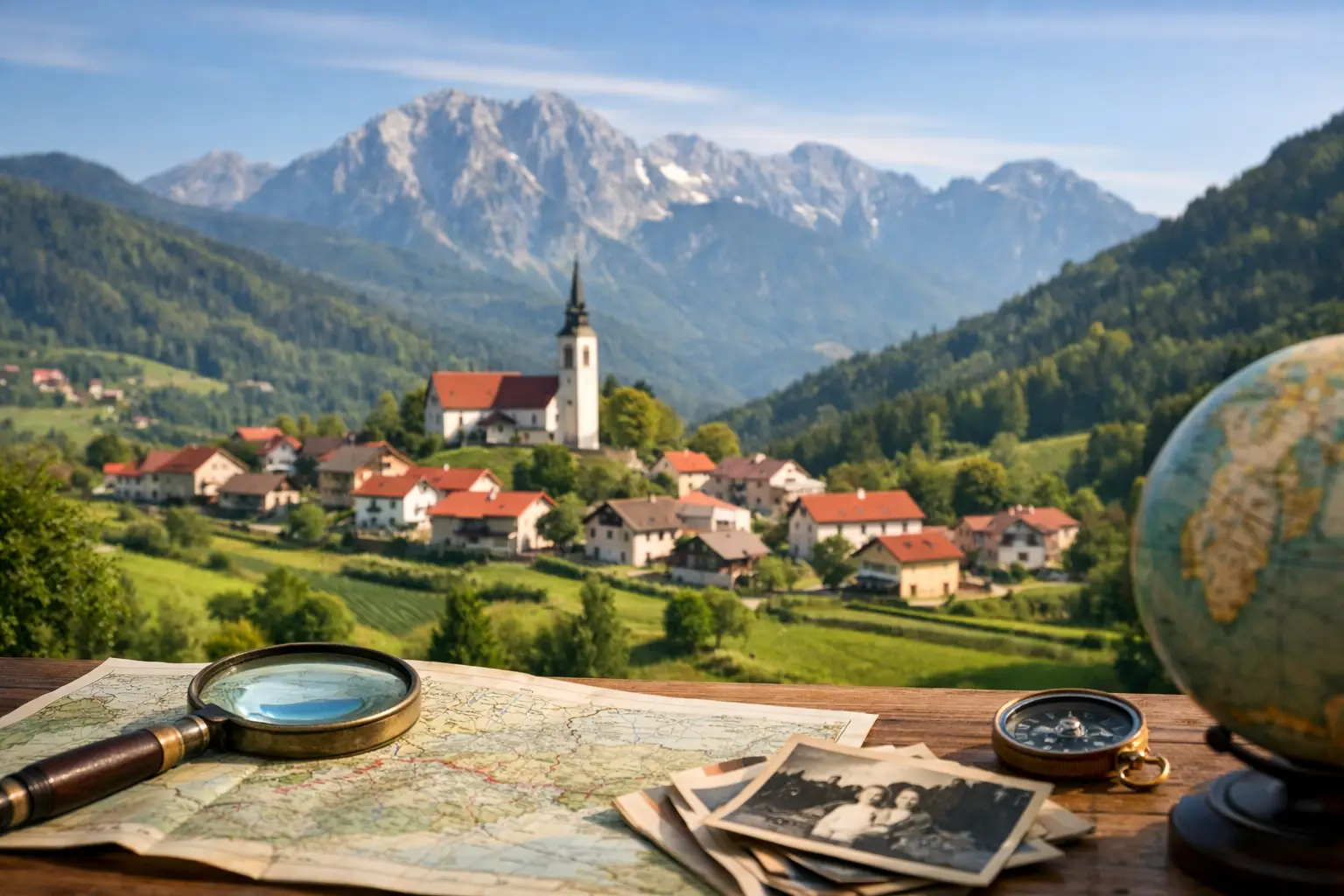
Once a family line is tied to a real Slovenian place, records take on new meaning. They are no longer just evidence for a file. They become a map back to your family’s landscape. The village baptism record points to the parish hill your ancestors climbed each Sunday. A marriage entry leads to the town square where two family lines joined. A burial register can guide you to a cemetery where your name still belongs.
That is why descendants often find that citizenship research and heritage travel naturally belong together. You may begin by asking whether you qualify, but along the way you discover where your people came from, why they left, and what remains of their world today. For many, visiting those places brings a kind of closure that paperwork alone never can.
At Ancestry Slovenia, we often see that shift firsthand. A client may arrive with only a surname and a family story, then leave with documents, a village, a church, a home region, and a much deeper sense of belonging. Not every search is quick, and not every line is straightforward, but meaningful progress is possible when the research is grounded in both local knowledge and care.
What to do before you apply
Before making formal decisions, gather as much evidence as you can and review it critically. Check whether names are consistent, whether dates align, and whether each generation is documented. If there are gaps, identify them early. A missing marriage record or uncertain birthplace is easier to solve when you know exactly what is absent.
It also helps to separate hope from evidence without losing either. Hope is what brings most families to this search. Evidence is what carries it forward. You do not need to know everything at the beginning, but you do need to be willing to follow the record trail where it leads.
Some families discover a clear, documentable line. Others uncover a more complex history that requires patience, interpretation, and local archival work. Both experiences can be deeply worthwhile. The records may support a legal pathway, but they also preserve something just as lasting – the story of how your family remained connected to Slovenia across generations.
If you are beginning this search, start with what your family already has, ask careful questions, and give the records time to speak. Sometimes the path to citizenship begins with paper. Just as often, it begins with the feeling that your family story is waiting to be brought home.