
A surprising number of people begin with a DNA kit and only later realize their biggest questions were never really genetic. They want to know which village their grandfather came from, which parish recorded a marriage, why a surname changed after immigration, or where to stand in Slovenia and say, this is where my family began. That is where Slovenian genealogy vs DNA testing becomes more than a technical comparison. It becomes a question of what kind of connection you are truly seeking.
For families of Slovenian descent, especially those whose stories crossed oceans generations ago, DNA can be useful. But records, places, and local history often carry the deeper answers. If your goal is not just ethnicity estimates but a real return to family origins, it helps to understand what each method can and cannot do.
What Slovenian genealogy and DNA testing actually answer
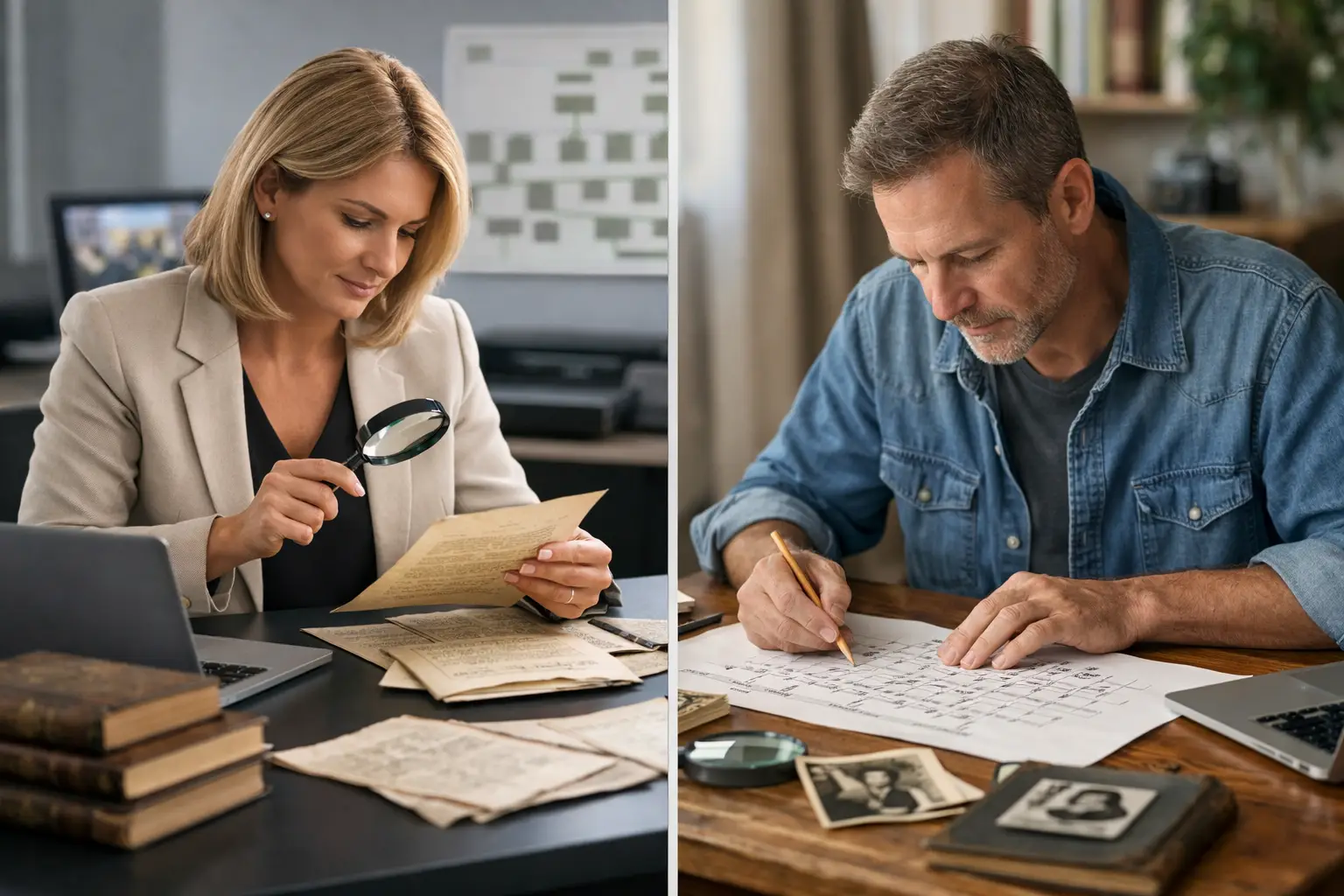
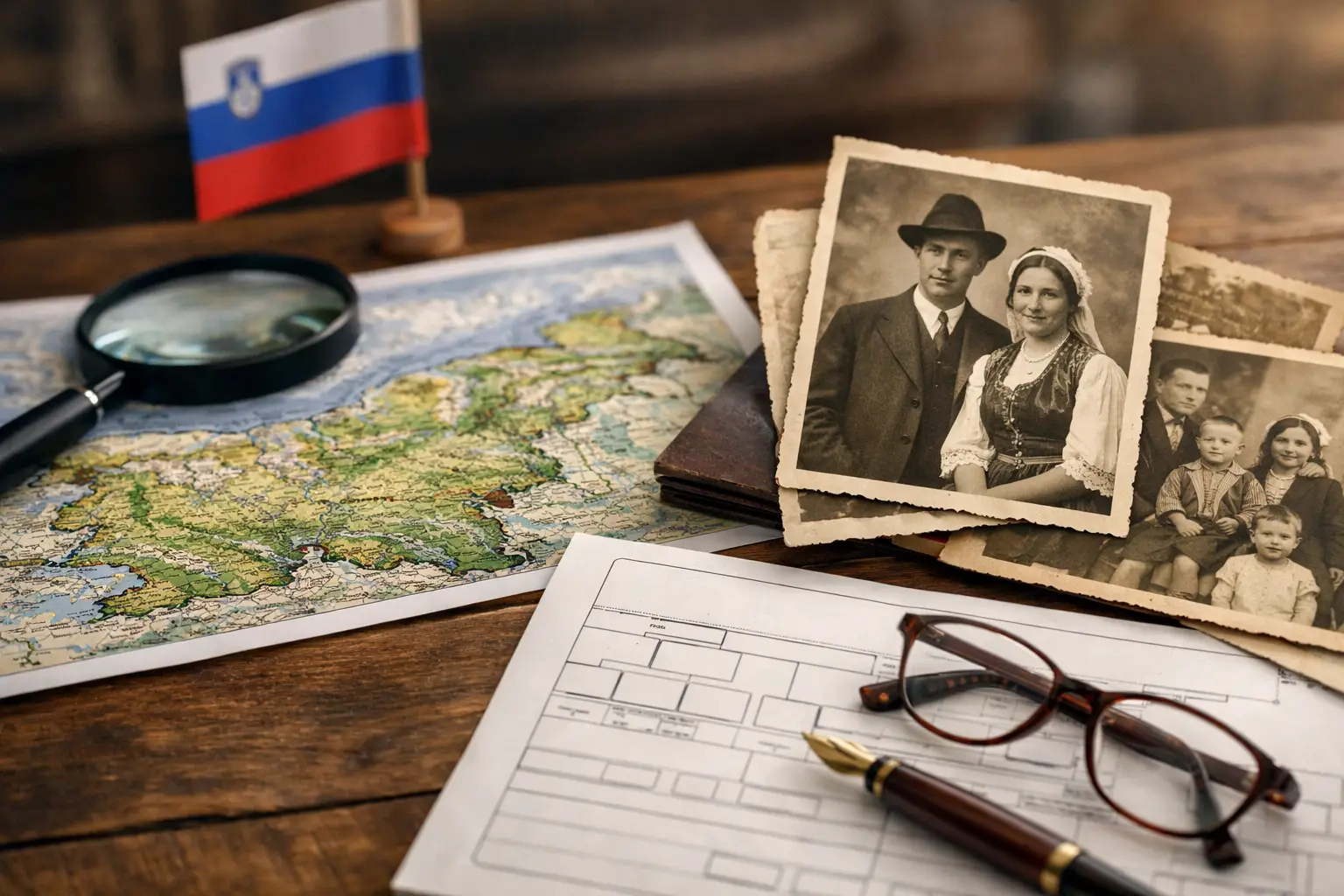
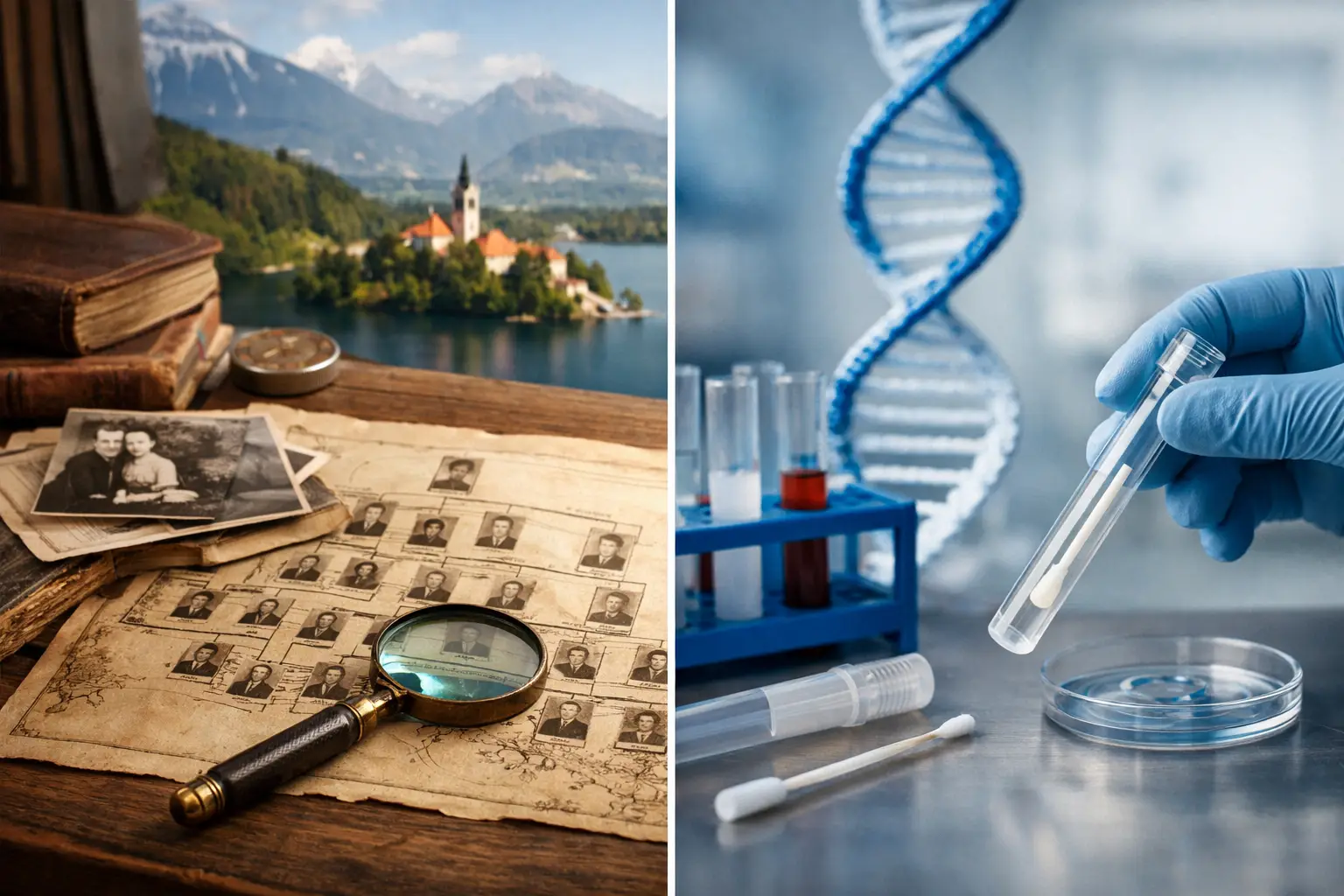
Traditional genealogy is built from evidence left behind in records. In a Slovenian context, that often means parish registers, civil records, old house numbers, military records, emigration documents, cemetery research, and local knowledge tied to a specific village or region. Genealogy asks: Who were your people? Where did they live? When did they marry, move, or leave? What names did they use before spelling changed abroad?
DNA testing asks a different set of questions. It compares your genetic data with other testers and population databases. It may suggest ethnic regions, identify living genetic cousins, or point to broad ancestral patterns. It is often strongest when you are trying to confirm biological relationships or discover family lines that were hidden, unknown, or separated by adoption or migration.
Both can matter. But they are not interchangeable, and that distinction is often missed.
Slovenian genealogy vs DNA testing: the core difference
If you are trying to find an ancestral village in Slovenia, documentary research is usually far more precise than DNA. A DNA result may tell you that you have roots somewhere in Central or Eastern Europe, or perhaps within a wider Balkan or Alpine regional pattern. That can be emotionally meaningful, but it rarely tells you whether your family came from Bela krajina, the Vipava Valley, Prekmurje, or a small hillside village near Celje.
Genealogy, by contrast, can often narrow your search from a family story to an exact place. A baptismal entry, marriage record, passenger list, or naturalization file may contain the village name you have been missing for decades. Once that place is identified, your family history starts to feel less abstract. It gains geography, language, church history, local custom, and real ground beneath it.
This is why DNA can feel exciting at first, while genealogy becomes meaningful over time. One offers clues. The other builds a life story.
Where DNA testing helps Slovenian descendants
DNA testing is not the lesser option. It is simply a different tool, and in some cases it is the one that opens the door.
If your paper trail is thin, DNA may help you identify cousin matches whose trees contain names or locations familiar to your family. If a grandfather used an Americanized surname, if an adoption interrupted the line, or if family silence left gaps no one could fill, DNA can create fresh leads. For some people, that first match is the first real confirmation that the family story was true.
DNA can also be useful as a reality check. Family traditions are often sincere but imperfect. A story that the family was “from Austria” may turn out to involve Slovene-speaking ancestors from territory that changed political identity over time. A claim of one surname line may connect to another through remarriage, informal name usage, or non-paternity events. DNA sometimes brings those hidden branches into view.
Still, it helps to keep expectations grounded. Ethnicity estimates are based on reference panels, algorithms, and changing databases. They can shift over time. They may reflect neighboring populations with long shared histories. Slovenia sits at a crossroads of cultural and historical influence, so neat modern labels do not always map cleanly onto older family movements.
Where traditional genealogy is stronger
When the goal is to reconnect with Slovenian roots in a concrete, place-based way, genealogy usually goes further. Records can reveal the church your ancestors attended, the hamlet they lived in, the names of parents and godparents, and even patterns of migration within Slovenia before emigration abroad.
That level of detail matters for heritage travel. A DNA test cannot walk you to a parish archive, explain why a family line appears under two spellings, or show how an old house number corresponds to a present-day home. It cannot tell you why one branch left in the 1890s while another stayed, or why your great-grandmother was married in one village but baptized in another.
Genealogical research can.
And for many descendants, that is the moment the journey changes. It is one thing to know your ancestors were Slovenian. It is another to stand in the village where they were born, hear the church bells they would have known, and understand your family not as a category, but as part of a place.
Why Slovenian research has its own challenges
Slovenian genealogy is richly rewarding, but it is not always simple. Historical records may appear in Slovene, German, Latin, or Italian depending on the time period and region. Borders shifted. Place names changed. Surnames were spelled differently by priests, clerks, and immigration officials. A village named in family memory may be recorded under an older form that is no longer used.
This is where many people hit a wall after a DNA test. They have a promising lead but no way to translate it into an exact location or family line. A cousin match with the surname Novak is not enough on its own. In Slovenia, as in many places, common surnames need context. You need dates, parishes, nearby settlements, occupations, witnesses, and family clusters.
That is why local knowledge matters so much. Research is not only about reading a record. It is about interpreting it within Slovenian geography, history, and naming patterns.
The best approach is often both, in the right order
For most families, the real question is not Slovenian genealogy vs DNA testing as if you must choose one forever. The better question is which tool should lead.
If you already have family documents, names, immigration clues, or old photographs, start with genealogy. Build the paper trail first. That gives structure to your search and helps you use DNA more intelligently later.
If your family history contains major unknowns, DNA may be a helpful starting point. But once a clue appears, genealogy is usually what turns that clue into proof. A cousin match can suggest a connection. Records are what establish it.
Used together, these methods can be powerful. DNA may point toward a branch you did not know existed. Genealogy can then trace that branch back to a parish, a household, and a village in Slovenia. That combination often brings the clearest results.
From records to roots to return
For descendants living in the United States, Canada, Australia, or Argentina, this work is rarely only academic. It is personal. It often begins with one question asked too late, after grandparents are gone, after family papers were lost, after the language faded from the home. The search becomes a way of recovering what almost disappeared.
That is why place matters so deeply. Once a village of origin is found, the story changes from research into reunion. The landscape, the church, the cemetery, the old roads, even the rhythm of daily life can restore something that records alone cannot. Family history stops feeling distant. It becomes lived experience.
This is the space where Ancestry Slovenia serves families with care – not just identifying names in archives, but helping descendants reconnect with the exact places their ancestors once called home.
DNA can support that journey. Genealogy usually gives it shape. And when the two are handled thoughtfully, they can bring you closer not only to facts, but to belonging.
If you are deciding where to begin, start with the question behind the question. If you want a percentage, DNA may satisfy your curiosity. If you want to know where your people lived, worshipped, married, and left their footprints, genealogy is what leads you home.