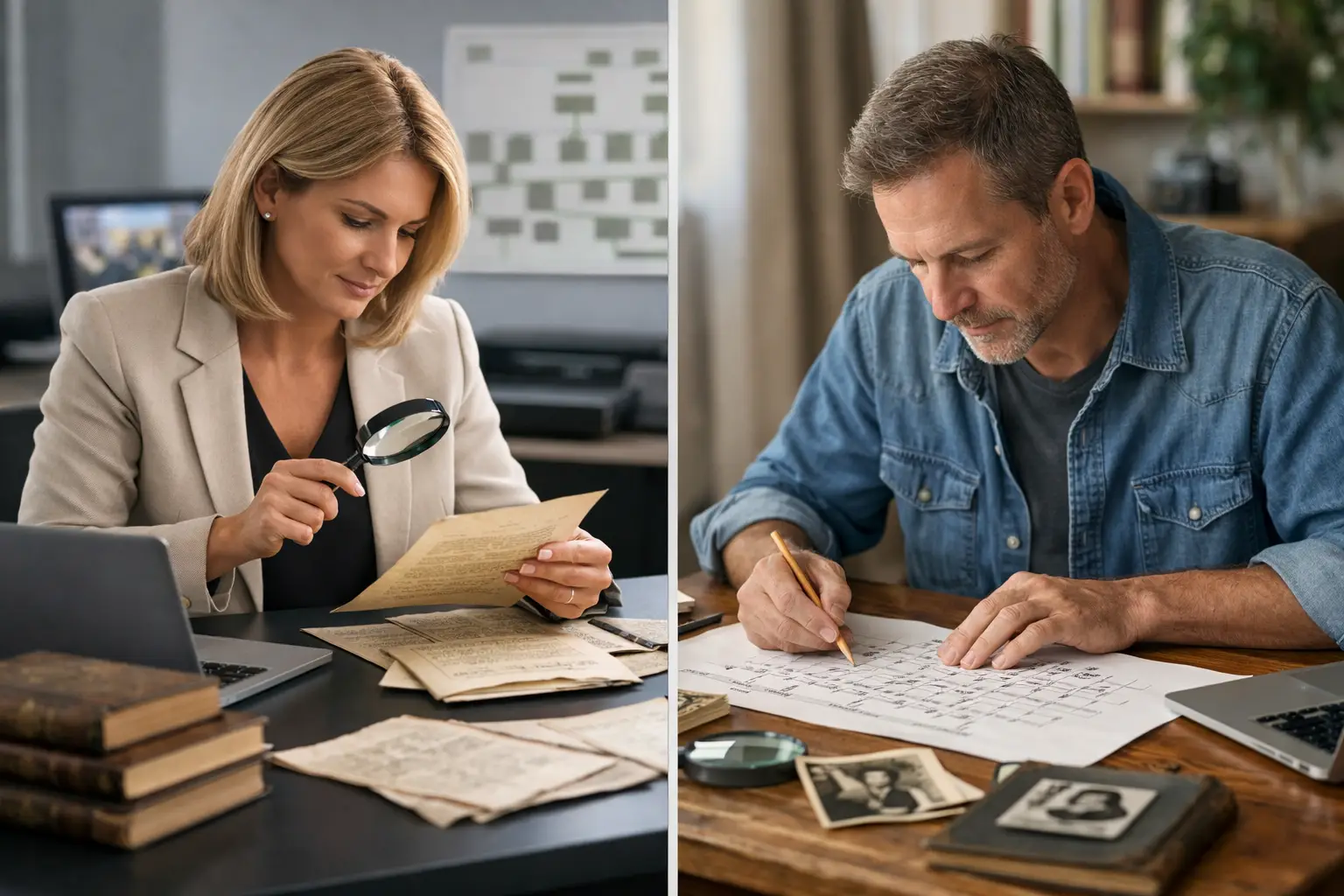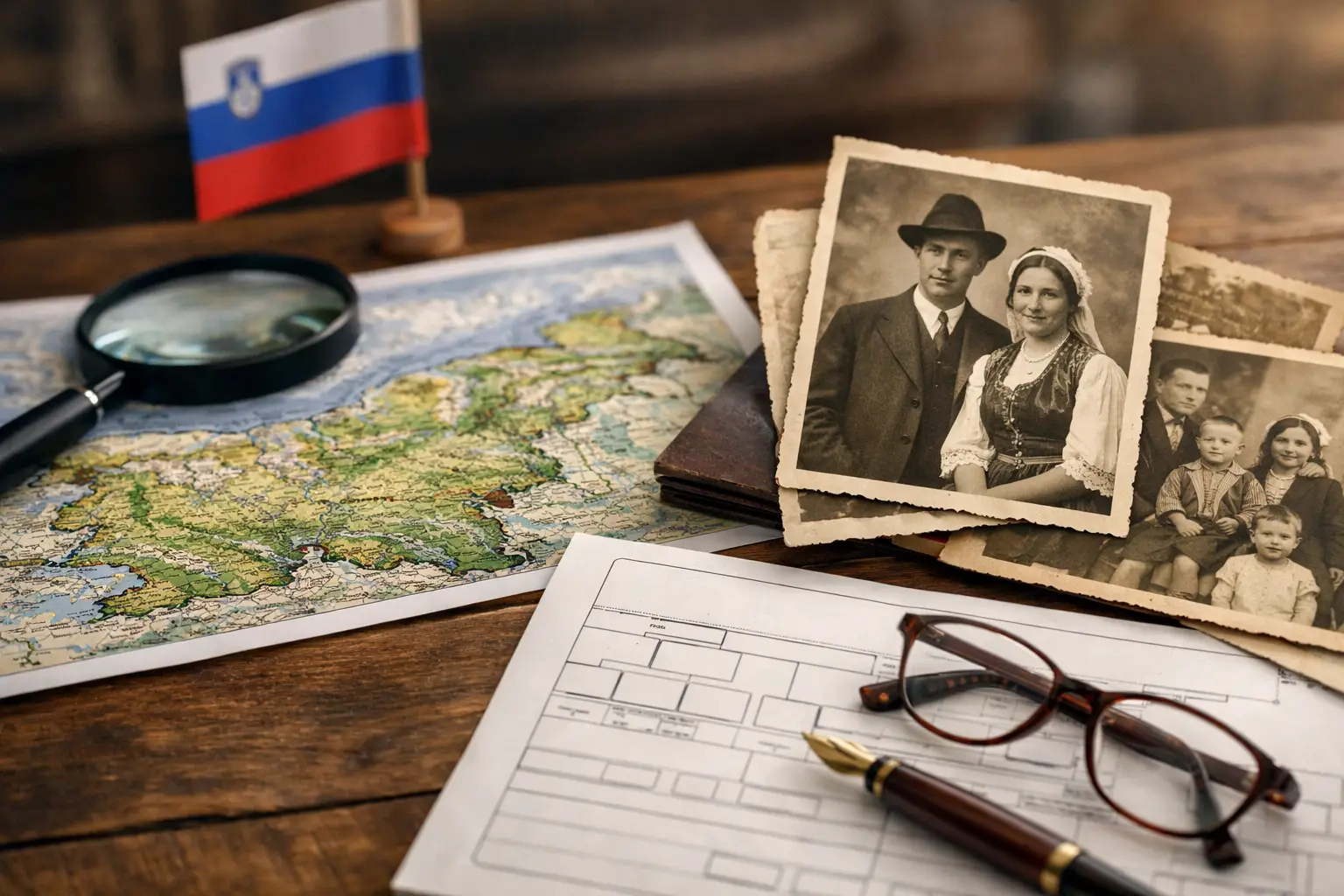
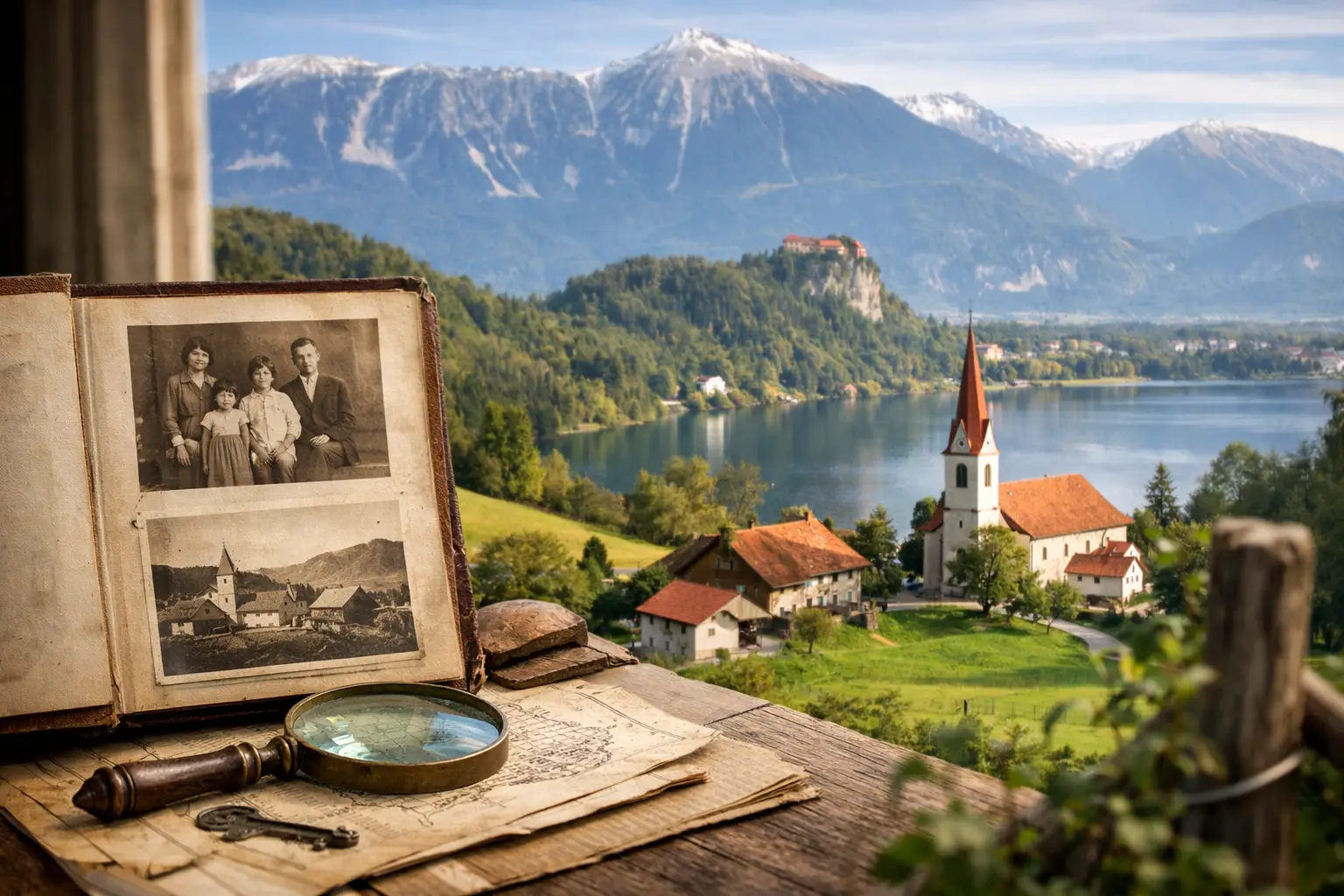

If you have ever looked at an old family photograph, a baptism record, or a ship manifest and asked, where did my Slovenian family live, you are asking the question that changes everything. A surname alone rarely tells the full story. But a village, a parish, a house number, or even a local dialect can turn family history from a mystery into a real place you can stand in.
For many descendants of Slovenians abroad, this search begins with fragments. A grandparent said “near Ljubljana.” An uncle mentioned Carniola. A naturalization paper listed Austria, Yugoslavia, or only a vague hometown spelling that no longer appears on modern maps. That does not mean the trail is lost. It means you need to understand how Slovenian families were recorded, how places were named, and how borders changed around them.
Where did my Slovenian family live? Start with the smallest clue
The most useful answer is rarely “Slovenia.” It is a specific village, town, parish, or hamlet. Before you look at archives, begin with what your family already carries.
Ask relatives for original documents, not just stories about them. Birth and death certificates, prayer cards, old letters, passports, military papers, and immigration records may contain a village name that later generations overlooked. Slovenian family memory also often preserves house names, nicknames, or nearby landmarks. Someone may remember that the family was “from the hills above Idrija” or “from a village outside Novo Mesto.” Even partial memories matter.
Pay close attention to language shifts. A place might appear in German, Italian, Hungarian, or an older Slovene form depending on the year and the record creator. The same village may be spelled three different ways across one family line. That is normal, not a sign you are on the wrong path.
Why old records can make your family’s home seem harder to find
Slovenia’s history is part of the puzzle. Your ancestors may not have identified their birthplace using the country name Slovenia at all. Depending on when they left, they may have lived under the Habsburg monarchy, Austria-Hungary, the Kingdom of Yugoslavia, socialist Yugoslavia, Italy, or in border areas where official place names shifted with politics.
That is why a US census saying “Austria” does not mean your family was ethnically Austrian. A passenger list saying “Jugoslavia” does not mean the village is impossible to identify. It simply reflects the state in control at the time. For Slovenian descendants, the key is often moving past the country label and locating the parish or settlement underneath it.
Regional names can also confuse the search. Older records may refer to Carniola, Styria, Carinthia, the Littoral, Prekmurje, or Lower Carniola rather than modern municipalities. These historical regions still matter because church and civil records were often organized through them.
The records that most often reveal where your Slovenian family lived
When families emigrated to the United States, Canada, Argentina, or Australia, they left a paper trail. Not every document is precise, but several record types are especially valuable.
Passenger manifests may list a last residence or the name of a nearest relative back home. Naturalization files can include a place of birth, especially in later applications. Death certificates sometimes name a village if the informant knew it, though they can also contain errors. Church records in immigrant communities are another strong source because priests often recorded exact birthplaces for marriages, baptisms, or funerals.
If you already have a town name, parish registers in Slovenia can take you further. Baptism, marriage, and burial records often connect generations within one place. Land records, military files, and cadastral maps may narrow the location down to a specific house or property. In some parts of Slovenia, house numbers remained more stable than street names, which makes them surprisingly powerful for ancestry research.
One important trade-off is this: civil records may feel easier to read, but parish records often go deeper. On the other hand, parish records require care with language, older handwriting, and shifting jurisdiction. The best path depends on the time period and region.
How surnames help – and where they can mislead
Many people begin by searching their last name and hoping it points to one village. Sometimes that works. Certain surnames are strongly associated with particular regions. But Slovenia is small, and surnames can repeat across multiple areas. Migration within the country also moved families from villages to mining towns, industrial centers, and cities.
Women’s surnames may appear in altered forms in older records, and immigrant officials often simplified or misspelled names after arrival abroad. A family called Kovačič might appear as Kovacic, Kovachich, or something even further removed from the original. The same goes for first names. Janez became John. Marija became Mary. Anton may appear as Antonio or Anthony depending on the country and record.
So yes, a surname is a clue. It is just not enough on its own. The strongest identifications usually come from combining a surname with a parish, sponsor name, house number, or migration chain involving relatives from the same place.
Where did my Slovenian family live if I only know a region?
This is more common than people think. Many descendants know only that the family came from “near Maribor” or “from the old Austrian part.” That is still workable.
Start by defining whether the reference points to a city, a wider district, or a historical region. From there, study cluster migration. Slovenians often emigrated with siblings, cousins, neighbors, or others from the same parish. If your great-grandfather’s hometown is vague but his wedding witnesses, boarding companions, or godparents in America came from one specific village, that village may be part of your answer too.
This is where genealogy becomes more than document collection. It becomes local context. Mountain villages, vineyard districts, border communities, and industrial settlements each left different records and migration patterns. A family from the Soča Valley has a different historical path than one from Bela Krajina or Prekmurje. The more precise the local setting, the more meaningful the story becomes.
What it feels like when the village finally becomes real
Finding the place is not just a research win. It often changes how a family understands itself.
A village name on paper can suddenly explain why your grandparents cooked certain foods, kept certain feast days, or spoke in a particular rhythm. A church register can connect names that were said around your childhood table. A cemetery can confirm that the family story was true after all. And standing in the landscape your ancestors knew can bring a kind of clarity that documents alone cannot offer.
This is why heritage travel matters so much in Slovenian family history. Once the village is identified, the journey shifts from abstract ancestry to lived connection. You are no longer asking only who your ancestors were. You are asking how they lived, what surrounded them, and what part of that world still remains.
For some families, the original house is gone. For others, the church still stands, the lane still follows the same curve, and the family name is still known locally. Sometimes the result is deeply moving. Sometimes it is quieter than expected. Both experiences are real. What matters is that the place gives your history shape.
When to ask for help
If your records conflict, the village name seems unrecognizable, or the family line crosses older borders, outside help can save months of frustration. Slovenian research often requires interpreting parish structure, regional naming, old scripts, and local geography together. A wrong assumption early on can send you to the wrong region entirely.
That is especially true when your goal is not just building a tree but returning home in a meaningful way. A research-guided approach can help connect archives, ancestral villages, cemeteries, churches, and family memory into one coherent journey. For many descendants, that is the moment the search becomes personal in a new way.
At Ancestry Slovenia, that bridge between records and place is at the heart of the experience. But whether you begin on your own or with guidance, the most important thing is to begin.
If you are still asking where did my Slovenian family live, do not wait for a perfect box of records to appear. Start with the fragments, follow the place names carefully, and trust that even a small clue can lead you back to the village where your family story first took root.