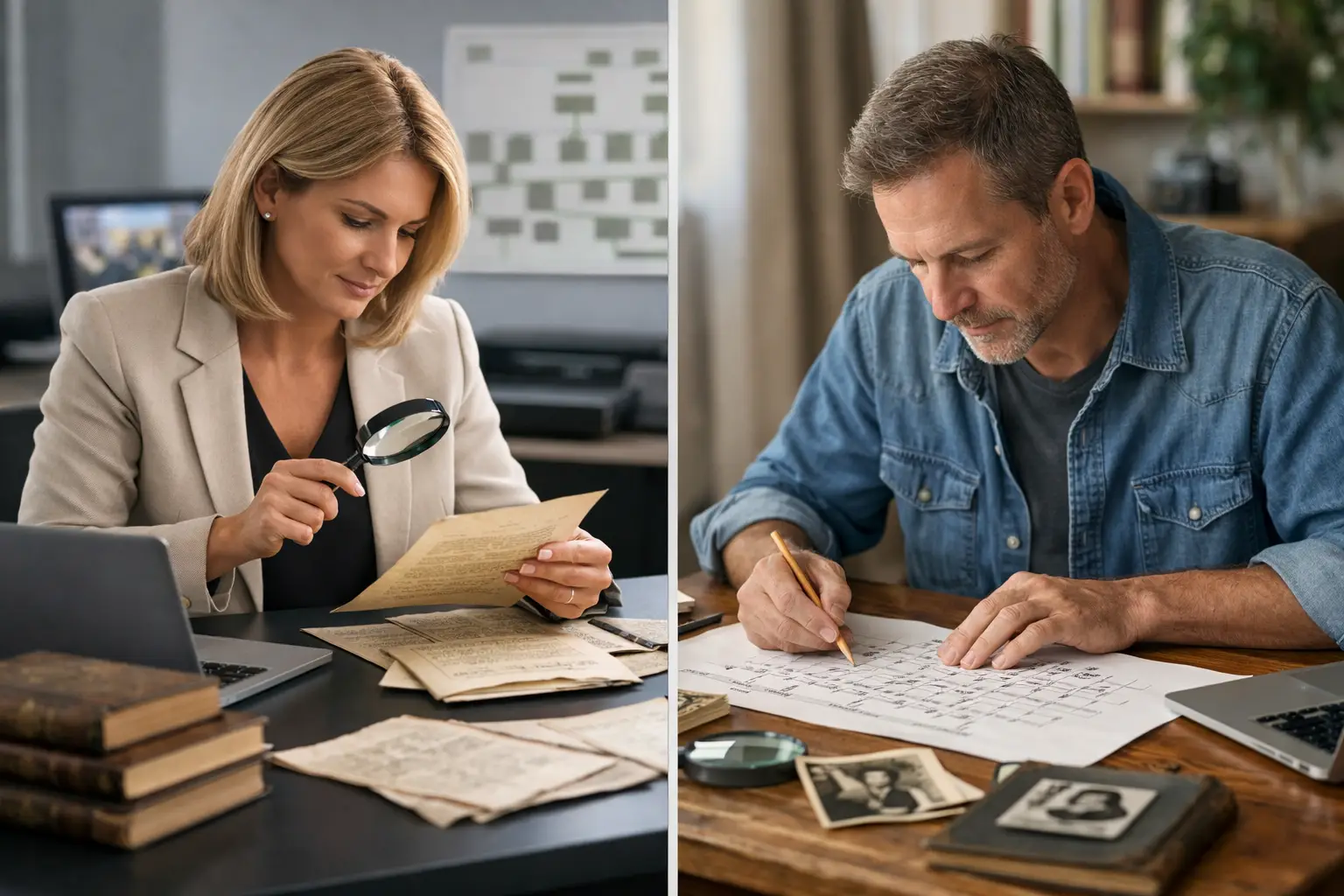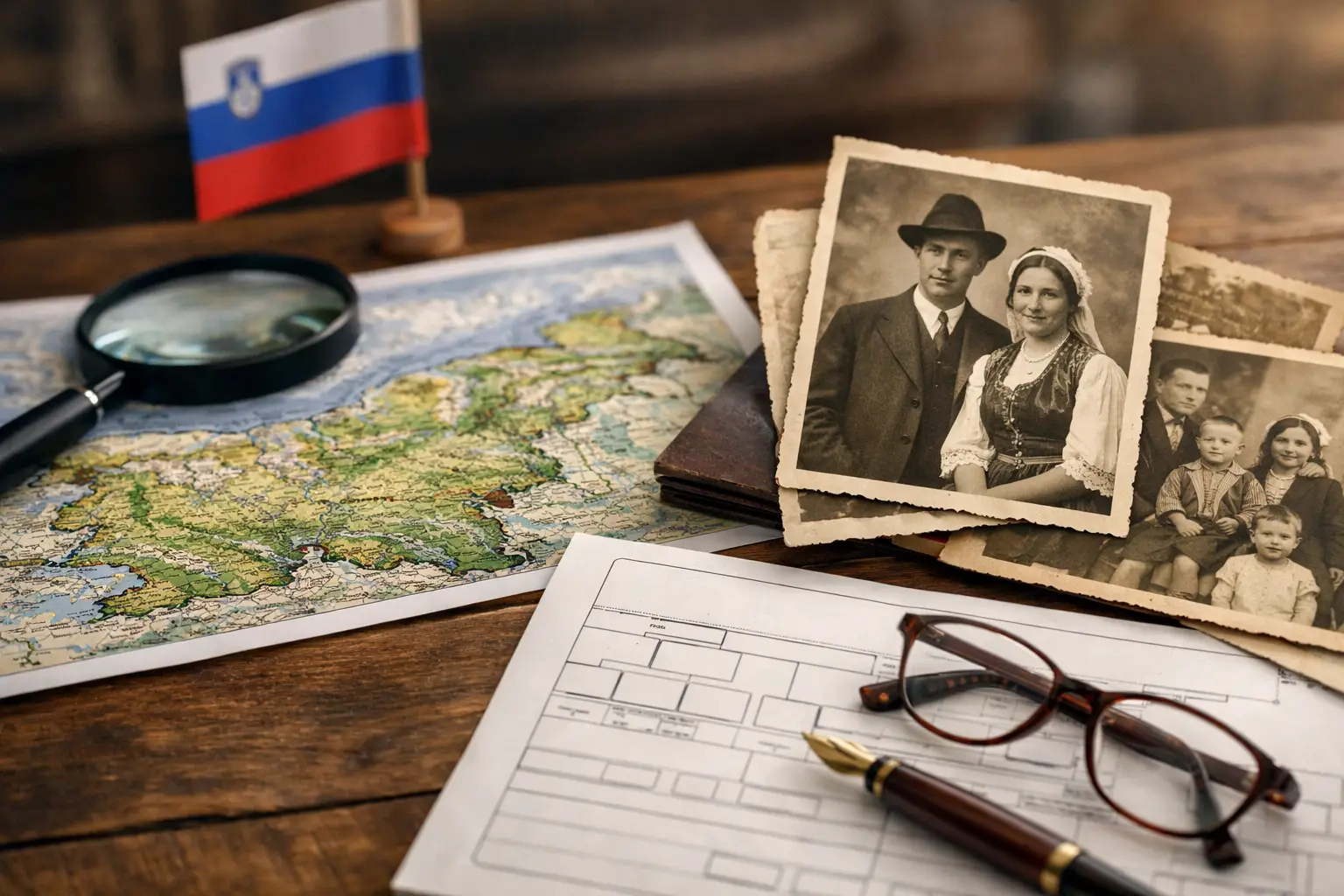

A passenger list says one thing. A baptism record says another. A gravestone uses a third spelling entirely. For many families tracing roots back to Slovenia, old village names Slovenia researchers encounter are the very reason a promising search stalls just before the answer appears.
That confusion is not unusual, and it does not mean your family story has hit a dead end. It usually means the place name changed over time, was recorded in a different language, or was written the way an official heard it rather than the way your ancestors said it. When you are trying to return to an ancestral village, these details matter deeply. A single old place name can be the key that turns a family memory into a real location on the map.
Why old village names in Slovenia can be hard to recognize
Slovenia’s history helps explain the problem. The territory that is now Slovenia was shaped by shifting borders, local dialects, and different governing powers. Depending on the time period, a village might appear in Slovenian, German, Italian, or Hungarian form. In some records, the same place may even appear in Latinized church entries.
For descendants abroad, especially those working from US immigration records, naturalization papers, or handwritten family notes, this creates a very human kind of confusion. Your grandmother may have remembered a name as it sounded in her home, while an American clerk wrote something that only roughly matched the pronunciation. Later, a researcher compares that spelling to a modern map and finds nothing.
This is where patience matters. Old village names are not just old labels. They reflect the political and linguistic world your ancestors lived in. If a town seems to have vanished, it often still exists under a modern Slovenian name or as part of a municipality that changed over time.
What changed village names in Slovenia?
Several forces shaped place names across Slovenian lands. Some names shifted because of imperial administration, especially under the Habsburg monarchy, when German versions were commonly used in official records. In western regions, Italian forms may appear. In Prekmurje and nearby areas, Hungarian names can enter the record. After wars, border changes, and the formation of new states, place names were standardized again.
There is also the local factor. A village may have had a formal name, a parish name, and a house name used by neighbors. Families often remembered the version they lived with, not the one a later government map preserved. This matters because many descendants begin with oral history, and oral history is valuable, but it rarely arrives in perfect archival form.
Another complication is that some records name the parish rather than the village itself. Others name a market town, district, or larger administrative unit. If your family said they came from one place, the document may point to the church where they were baptized or the district office where they registered, not the exact hamlet where they lived.
How to work backward from an old village name Slovenia record
The best approach is to treat the place name as a clue, not a final answer. Start by collecting every version you have seen, even if some look clearly wrong. A ship manifest, death certificate, marriage record, military paper, family letter, and prayer card may each preserve a different piece of the puzzle.
Then compare the spellings side by side. Look for repeated sounds rather than exact letters. Slovenian names were often altered by English-speaking clerks, and German spellings can look especially different from modern Slovenian ones. A name that appears inconsistent on paper may sound surprisingly close when spoken aloud.
Dates matter too. If the record is from the late 1800s, you may be dealing with Austro-Hungarian naming conventions. If it comes from the interwar period, the same village may appear under a different state system. Without the historical timeframe, even a correct spelling can send you to the wrong conclusion.
It also helps to identify nearby landmarks. If a document mentions a parish, county, district, or neighboring town, that context can narrow the search faster than the village name alone. In genealogy, location is often solved by clusters, not by a single word.
Pay attention to parish names
For Slovenian family history, parish records are often central. Baptisms, marriages, and burials were usually recorded through the local parish, which means the name on the record may not be the exact village of residence. Many descendants search only for a village on a modern map and miss the fact that the ancestral record was organized under a church jurisdiction.
If your family came from a very small settlement, the parish may be the more visible historical reference point. In practice, this means a record can be accurate even when the village seems absent. The answer may be waiting in the parish structure around it.
House names and hamlets can matter more than you expect
In rural Slovenia, house names carried strong local meaning. Families were sometimes known by the name of the farm or household rather than only by surname. A relative may have remembered that name for generations, especially after emigration. To a descendant in the US, it may sound like a village. In reality, it could be a farm name, a hamlet, or a local nickname.
This is one reason why heritage travel becomes so meaningful after careful research. Once a family reaches the right region, local knowledge often brings the record to life. What looked obscure in an archive can suddenly make sense when standing in the landscape where those names were spoken every day.
Common mistakes when searching old village names Slovenia ancestors used
One common mistake is assuming the modern country name appeared in older records. Many ancestors who left before 1918 would not have listed “Slovenia” as a country of origin because it was part of a larger empire. Another is treating phonetic spellings as random errors. They are often useful clues to accent and pronunciation.
A third mistake is choosing the first place that looks similar on a map. Slovenia has many repeating name patterns, and there can be multiple villages with related or nearly identical names. Without checking parish, region, and historical administration, it is easy to connect your family to the wrong place.
There is also the issue of translation. Some old records use exonyms, meaning names used by another language community rather than local residents. A place may look unfamiliar simply because it is the German or Italian version of a Slovenian village you would instantly recognize today.
Why this matters for heritage travel, not just research
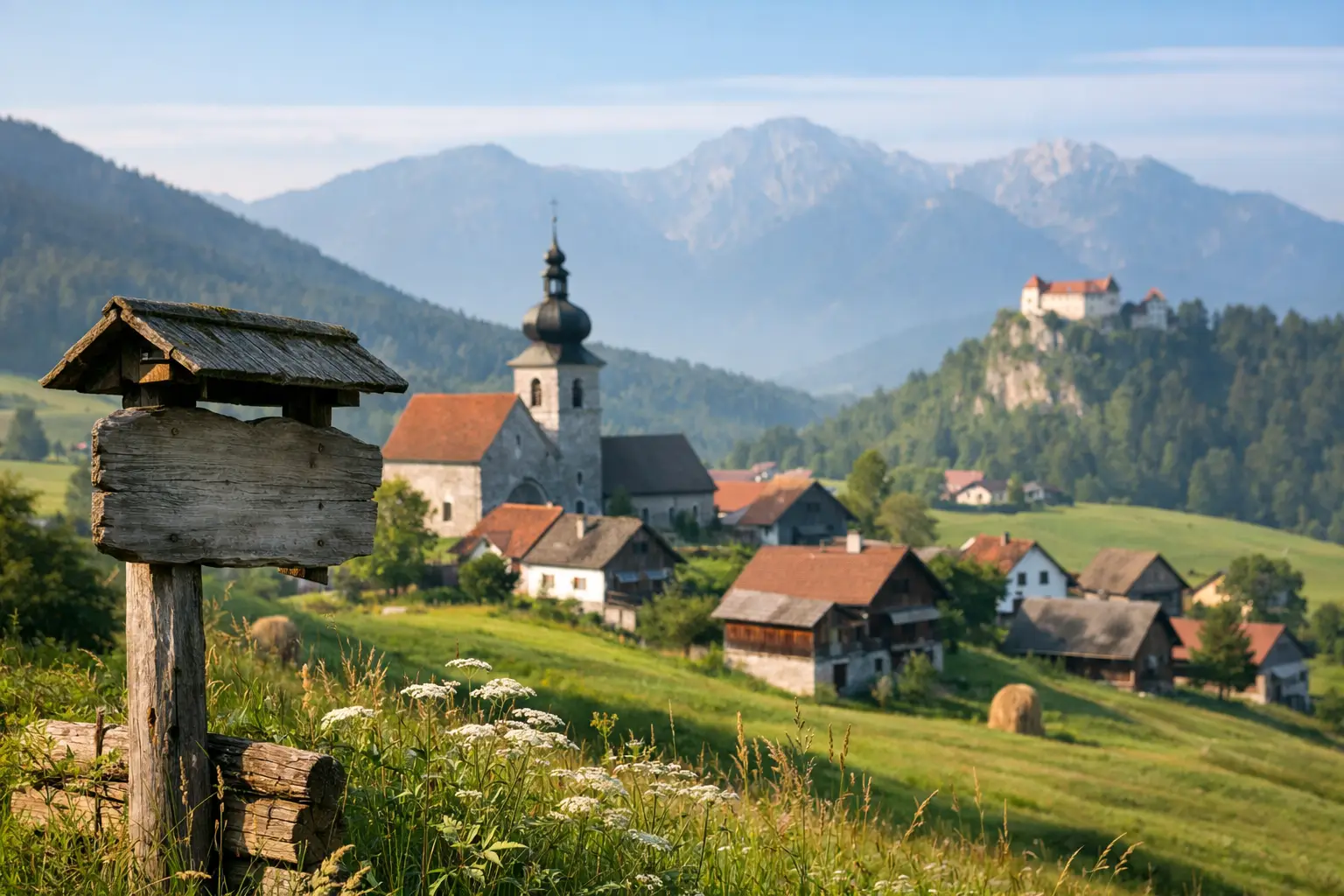
For many descendants, identifying the right village is not only a genealogical win. It is the emotional center of the journey. Knowing where a great-grandparent was born changes the experience of travel completely. Instead of seeing Slovenia as a beautiful country in general, you begin to encounter your family’s Slovenia – the church they may have entered, the hillside they saw each morning, the cemetery where earlier generations may still rest.
That is why careful place-name research matters so much before a heritage trip. Visiting the wrong village can still be pleasant, but visiting the right one can feel like returning home to a story that has waited decades, sometimes generations, to be heard clearly.
At Ancestry Slovenia, this is often where research and travel come together most powerfully. A confusing old village name on paper becomes a real road, a real parish, a real family place. What was once uncertain becomes something you can stand inside.
When to ask for expert help
Some cases can be solved with persistence and a handful of records. Others need historical knowledge, regional familiarity, and an understanding of older administrative systems. If your family line crosses language borders, includes heavily altered spellings, or points to tiny settlements, expert guidance can save months of frustration.
This is especially true when the goal is not just to build a tree, but to plan a meaningful visit. Research for travel needs a higher level of confidence. You want to know that the village on your itinerary is truly connected to your family and not simply the closest guess.
The good news is that uncertain names do not mean lost history. In Slovenian genealogy, they often mean the story is still nearby, waiting behind one old spelling, one parish clue, or one remembered pronunciation. Sometimes the path back begins not with a perfect record, but with a family name spoken imperfectly and carried faithfully across generations.