

A family name can live in your mind for decades before it becomes a real place. Then one day, you stand in a village your grandparents once spoke about, hear the church bells they likely heard, and realize why heritage travel matters in a way no document ever could. For many people of Slovenian descent, this kind of journey is not just travel. It is a return to something personal, unfinished, and deeply human.
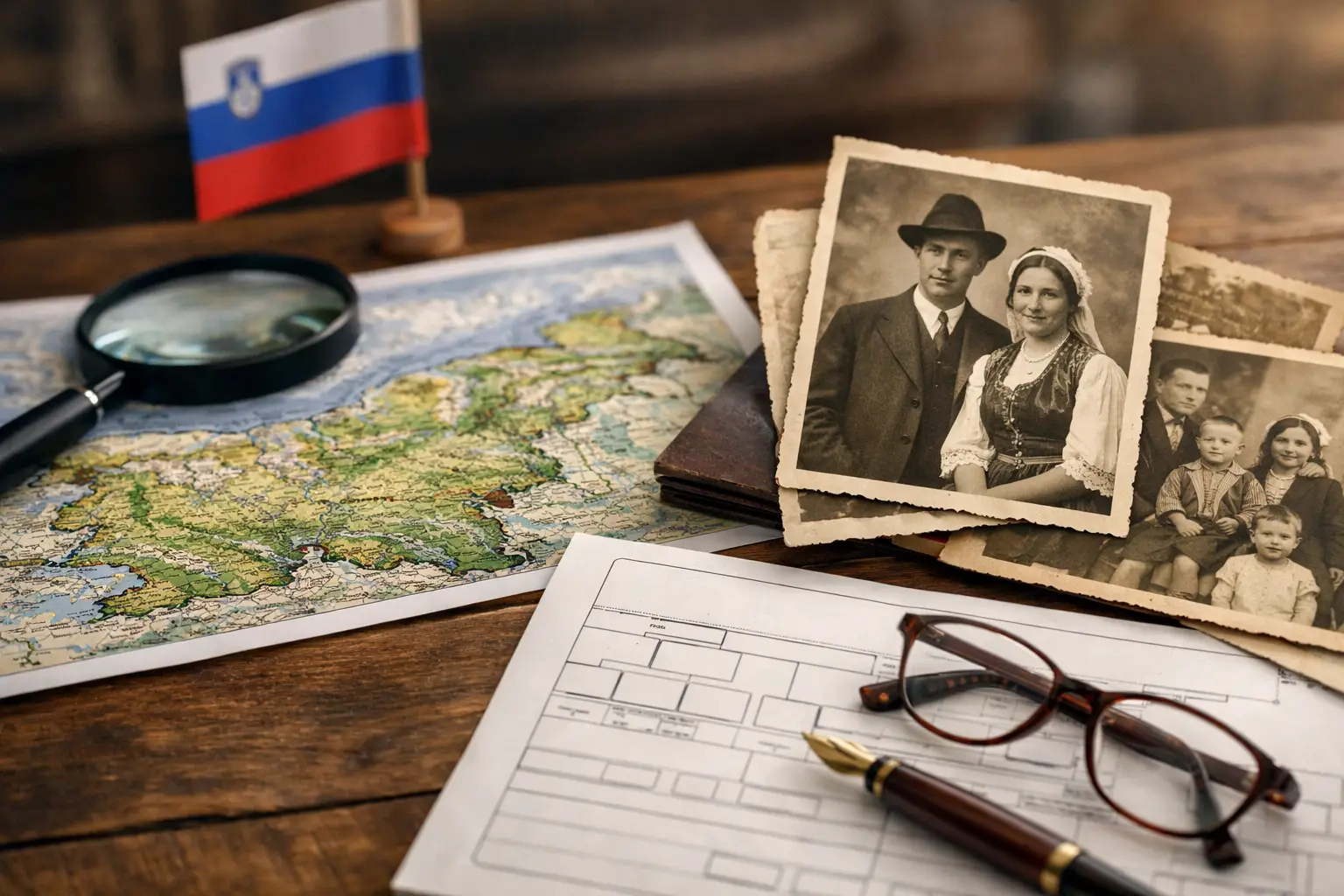
Heritage travel begins with questions. Who were the people in the faded photograph? Why did they leave? What did they carry with them besides a surname, a language, or a recipe remembered only in fragments? Ordinary tourism may answer where to go and what to see. Heritage travel asks different questions – where do I come from, and what does that mean now?
Why heritage travel matters beyond sightseeing
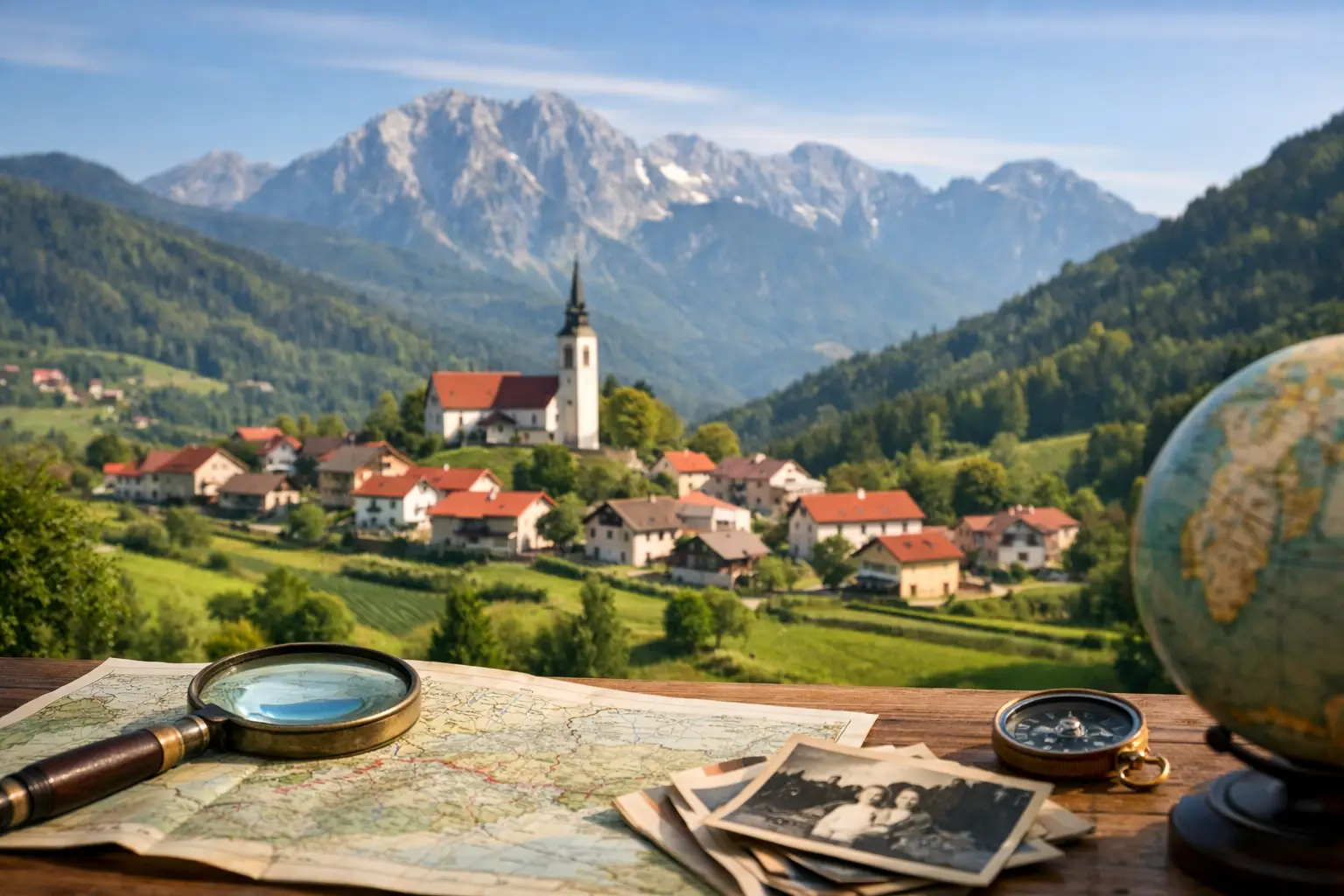
There is a difference between visiting a country and encountering your own family story within it. Slovenia is full of beautiful places, but for descendants abroad, the most meaningful destination is often not the capital city or a famous landmark. It is a hillside village, a parish archive, a cemetery, or the road where an ancestor once walked to school, to work, or to church.
That difference matters because identity is rarely built from facts alone. Genealogy records can tell you names, dates, marriages, and migration patterns. They are essential, and they often provide the first real proof of family connections. But records have limits. They do not tell you how close the mountains feel, how small a village lane is, or how much courage it must have taken to leave it behind.
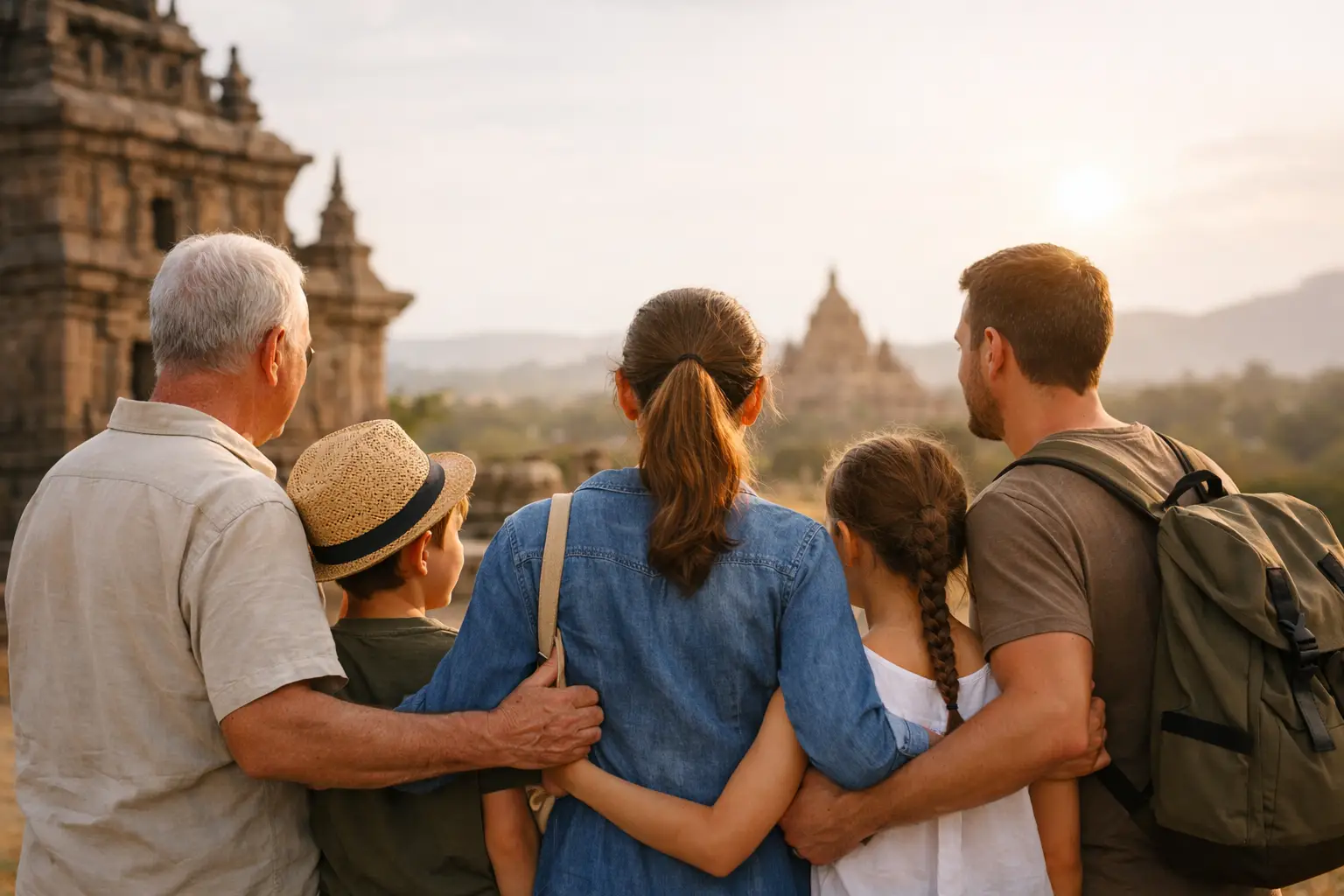
When people visit ancestral places, history becomes physical. The distance between past and present narrows. A great-grandfather stops being just a name on a passenger list and starts to feel like a person who belonged somewhere specific.
Heritage travel turns family history into lived experience
For many descendants, family history starts at the kitchen table. Someone remembers a town name that may be misspelled. Someone else recalls that a relative came from “near Ljubljana” or “from a village with a church on a hill.” These fragments can feel frustratingly incomplete. Yet they are often the beginning of something meaningful.
What changes everything is moving from family lore to place-based experience. Seeing an original parish register, finding a house number in an old record, or locating the village of origin creates a kind of emotional clarity. You are no longer imagining where your family came from. You are there.
This is especially powerful in Slovenia, where local identity matters. Villages, parishes, and regions often hold the key to understanding how your ancestors lived. Two families with the same surname may come from entirely different places. A single village can explain migration routes, occupations, faith traditions, and even naming patterns that have been carried across generations.
That is why research-guided travel is so valuable. Without careful preparation, a heritage trip can become vague and disappointing. With the right groundwork, it becomes personal and precise.
Why heritage travel matters for identity and belonging
Many people in the Slovenian diaspora grow up with pieces of heritage rather than the whole picture. Maybe there was a family recipe, a holiday tradition, a prayer in Slovenian, or stories about “the old country.” Those memories matter, but they can also leave people feeling slightly outside their own story.
Heritage travel helps bridge that gap. It offers a way to connect inherited identity with direct experience. That connection can be emotional, but it can also be steadying. It gives context to the values many immigrant families passed down – thrift, faith, hard work, devotion to family, and attachment to home.
For some travelers, the experience brings pride. For others, it brings grief, especially if they begin to understand what migration cost their ancestors. Sometimes it brings both at once. That complexity is part of what makes the journey worthwhile. Not every moment is neat or sentimental. Some villages have changed. Some family homes are gone. Some records cannot be found. Heritage travel still matters because it allows people to meet the truth of their story, not just the polished version.
The emotional value of returning home to a place you never lived
One of the most surprising parts of ancestry travel is how familiar an unfamiliar place can feel. Even when you were born thousands of miles away, there can be a sense of recognition in the landscape, the church architecture, the food, or the rhythm of village life.
That feeling does not have to be mystical to be real. It often comes from finally seeing the environment that shaped your family before they emigrated. If your grandparents spoke about forests, vineyards, alpine valleys, or small farming communities, those descriptions gain weight when you see them with your own eyes.
People often describe this as a kind of homecoming. Not because they are pretending the past can be restored, but because they are honoring a bond that never fully disappeared. In that moment, heritage is no longer abstract. It becomes relationship.
Research makes heritage travel more meaningful
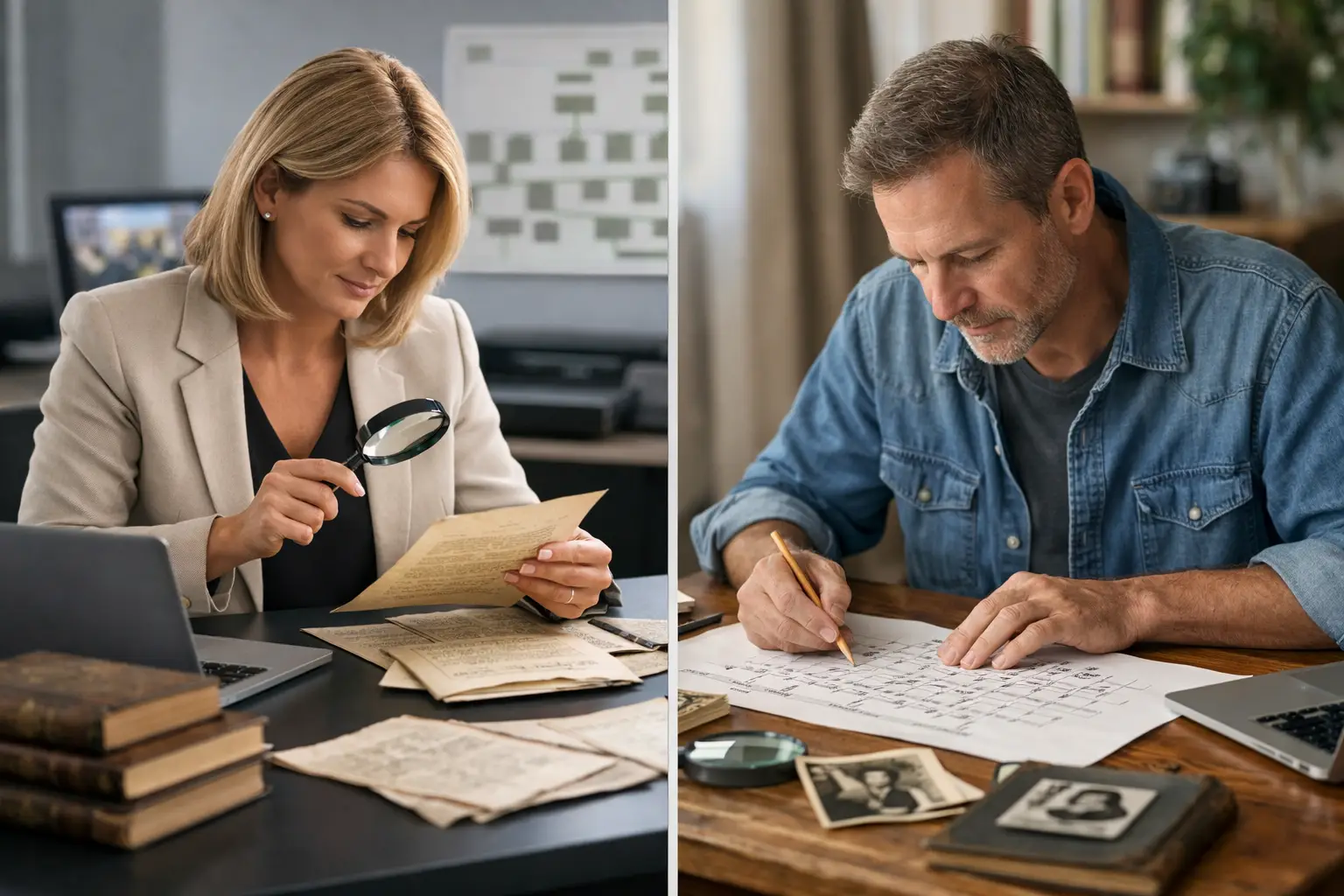
A heritage trip is strongest when it is guided by evidence. That may include civil records, parish books, immigration documents, military records, maps, family letters, and cemetery research. Each source helps narrow the search and shape the travel experience around real family connections.
This is where many travelers hit a wall on their own. Surnames change spelling. Old records use historic place names. Borders shifted. Villages may be small, and local details matter more than broad assumptions. What seems like a simple search can quickly become complicated.
Thoughtful planning helps avoid disappointment. If you know the exact parish where an ancestor was baptized or married, your visit carries a different kind of meaning. If you can stand in the cemetery where relatives are buried or visit the village where a family line lived for generations, the journey becomes anchored in truth.
That is also why a specialized, Slovenia-focused approach matters. General travel planning may show you where to stay. Genealogy research may give you names. Bringing those two together is what turns a trip into a personal return.
Heritage travel is also a gift to future generations
Many travelers begin this journey for themselves, but they rarely do it only for themselves. They go because they want to preserve something before it is lost. A parent passes away. A grandparent’s stories begin to fade. A box of old papers needs interpretation. The urge to act becomes stronger.
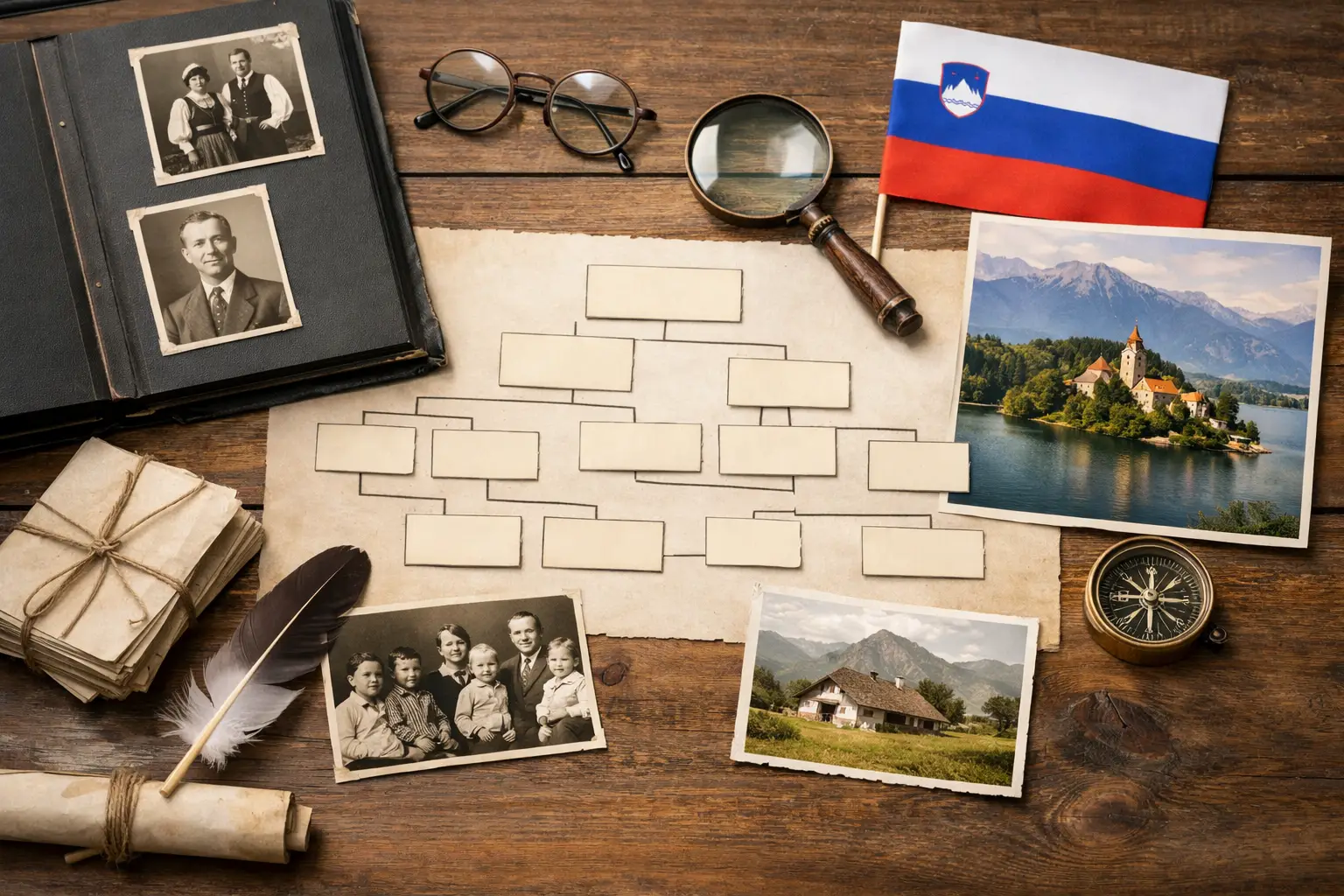
When you make the trip, gather records, photograph ancestral places, and document what you learn, you create a bridge for children and grandchildren. You give the next generation more than a family tree. You give them a story with geography, texture, and memory.
This matters even if younger relatives are not interested right now. Interest often comes later. What they may need one day is not a perfect archive, but a faithful record of where the family came from and how that history was remembered.
Heritage travel is not only for expert genealogists
Some people hesitate because they think they need years of research before they can plan a meaningful trip. Others assume they know too little to begin. In truth, both beginners and experienced family historians can benefit.
If you are just starting, even a few clues – a surname, an approximate town, a marriage record, a naturalization file, or a family story – can open the door. If you already have documents, the next step may be interpreting them correctly and turning them into a practical travel plan.
It depends on the quality of the information, of course. Not every case leads immediately to an exact village. Some require more archival work. Some family stories turn out to be partly wrong. That can feel discouraging, but it is often part of the process. The goal is not to force certainty where none exists. It is to get as close to the truth as the evidence allows and build the trip from there.
For families seeking that kind of personal return, Ancestry Slovenia helps connect documentary research with time on the ground, so the journey feels both emotionally meaningful and carefully rooted in fact.
A heritage journey does not ask you to become someone else. It simply gives you the chance to stand where your family’s story began, see it more clearly, and carry it forward with greater care.