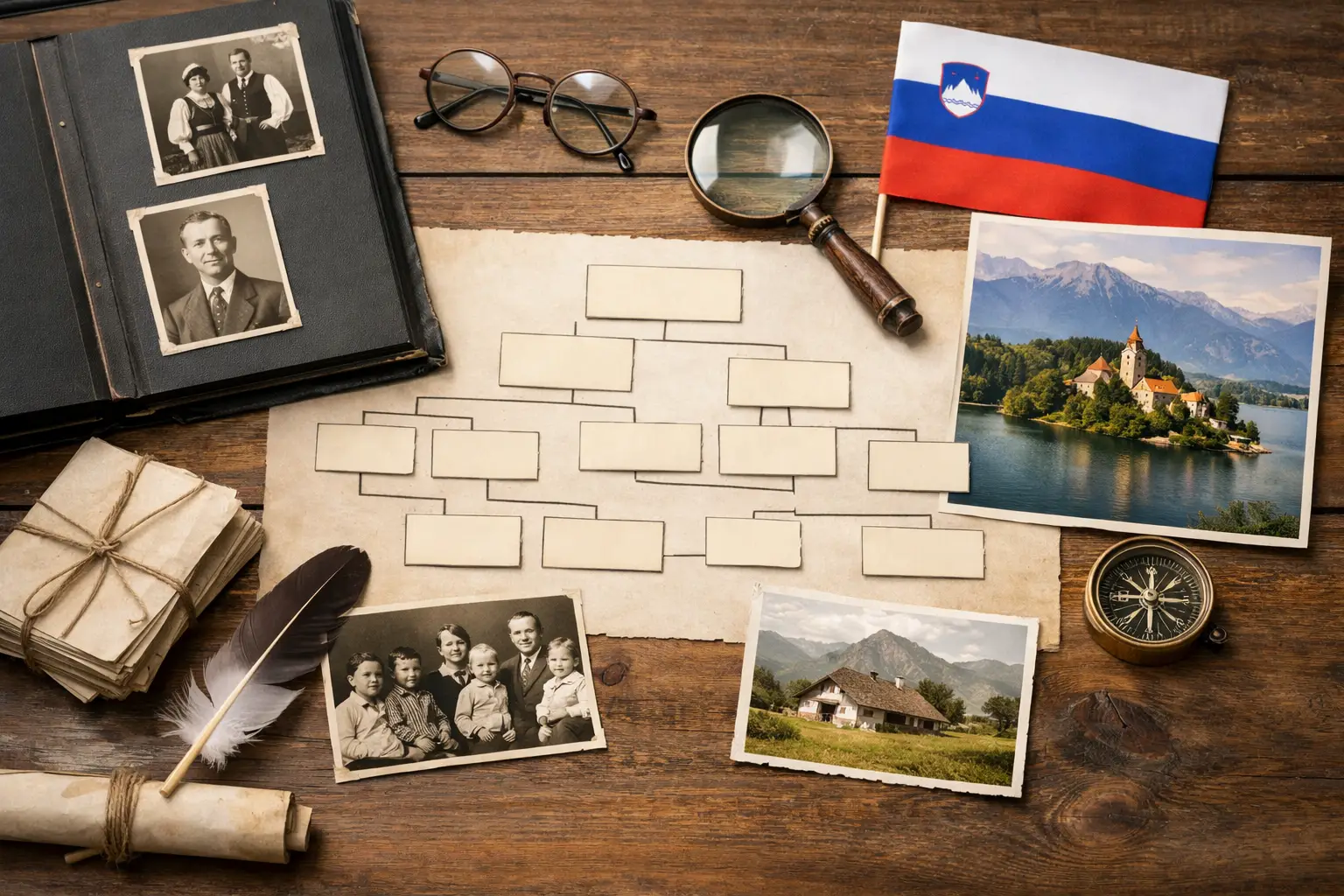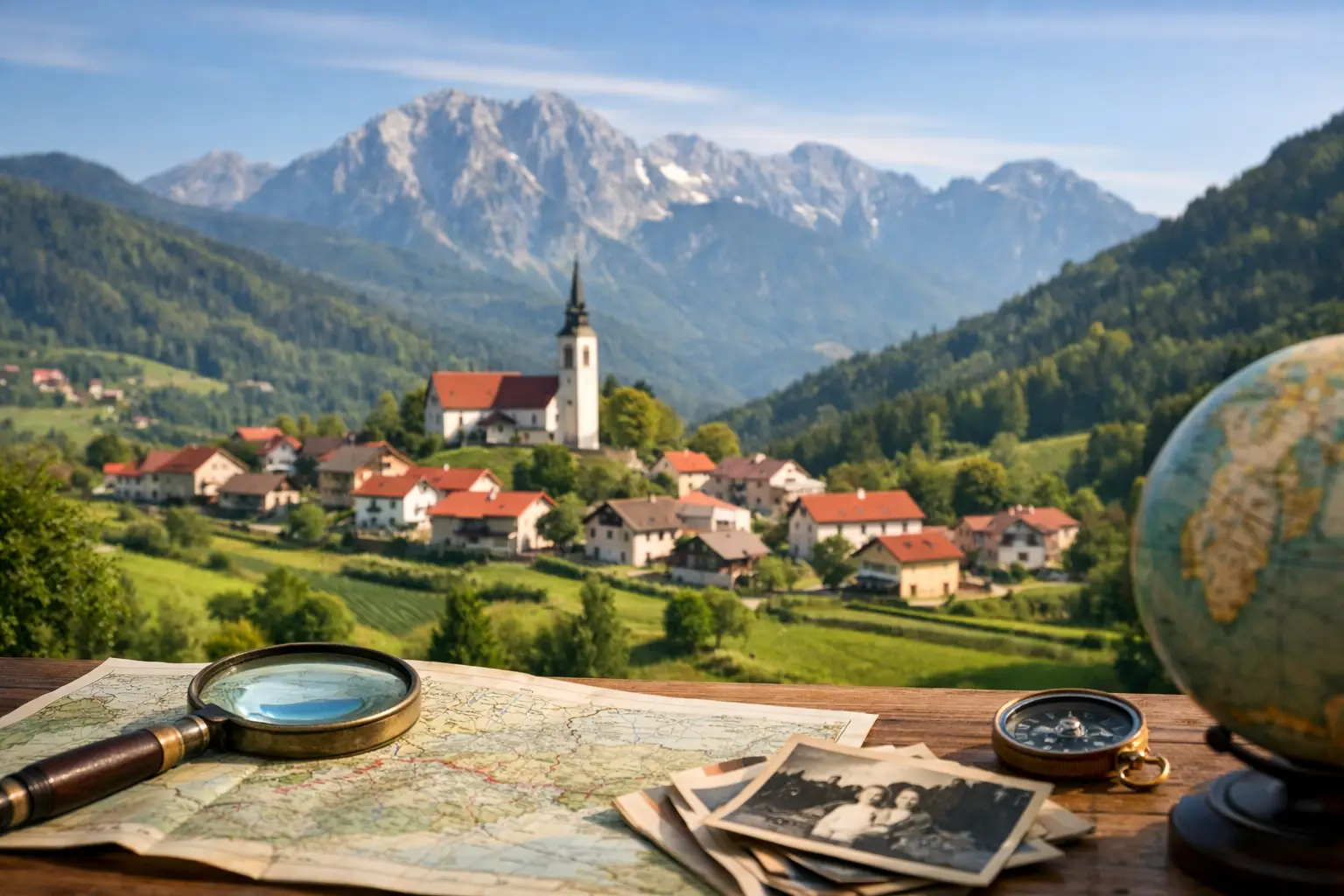
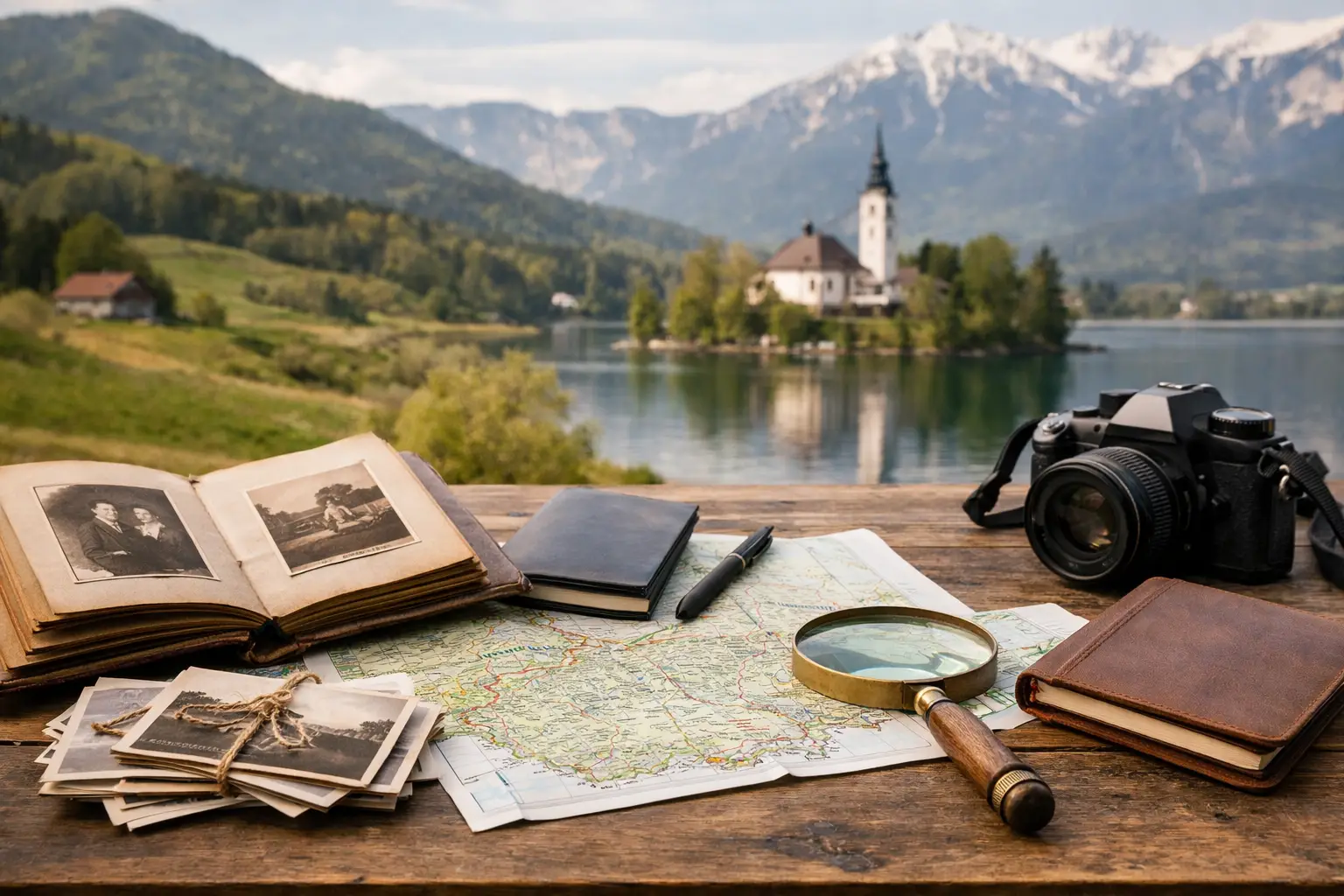


A name on a ship manifest can stay flat on the page for years. Then one day, you stand in the village where that person was born, hear the church bell, see the hillside fields, and your family story changes shape. A Slovenia roots trip planner helps make that kind of journey possible – not as a generic vacation, but as a return to the places that formed your family.
For many Slovenian descendants in the United States and beyond, the hardest part is not the desire to go. It is knowing where to begin. Maybe you have a surname, a few old photographs, and a grandmother who said the family came from “near Ljubljana” or “somewhere in Carniola.” Maybe you already have records but are unsure how to turn them into a meaningful itinerary. A heritage trip works best when research and travel planning move together.
What a Slovenia roots trip planner actually does
A good Slovenia roots trip planner is not simply booking hotels and driving routes. It starts with family clues and builds toward places that matter. That might mean identifying an ancestral village, confirming old house numbers, locating parish churches, finding cemeteries, or understanding whether your ancestors came from a mountain hamlet, a wine-growing region, or an industrial town.
That distinction matters because heritage travel is personal. If your great-grandfather left a village in Bela Krajina, the trip should not feel like a broad tour of Slovenia with one sentimental stop. It should reflect his world – the landscape, the local customs, the church records, the dialect region, even the practical realities that may have pushed him to emigrate.
This is where planning based on genealogy makes the experience richer. You are not only asking, “What should I see in Slovenia?” You are asking, “What belongs to my family’s story, and how do I reach it in a way that honors that story?”
Start with the family evidence you already have
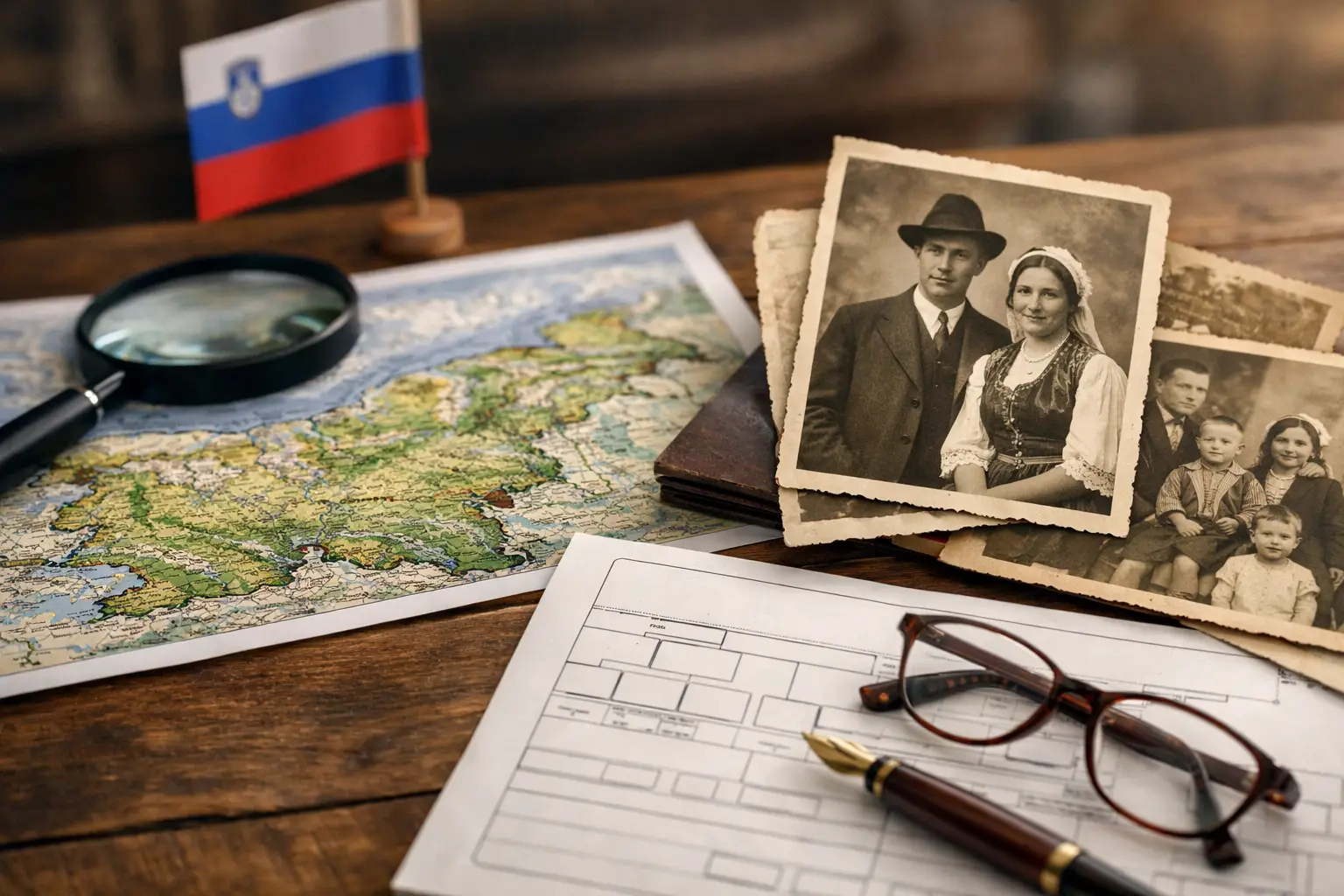
Most people know more than they think. The first step is gathering every small clue before planning dates, routes, or expectations. Family papers often hold the first usable details – naturalization records, baptism certificates, death records, marriage licenses, military papers, funeral cards, old letters, and the backs of photographs.
Pay special attention to place names, even if the spelling looks unfamiliar. Slovenian places were often recorded in German, Italian, or older regional forms. A village might appear under several versions of its name depending on the time period and the recordkeeper. That is one reason a straightforward internet search can lead people in the wrong direction.
Oral history matters too, though it needs careful handling. A relative may remember “St. Mary’s parish” but not the village name, or say the family was Austrian when the ancestors actually came from territory that is now Slovenia. Those memories are still valuable. They often preserve a real clue, even when geography or political borders have blurred over generations.
Why village-of-origin is the turning point
The most meaningful ancestry trips usually depend on one thing – finding the exact place of origin. Not just a region, and not only a major city nearby. In Slovenia, villages are often the key to everything.
Once a village is identified, the trip becomes more focused. You can visit the parish where baptisms and marriages were recorded. You can walk the local cemetery, review municipal history, understand the terrain your family knew, and sometimes even locate the family farm or house site. Without that anchor, a roots trip can still be moving, but it may feel more symbolic than specific.
That said, certainty is not always possible before travel. Some families have clear paper trails. Others have partial evidence that points to two or three likely places. In those cases, planning should stay flexible. It may be wiser to build an itinerary around a region while allowing time for on-the-ground discovery rather than forcing a false sense of certainty.
Building a roots itinerary with purpose
A heritage itinerary should leave room for emotion, but it also needs structure. Too many people imagine they can simply arrive in Slovenia and solve family mysteries in a few afternoons. Sometimes that happens. More often, the strongest trips are shaped ahead of time with a realistic sense of what can be researched, visited, and verified.
Research first, travel second
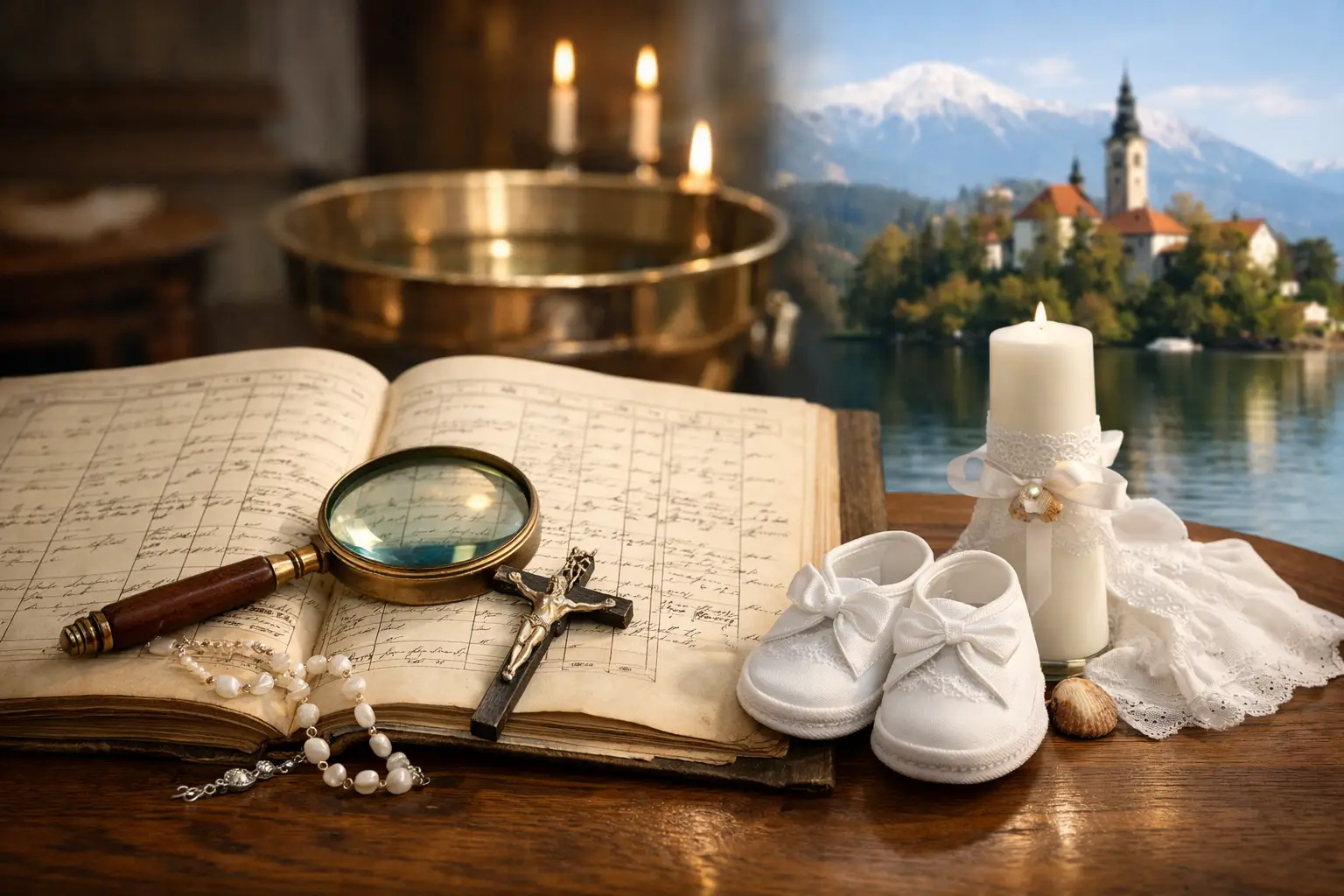
If records can be reviewed before arrival, do it. Parish registers, civil records, emigration documents, cemetery sources, and local archives may identify people, homes, and relationships that would otherwise be missed. Even one confirmed baptismal entry can change the entire route of a trip.
Pre-trip research also helps avoid common disappointments. A church may no longer hold older registers locally. A cemetery may have reused plots. A family house may have been rebuilt. Knowing this in advance does not make the journey less meaningful. It helps you approach the place with the right expectations.
Balance ancestral sites with breathing room
Not every day should be filled with records and appointments. These trips carry emotional weight. Visiting an ancestral village, especially for the first time, can be surprisingly intense. Some travelers want time to sit quietly in a churchyard, talk with relatives, or simply look at the landscape.
A good plan balances purpose with space. One day may center on archival work or a parish visit. Another may focus on the broader region – local food, a museum, a market town, or the river valley your family would have known. That balance helps family history feel lived, not staged.
Think regionally, not only nationally
Slovenia is small, but heritage travel is rarely about covering the whole country. A roots-based trip often works best when organized around one or two family regions. If your ancestry traces to the Vipava Valley, Prekmurje, Lower Carniola, or the Karst, that region deserves time and context.
This approach also respects how ancestors actually lived. Most people did not move broadly across the country. Their lives were rooted in local parishes, nearby market towns, seasonal work, and family networks. Seeing those connections on the ground often explains more than a fast-paced national itinerary ever could.
What to expect emotionally
People often prepare for the logistics of a roots trip and underestimate the emotional side of it. Standing in a church where your ancestors were baptized can feel deeply grounding. So can hearing a family surname spoken aloud by a local resident. At the same time, not every moment will be cinematic.
Sometimes the ancestral home is gone. Sometimes records are missing. Sometimes the village is quiet and ordinary in a way that surprises people who expected a dramatic revelation. That does not mean the trip failed. In fact, ordinary details are often what make the connection real. The road, the fields, the scale of the village, the distance to the church – these are the textures of your family story.
It also helps to remember that your ancestors’ relationship to Slovenia was not always simple. They may have left because of poverty, military service, political pressure, lack of land, or family hardship. A roots trip is not about idealizing the past. It is about meeting it honestly and with care.
When expert help makes the difference
A Slovenia roots trip planner becomes especially valuable when records are fragmented, place names are unclear, or your time in-country is limited. Local expertise can connect historical sources with geography in a way that general travel planning cannot. That may include understanding old parish boundaries, recognizing surname clusters, identifying former place names, or arranging visits that would be difficult to organize from abroad.
For many travelers, expert guidance also brings peace of mind. Instead of wondering whether you are missing the right village or overlooking an important archive, you can move through the trip with confidence. The best support does not take the journey away from you. It makes the journey more accurate, more personal, and more grounded in real evidence.
This is the work Ancestry Slovenia is built around – helping descendants reconnect with family history through research-guided travel that leads back to the places that truly matter.
The best time to plan your heritage journey
The ideal timeline depends on your goals. If you want a simple emotional return to a known village, planning may be fairly straightforward. If you need village-of-origin research, archive coordination, and a custom route, start months in advance.
Spring and fall are often especially good for roots travel. The weather is comfortable, villages are easier to experience at a slower pace, and the countryside has a sense of texture that suits reflective travel. Summer can work well too, particularly for family groups, though popular areas may feel busier. Winter has its own quiet beauty, but shorter days and holiday closures can affect research visits.
A roots trip is rarely only about one traveler. It is often about parents, grandparents, children, and the family story you hope to pass forward. That is why thoughtful planning matters. When done well, the journey does more than answer a question about where your family came from. It gives that answer a place, a feeling, and a memory your family can carry home.
If you have been waiting until you knew more, start with what you have. A surname, a faded record, a remembered village name, a story told at the dinner table – these are often enough to begin finding your way back.