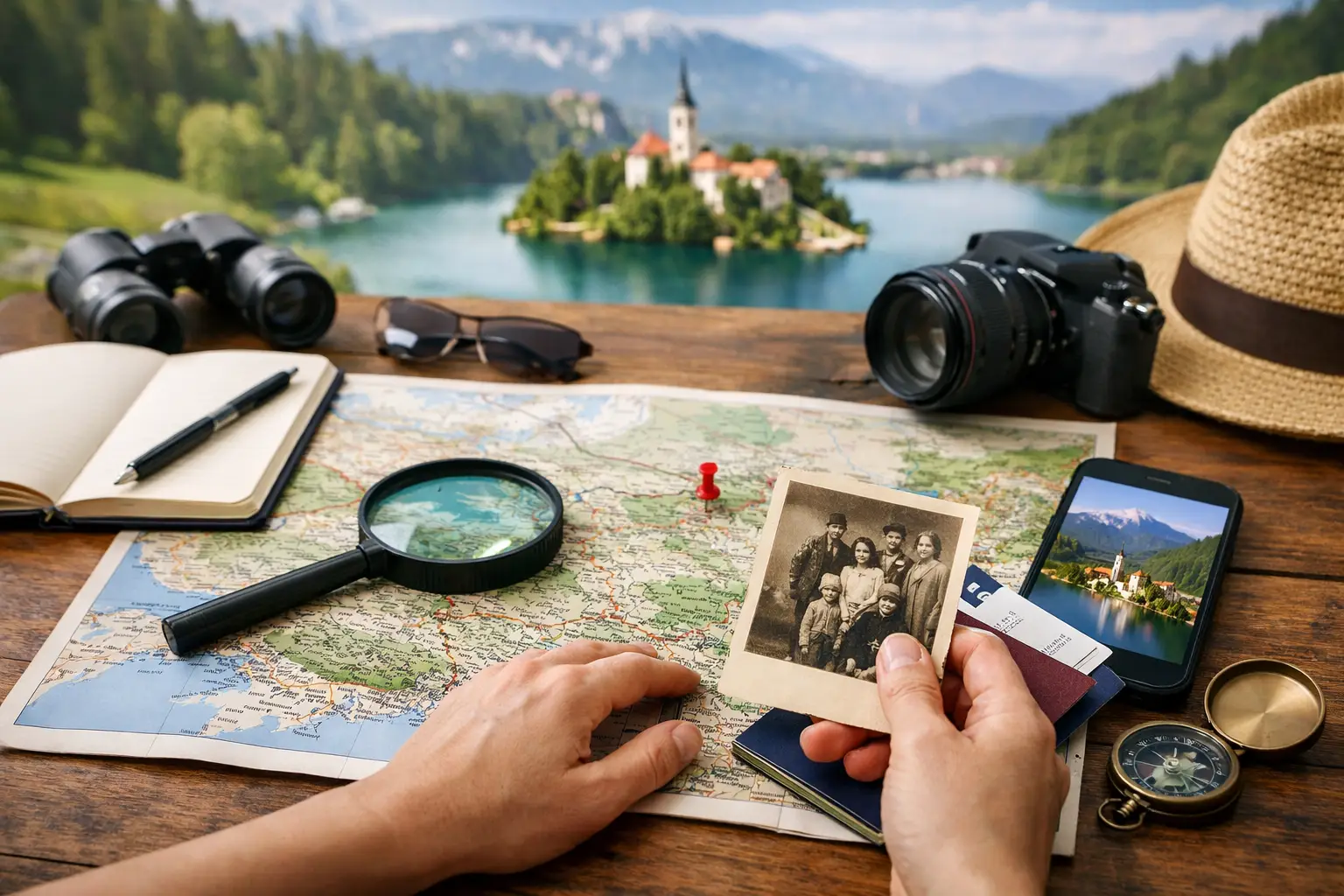


A family story often begins with something small – a surname written on the back of an old photograph, a baptism certificate tucked into a drawer, or a grandmother saying, “Our people came from a village near the hills.” For many descendants abroad, slovenian genealogy travel planning starts right there, with fragments. The goal is not simply to visit Slovenia, but to return with context, names, places, and a stronger sense of where your family’s story truly began.
That is what makes ancestry-based travel different from ordinary trip planning. If your purpose is to reconnect with Slovenian roots, the most meaningful journey usually starts before you ever board a plane. Research shapes the route. Records narrow the map. Local knowledge helps turn “somewhere in Slovenia” into a real parish, a real cemetery, a real village lane your family once knew.
Why slovenian genealogy travel planning needs research first
Many travelers assume they can arrive in Slovenia, ask around, and quickly find their ancestral home. Sometimes that does happen, especially in smaller communities where surnames are still familiar. But more often, family memory has gaps. Place names may be misspelled, borders may have changed, and older records may use German, Latin, or historic regional references instead of modern Slovenian names.
That is why research should lead the travel plan, not the other way around. Even a few verified facts can make a major difference. A known village of origin, a parish name, a marriage date, or an emigration record can focus the trip and save days of uncertainty.
In Slovenia, geography matters in family history. Villages are close together, but records are often tied to specific parishes, municipalities, or archives. If you visit the wrong town because a family story simplified the location, you may miss the place that actually holds your history. Careful planning helps avoid that disappointment and replaces guesswork with a much more personal experience.
Start with what your family already knows
The best starting point is not a database. It is your own family.
Talk to parents, aunts, uncles, and older cousins before planning the trip. Ask not only for names and dates, but for details that sound ordinary. What language did the family speak at home? Was there a patron saint image on the wall? Did relatives mention a mountain region, a river, a church feast day, or a nearby city when describing where they came from? These details can become valuable clues later.
Gather documents next. Naturalization papers, death certificates, ship manifests, church records from immigrant parishes, obituaries, military draft cards, and old letters can all point back to Slovenia. Pay close attention to original spellings. Names often changed after immigration, and even one missing letter can lead you away from the correct village.
Photographs matter too. A picture of a church, a house, or a funeral procession may seem impossible to identify at first, but with local knowledge and regional familiarity, those visual clues can become surprisingly useful.
What makes a heritage trip truly personal
A meaningful ancestry journey is rarely built around famous landmarks alone. It is built around your family’s places.
That might include the village where your great-grandfather was born, the parish where your ancestors were married, the cemetery where earlier generations are buried, or the road they likely walked to school or market. These are not dramatic tourist attractions in the usual sense. Yet for descendants, they often become the most powerful parts of the trip.
A church register entry can be moving on paper. Standing in the church where that baptism took place is something else entirely. Reading a family name in an old cemetery, hearing the bells in a village your relatives once left behind, or meeting distant kin who still live in the area can transform research into memory.
This is where thoughtful slovenian genealogy travel planning becomes so important. The strongest itineraries leave room for both documentation and emotion. They combine practical goals, such as archive visits or parish appointments, with slower moments that let the experience settle in.
Planning the right itinerary for your family story
No two ancestry trips should look exactly the same. Some travelers have one clearly identified village and want to spend several days there. Others have only partial evidence and need an itinerary that includes archives, regional centers, and multiple possible locations.
If your ancestral place is known, the trip can focus more deeply on that area. You may want time for parish research, a cemetery visit, conversations with local residents, and exploration of nearby towns that shaped everyday life for your family. In this case, slower travel often works best. A rushed schedule can make the experience feel thin.
If the village is still uncertain, the itinerary may need to be more investigative. That could mean beginning in Ljubljana or another regional center where records and logistics are easier, then moving into likely ancestral areas once documentary clues are confirmed. This approach requires flexibility, but it can still be deeply rewarding.
Timing matters as well. Parish offices may not keep regular public hours, local archives may require advance arrangements, and rural visits are often easier in milder weather. Summer has appeal, but spring and early fall often provide a calmer pace and better conditions for research-focused travel.
Records, language, and local context
One reason genealogy travel in Slovenia benefits from guidance is that records do not always speak plainly to modern readers. Handwriting can be difficult. Languages may shift across generations and jurisdictions. Historical boundaries can confuse even experienced researchers.
A village associated with your family may once have been recorded under a German name, while a church register may be in Latin and a gravestone inscription in Slovenian. Without context, these details can feel overwhelming. With context, they begin to form a coherent picture.
This is also why local culture matters alongside research. Understanding regional traditions, naming patterns, religious life, and emigration history helps families interpret what they find. A record is never just a record. It belongs to a real community, with customs, hardships, and rhythms that shaped your ancestors’ lives.
For many descendants, that cultural understanding becomes one of the most healing parts of the journey. It closes the distance between “they left Europe” and “they came from this place, for these reasons, carrying this heritage.”
Slovenian genealogy travel planning for beginners and experienced researchers
You do not need to arrive with a complete family tree to have a worthwhile trip. Beginners often worry that they know too little to begin. In reality, many successful ancestry journeys start with only a surname, a rough region, and a few family stories.
What matters is setting realistic goals. If you are early in the process, your trip may be about identifying the correct village, understanding the historical backdrop, and gathering the next layer of evidence. That is real progress.
If you are a more advanced researcher, your goals may be more specific. You might want to confirm a house location, locate burial sites, compare parish entries across generations, or visit multiple branches of the family in different regions. In those cases, planning becomes more detailed and often more rewarding, because the groundwork allows for a deeper connection on the ground.
At Ancestry Slovenia, this bridge between research and travel is exactly where heritage journeys become most meaningful. The right support can help descendants move from uncertainty to recognition, and from records to lived experience.
What to prepare before you go
Before traveling, organize your documents in one place, with digital backups. Create a timeline of your known ancestors, including names, dates, places, and source notes. Print copies of key records in case you need to reference them during visits.
It also helps to prepare emotionally. Heritage travel can bring joy, but it can also bring grief, surprise, and unanswered questions. Sometimes the ancestral home is gone. Sometimes the surname disappeared from the village. Sometimes the story is more complicated than the family remembered. None of that makes the journey less meaningful. In many cases, it makes it more honest.
Leave room for what cannot be planned. A conversation with a church caretaker, an unexpected family connection, or the simple feeling of standing in your ancestral landscape may become the moment you remember most.
Returning to Slovenia in this way is not about chasing a perfect story. It is about meeting your family history where it truly lives – in records, in places, and in the quiet recognition that your roots are still there, waiting to be known.