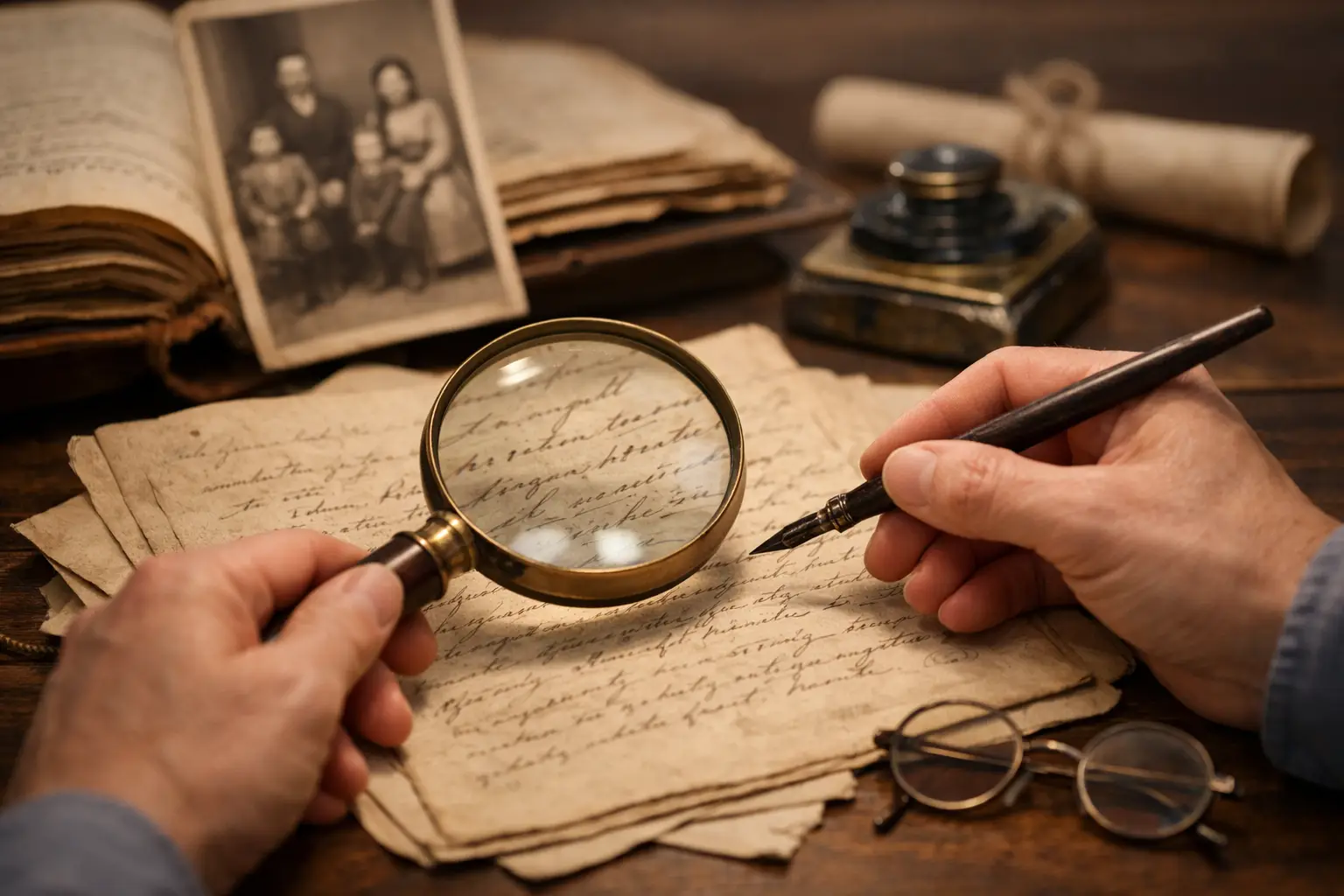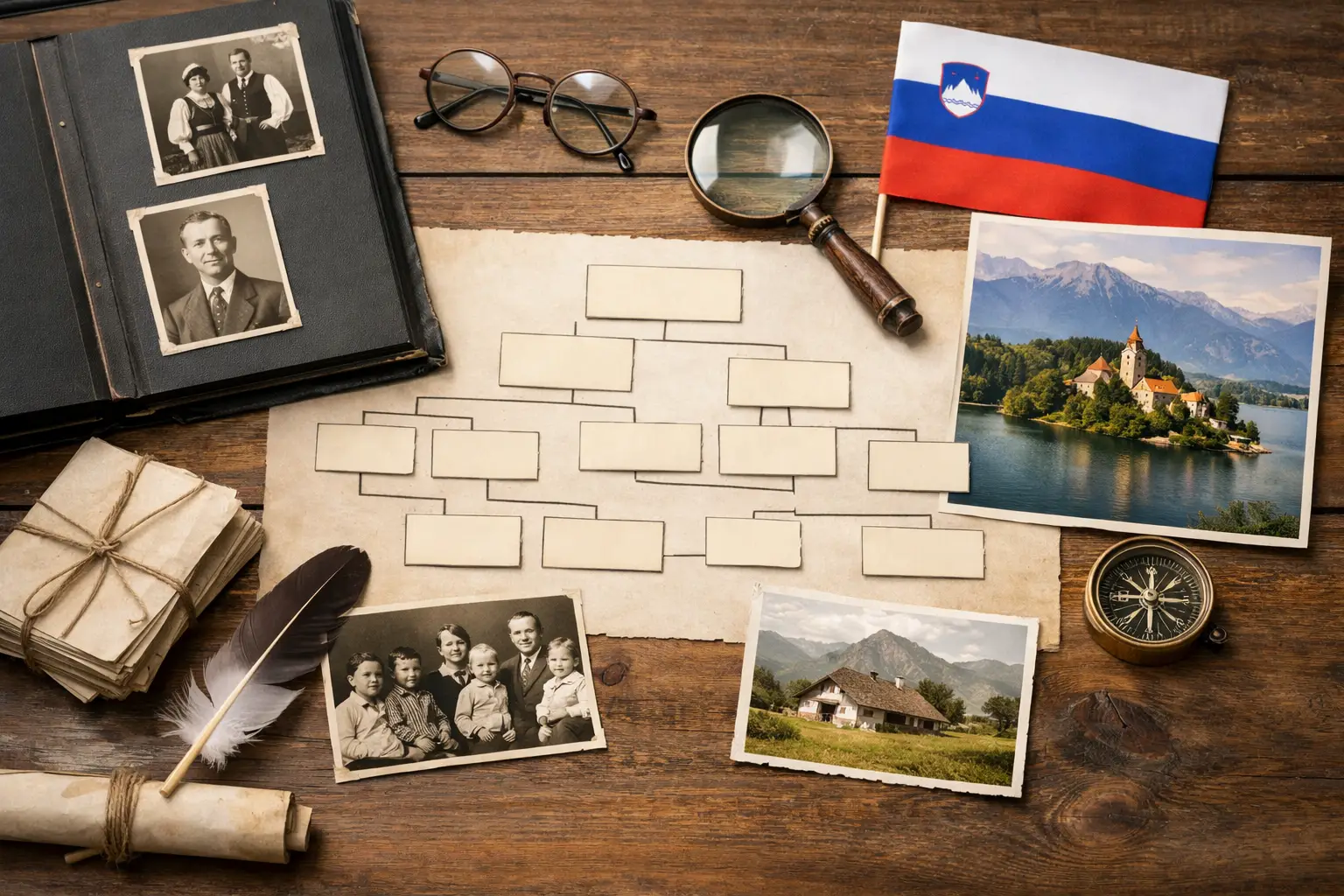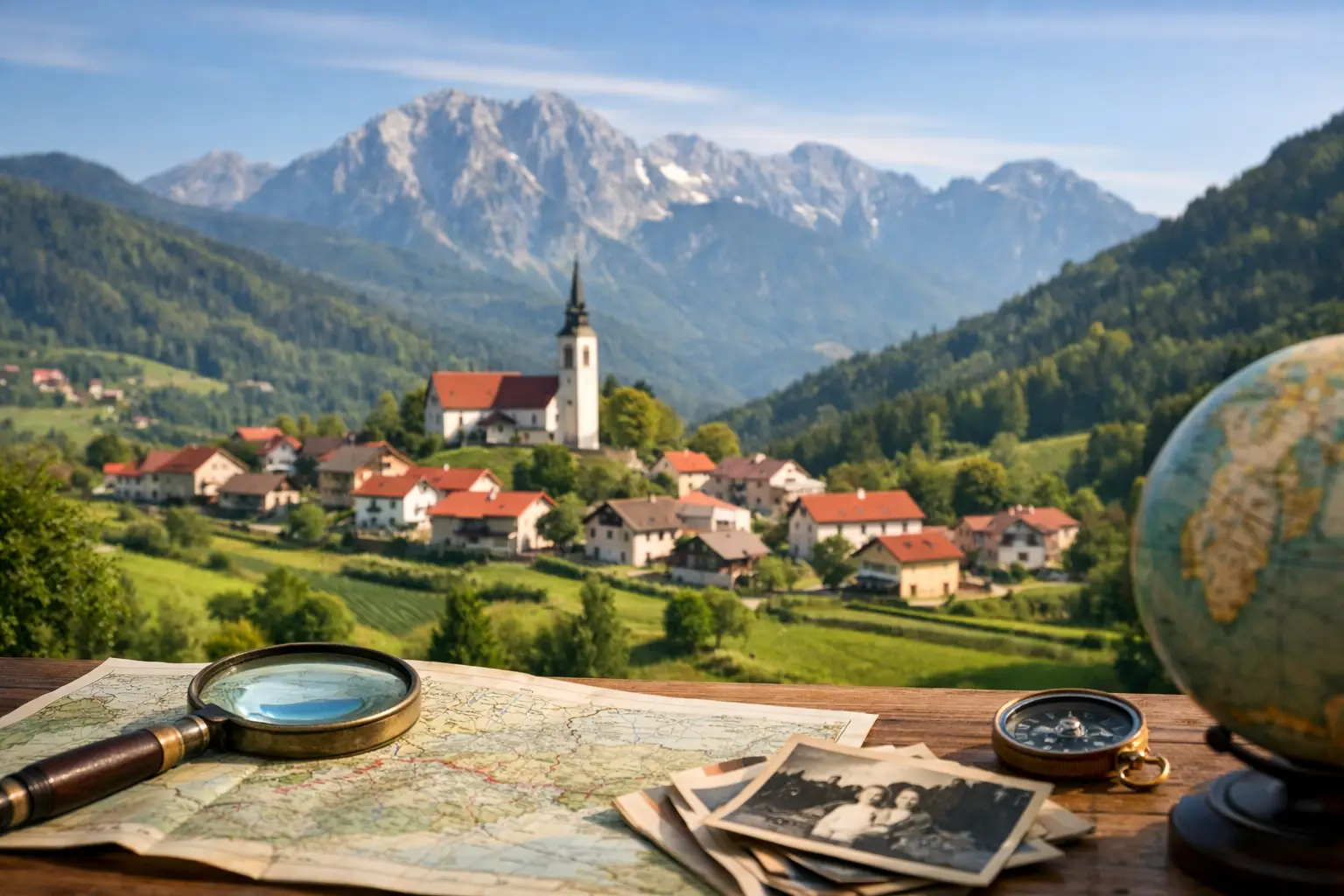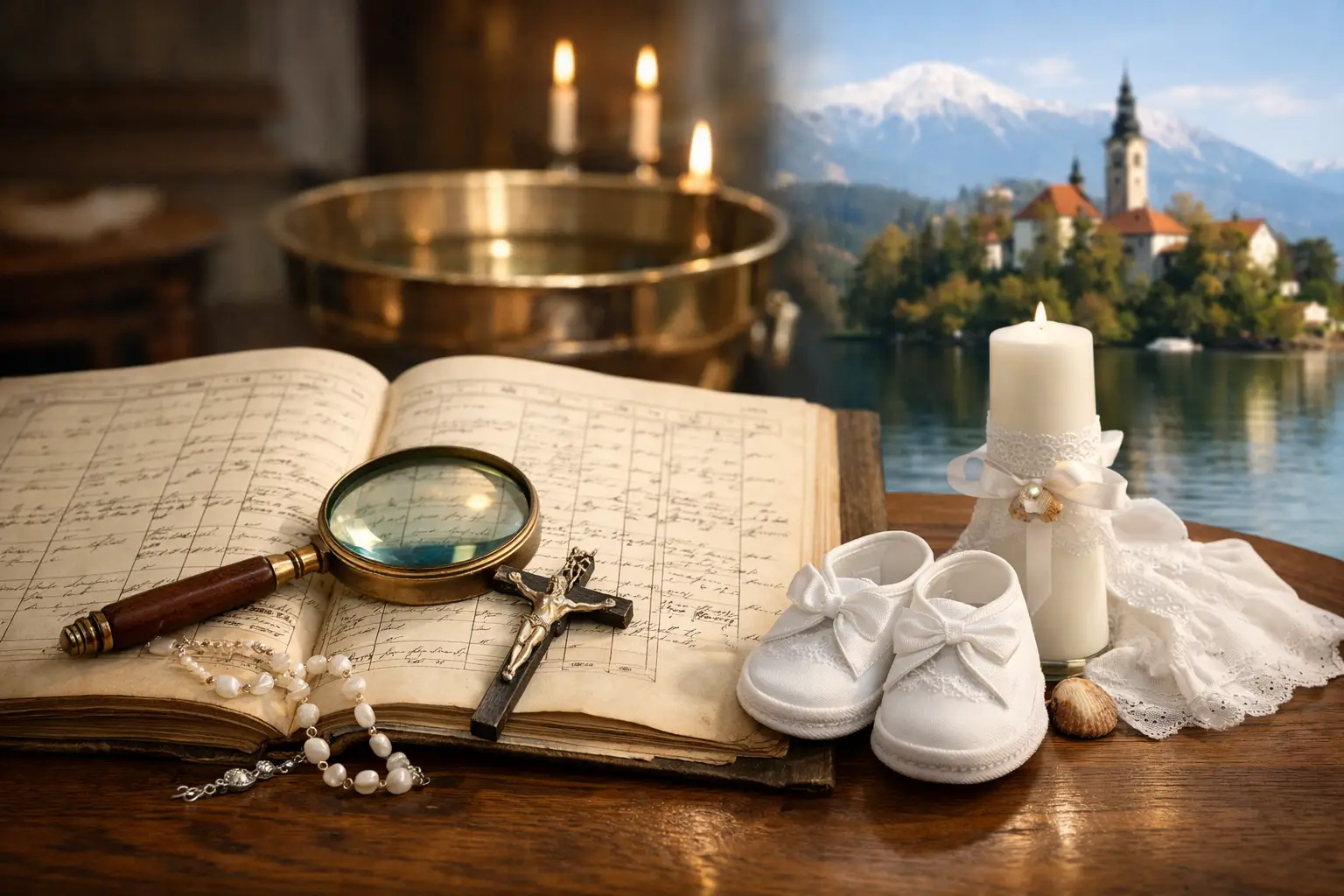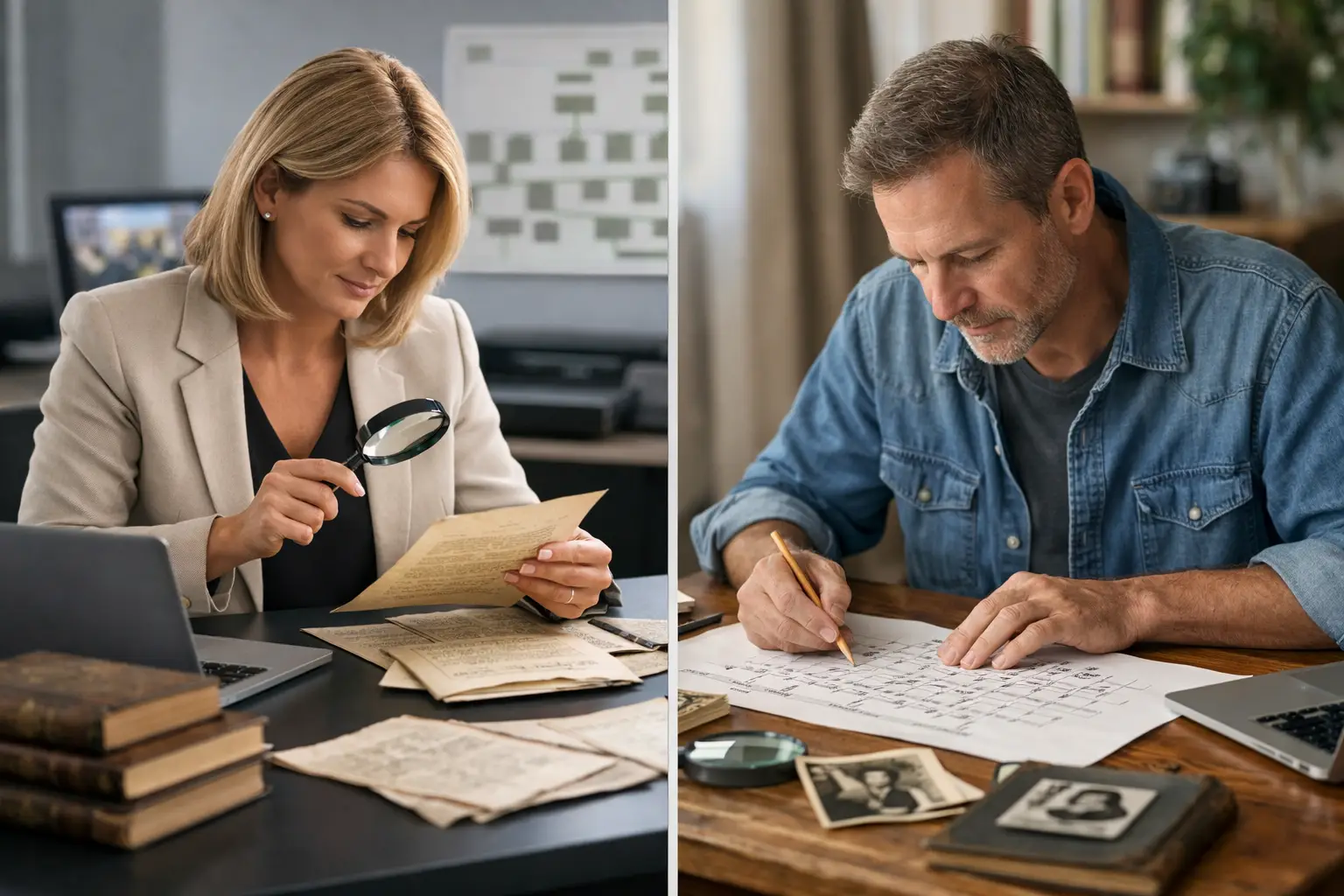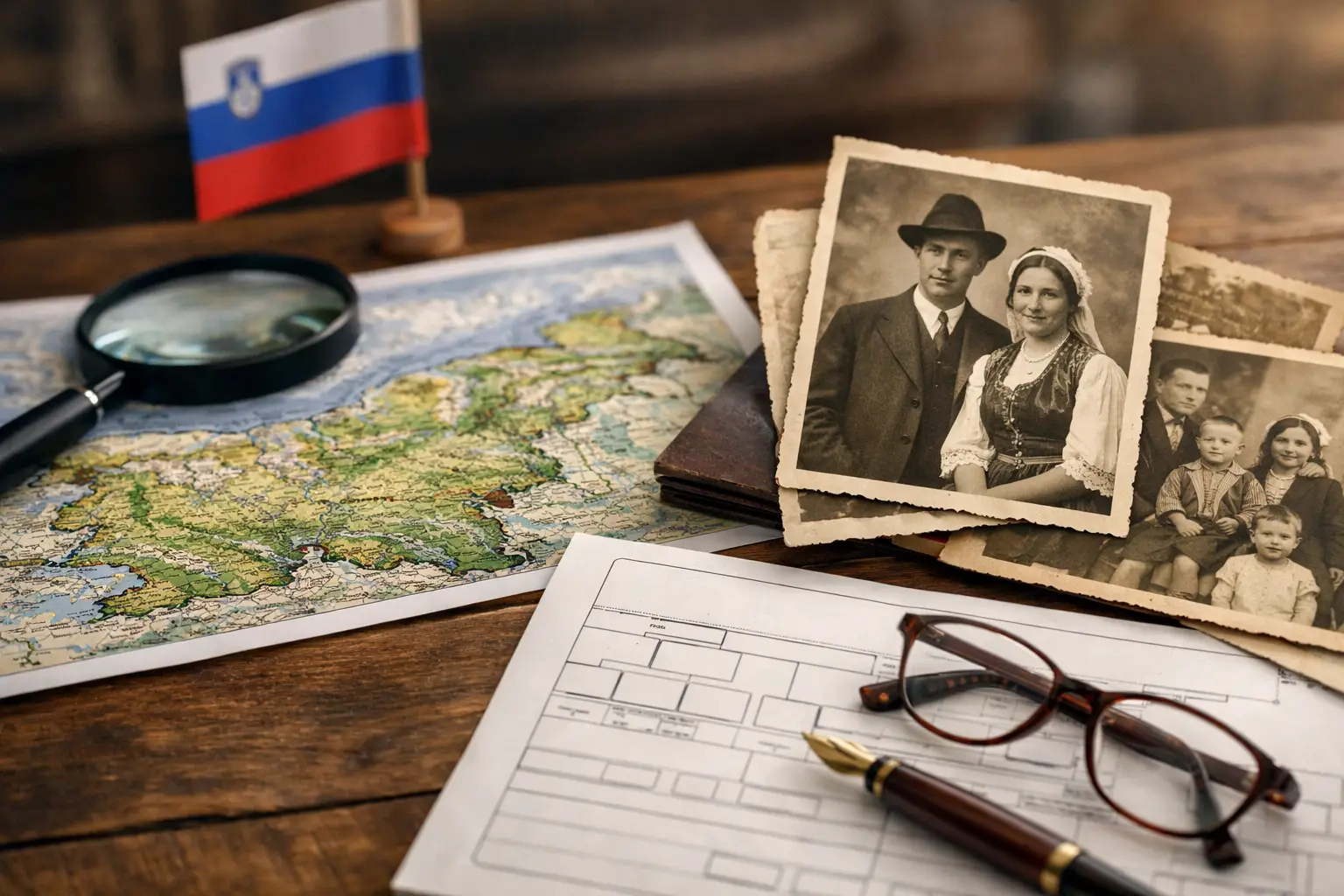
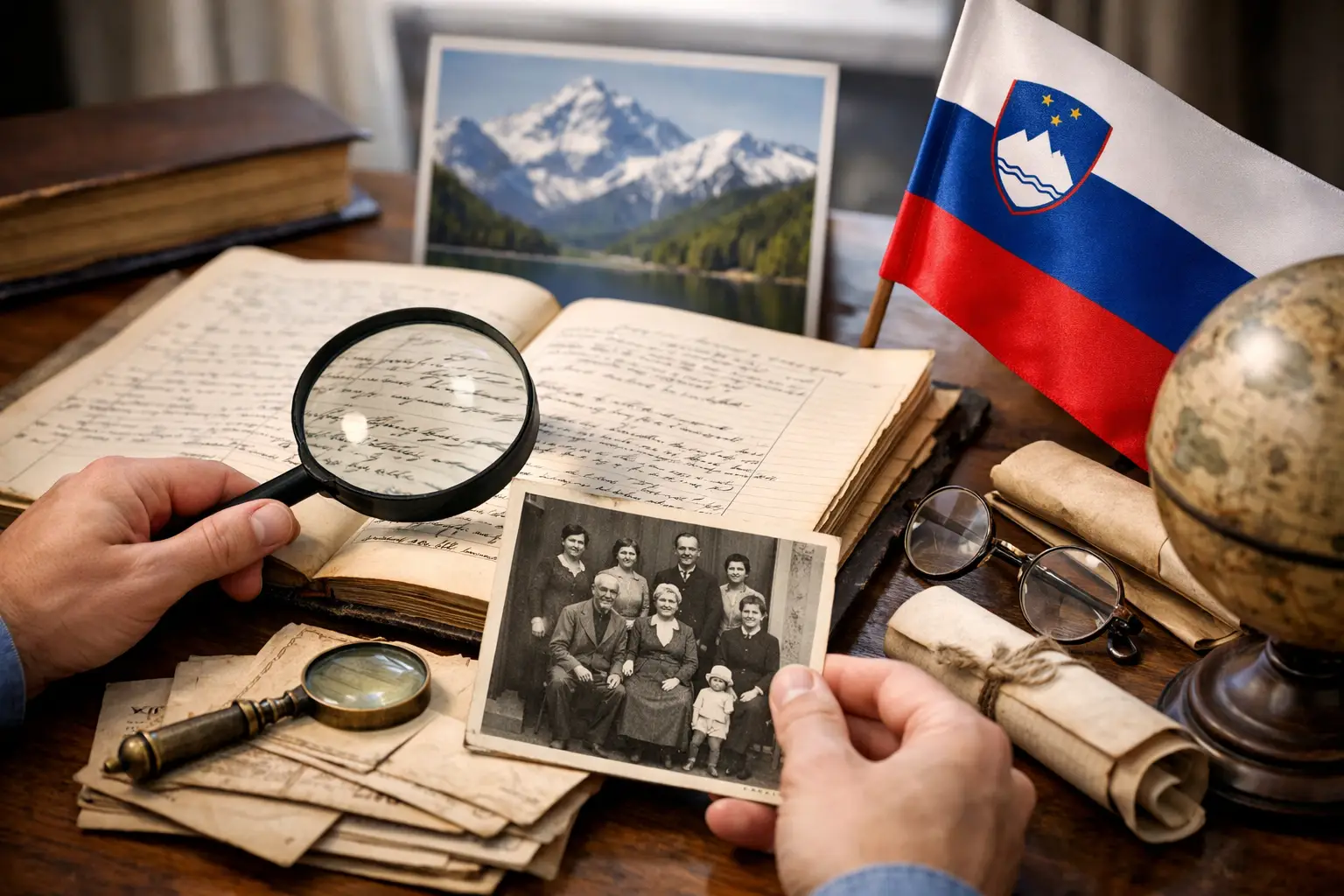

A handwritten village name on the back of an old photograph can change everything. So can a baptism date in a family Bible, a naturalization paper tucked into a drawer, or a surname that has been pronounced three different ways across three generations. Archival research for Slovenian descendants often begins with fragments like these, not with a complete family tree. The work is part detective story, part historical reconstruction, and for many families, part homecoming.
If your ancestors left Slovenia for Cleveland, Chicago, Toronto, Buenos Aires, or Melbourne, their paper trail may cross languages, borders, and changing political systems. That can feel intimidating at first. But it also means there are often more clues than people expect. The key is knowing where to look, what a record can actually tell you, and when one small detail is enough to lead you back to a real place.
Why archival research matters for Slovenian descendants
For descendants abroad, family history is rarely just about dates. It is about understanding why someone left, what village shaped them, which parish recorded their life events, and whether the family story passed down at the dinner table still holds up in the documents. Archives help bridge the gap between memory and evidence.
That matters especially in Slovenian research because place is everything. A surname alone is usually not enough. You need the right village, parish, municipality, or historical district to move forward with confidence. Two men with the same name may appear in records from different regions, and a spelling used in the United States may not match the form used in a Slovenian church book a century earlier.
Archival research also gives descendants something more personal than a chart of names. It can reveal occupations, property references, military service, migration patterns, and religious communities. Those details make an ancestor feel less like a distant entry and more like a real person who lived in a specific landscape, among identifiable neighbors, in a village you may still be able to visit today.
Start with what your family already has
Before anyone contacts an archive, the strongest first step is usually the family itself. Talk to relatives, especially older ones, while you can. Ask about original names, nicknames, saints’ names, hometowns, departures, sponsors at baptisms, military service, and who wrote letters back to Europe. People often remember details that seem minor but become essential later.
Gather home sources carefully. Passenger manifests, obituaries, death certificates, naturalization files, funeral cards, marriage records, church documents, and cemetery markers can all contain place clues. Even a vague line like “born in Carniola” or “from near Ljubljana” helps narrow historical context. A photo studio imprint, a sponsor’s surname, or a witness on a marriage certificate can point to kinship networks that traveled together.
This is also the stage where spelling issues begin to surface. Slovenian names were often altered after migration. Diacritics disappeared. German, Italian, Hungarian, and English versions may all appear for the same family line. A place name may have changed over time or may be remembered in its older form. That is normal. Good research does not assume one spelling is final.
What archives can reveal
When people hear “archive,” they often imagine a single building full of old papers. In practice, Slovenian ancestry research may involve several kinds of repositories, each preserving a different part of the story.
Church records are often the backbone. Baptism, marriage, and burial entries can identify parents, godparents, villages, house numbers, and sometimes occupations. For many families, parish books are the first records that securely connect a person in America or Argentina to a precise Slovenian locality.
Civil records may add another layer, particularly for later periods. Depending on the time and region, these can include births, marriages, deaths, residence records, and other administrative documents. Historical land and cadastral materials can show where a family lived and whether they held property. Military records may help with men of the Austro-Hungarian era. Emigration permissions, school registers, and court or municipal records can occasionally fill in the human story in remarkable ways.
The trade-off is that not every archive holds every answer, and not every record survived in equal condition. Some collections are digitized, some are not. Some are indexed, others require page-by-page reading. Some records are in Latin, German, old Slovenian forms, or a mixture of all three. That is why archival work often moves in stages rather than in one straight line.
Archival research for Slovenian descendants often hinges on location
The most decisive breakthrough is usually the ancestral village. Once that is known, records become far more manageable. Without it, research can stall, especially with common surnames.
This is where many descendants hit a frustrating point. A US death certificate may say only “Austria” because the ancestor was born before Slovenia became an independent country. A passenger list may use a broad region rather than a village. A naturalization record may contain a town name that was heard by an English-speaking clerk and written phonetically. What looks like a dead end may actually be a clue waiting to be interpreted in historical context.
Slovenian geography also has layers. Your family may have identified with a village, but the relevant record could be filed under a parish, municipality, district, or historic crown land. Borders shifted. Administrative names changed. The village remembered in family speech may not match the name used in official records from the time. Careful comparison is often what resolves the puzzle.
The most common research challenges
Many descendants worry that they do not know enough to begin. In truth, beginners and experienced family historians run into similar problems. The difference is usually not motivation but methodology.
One common issue is assuming the first matching record is the right one. With repeating given names and reused family names, that can send research in the wrong direction quickly. Another is relying too heavily on family legend without testing it against records. Family stories are valuable, but they often compress generations, confuse villages, or attach one person’s migration story to another relative.
Language is another barrier. Older records may use Latin formulas for baptisms and marriages, German for administration, or local naming habits unfamiliar to descendants abroad. Handwriting can be just as challenging as language. Even when a record is physically available, reading it accurately takes patience.
Then there is the emotional side. Some people find what they hoped for – a village, a church, a house line, living cousins. Others uncover harder truths, like illegitimacy, remarriage, poverty, infant loss, or migration caused by conflict and hardship. Archival research is deeply rewarding, but it is also human. The records do not flatten the past. They restore it.
How archival research becomes a heritage journey
This is where the process becomes especially meaningful for Slovenian descendants. A record is never just a record when it leads you to a church door your great-grandparents knew, a hillside cemetery where family names still appear, or a village lane that turns an old story into something tangible.
Research-led travel changes the experience of visiting Slovenia. Instead of seeing the country as a tourist, you arrive with context. You understand why your ancestors left that particular region, what parish anchored community life, and how local geography shaped family patterns. A village stop is no longer just scenic. It is personal.
That is also why many descendants benefit from guidance that connects documentary evidence with places on the ground. The strongest ancestry journeys are not built from guesswork or generic itineraries. They are built from verified names, local knowledge, and enough historical sensitivity to understand what can and cannot be proven. At Ancestry Slovenia, that bridge between records and real places is what turns genealogy into something lived.
Archival research for Slovenian descendants works best as a process
The most successful projects usually move through a clear sequence. First, gather family sources and oral history. Next, identify the strongest migration-era records in the country where your ancestors settled. Then use those clues to narrow the Slovenian place of origin. After that, move into parish, civil, and regional archival materials to extend the line and confirm relationships.
Sometimes this process goes quickly. A naturalization file names the village, the parish books align, and the family line unfolds. Sometimes one missing place name delays everything. That does not mean the search has failed. It usually means the next step needs to be smarter, not broader.
Patience matters here. So does perspective. The goal is not only to collect names but to reconstruct belonging – to understand where your people stood in Slovenia before they became immigrants somewhere else. That is why even a single confirmed village can feel so powerful.
If you are carrying a few family papers, a remembered surname, or simply the sense that your story began somewhere in Slovenia, that is enough to start. Archives do not ask for a perfect beginning. They ask for care, curiosity, and the willingness to follow one true clue until it leads you home.