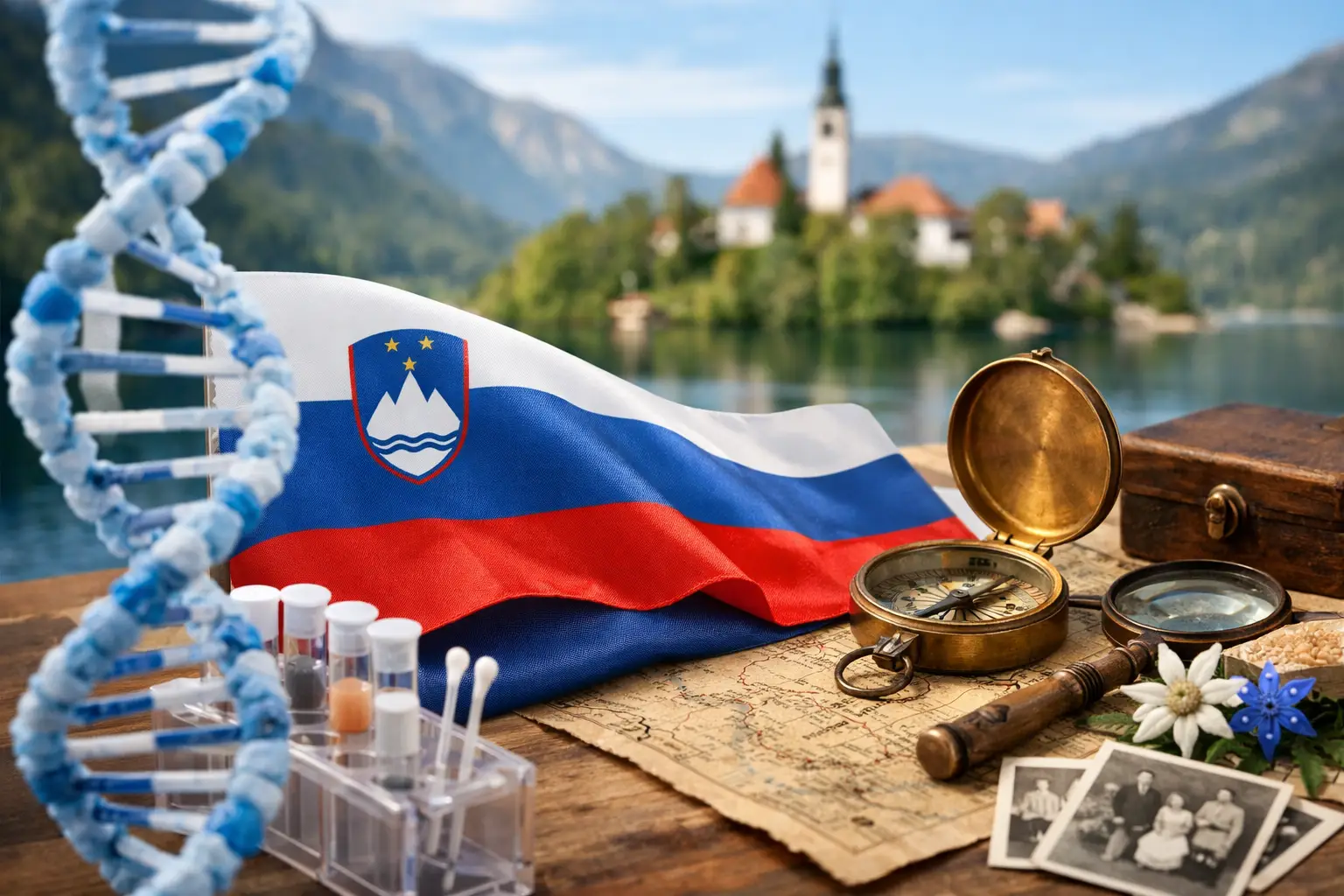

A DNA test can feel like a shortcut to home. You mail in a sample, wait for the results, and hope to see proof of the family stories you grew up with – a Slovenian surname, a grandmother’s accent, a village name spoken at holiday tables. So can DNA confirm Slovenian ancestry? Sometimes it can support that story, but on its own, it rarely provides the kind of clear, place-based answer most families are looking for.
That can be disappointing at first. But it also points to something more meaningful. Slovenian ancestry is often confirmed not by a single percentage on a DNA estimate, but by combining genetic clues with records, family history, and local research that leads back to an actual parish, town, or hillside village.
What DNA can tell you about Slovenian ancestry
DNA testing is useful, but it works best as one piece of a larger puzzle. Most consumer DNA tests compare your genetic data to reference panels made up of people from different regions. If your results show a connection to Central Europe, the Balkans, Eastern Europe, or nearby border regions, that may fit a Slovenian family story. It may also fit ancestry from neighboring areas that share a long and intertwined history.
That is the first trade-off. Slovenia sits in a part of Europe where borders shifted, empires changed, and populations moved across what are now Slovenia, Austria, Italy, Croatia, and Hungary. Families married across language groups. Villages that were once recorded under Austro-Hungarian rule may have German, Italian, or Latin place names in older records. Because of that, DNA ethnicity estimates often reflect the broader region better than the modern nation.
If your test says Eastern European, Balkan, or Central European, that does not rule Slovenia in or out. It simply means the DNA company sees your ancestry as most similar to people from that wider area.
Can DNA confirm Slovenian ancestry with certainty?
Usually, not with certainty in the way many people expect.
A consumer DNA test generally cannot say, “Your ancestor came from Slovenia” with documentary precision. It may suggest a regional match, and it may connect you with living relatives whose family lines trace back to Slovenia. Those are valuable clues. But a DNA result alone rarely confirms a specific Slovenian origin the way a baptism record, marriage entry, immigration document, or parish register can.
This is especially true for descendants of Slovenian immigrants in the United States, Canada, Argentina, or Australia. Many families arrived when Slovenia was not an independent country. Their records may list Austria, Yugoslavia, Austro-Hungary, Carniola, Styria, Littoral, or simply “Europe.” A DNA test does not sort out those historical labels for you. Genealogical research does.
So the honest answer is this: DNA can support a case for Slovenian ancestry, but records are what usually confirm it.
Why Slovenia is harder for DNA ethnicity estimates
Some countries stand out more clearly in consumer DNA databases than others. Slovenia is harder because it is small, historically complex, and genetically close to surrounding populations.
That does not make Slovenian ancestry invisible. It just makes it harder to isolate through percentages alone. A person with deep roots in Slovenia may receive results spread across several overlapping regions. Another person with ancestry from a neighboring country may receive a similar estimate.
The size and quality of each company’s reference panel also matter. If fewer people with well-documented Slovenian roots are included in a database, the company has less precision to work with. Results can also change over time as testing companies update their algorithms.
This is why many people take a test expecting one clean answer and instead get something broad and confusing. The family story may still be true. The test just may not be fine-tuned enough to tell that story on its own.
When DNA is most helpful
Where DNA often shines is in cousin matching rather than ethnicity estimates. If you match relatives whose grandparents or great-grandparents came from Slovenia, those connections can help confirm a family line. Sometimes a match has a family tree, old documents, or village knowledge your branch lost generations ago.
This can be especially helpful in cases of adoption, unknown paternity, name changes, or fragmented immigrant records. DNA can reopen doors that paper records alone cannot.
Still, cousin matches require work. You may need to compare surnames, migration routes, church records, and ship manifests. The best breakthroughs happen when DNA points you toward a family network and traditional research identifies the exact relationship.
Records are what turn a genetic clue into a family story
If your goal is not just to know that you have Slovenian roots, but to know where your people came from, records matter more than percentages.
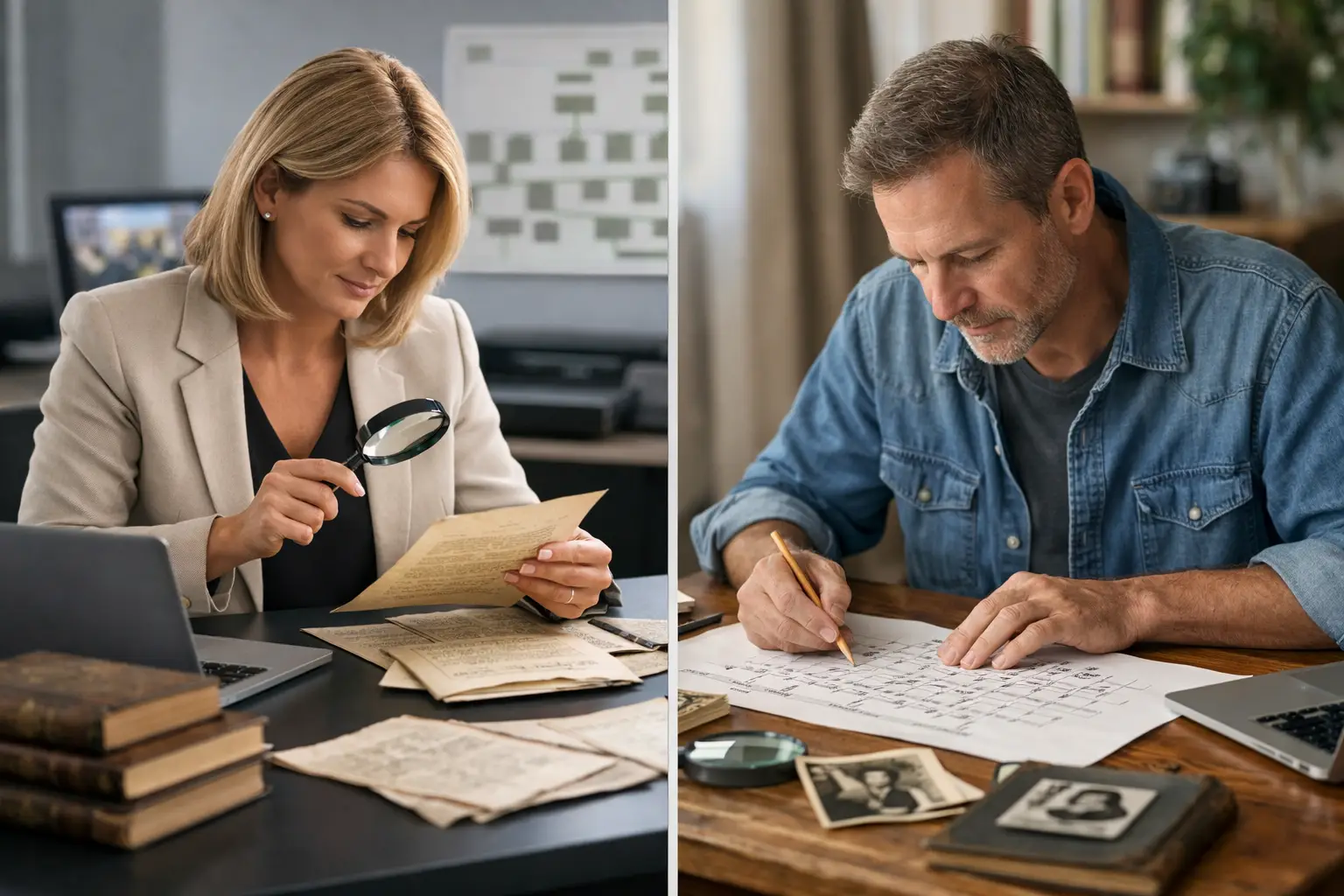
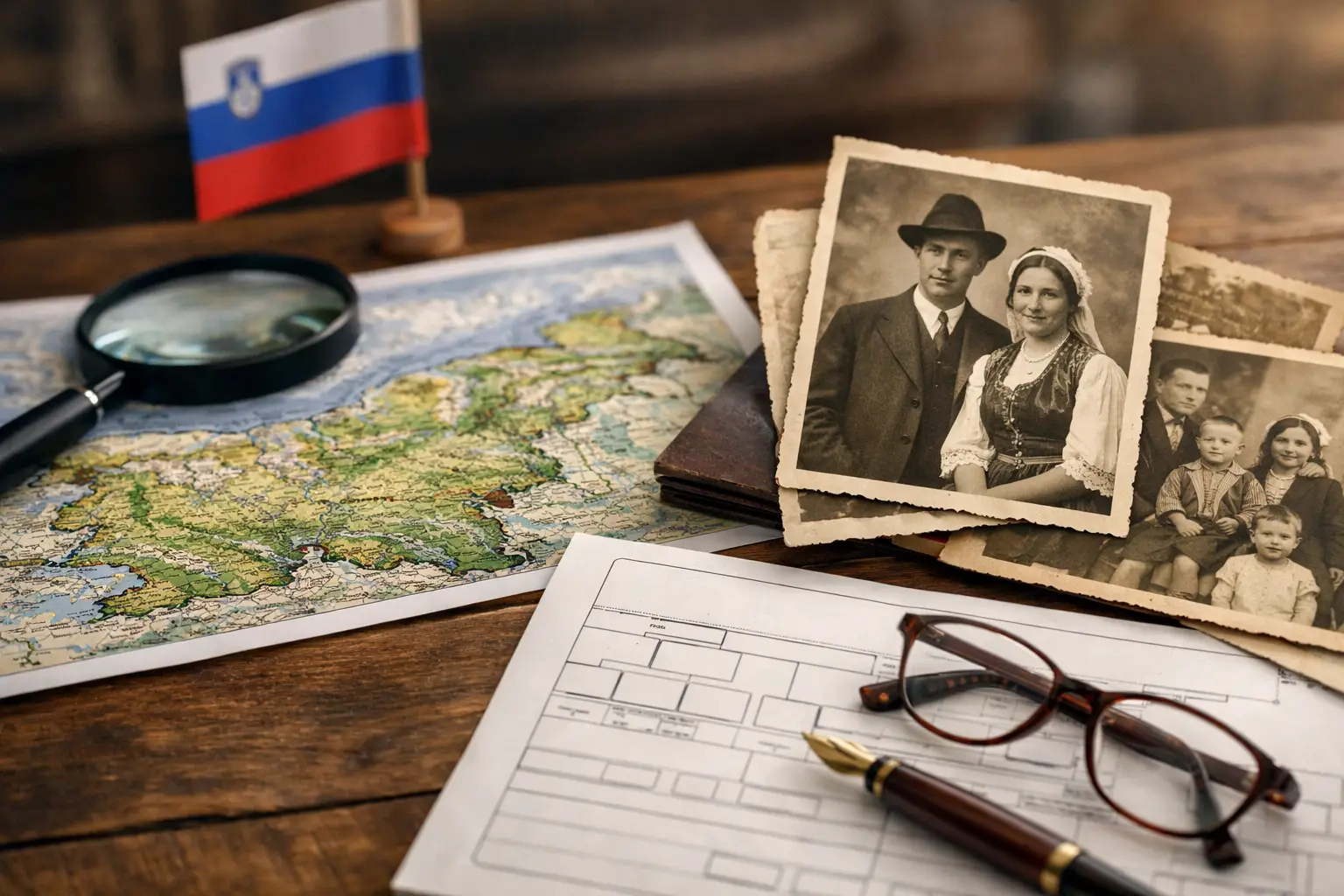
A good research process often begins with what your family already has – names, birth dates, marriage dates, obituary clippings, naturalization papers, funeral cards, prayer books, and old photographs. Even one half-remembered village name can be enough to start narrowing the search.
From there, the work usually moves through US records first, then backward into European records. Passenger lists, church records, death certificates, and census records may reveal an original place name or a more precise birthplace than a DNA test ever could. Once the ancestral village is identified, parish and civil records in Slovenia can begin to confirm generations of family connections.
That is the point where family history starts to feel real. You are no longer looking at a regional estimate on a screen. You are standing in relation to a place.
Can DNA confirm Slovenian ancestry if your family story is vague?
Yes, but only as part of a broader search.
Many descendants of Slovenian immigrants inherited partial stories. Maybe the family said they were “Austrian.” Maybe someone insisted they were “Yugoslav.” Maybe the surname sounds Slovenian, but no one knows the village. In these cases, DNA can help by showing whether your roots fit the broader region and by connecting you to genetic matches with stronger documentation.
But the real confirmation usually comes when those clues line up with records. A DNA result may suggest the right neighborhood of Europe. A naturalization record may reveal the right province. A parish register may finally name the exact village church where your ancestors were baptized and married.
That layered approach is far more reliable than trying to force certainty from a DNA map alone.
The emotional side of the search matters too
For many families, this question is not purely scientific. It is personal.
People ask whether DNA can confirm Slovenian ancestry because they want to know whether the old stories were true. They want to understand why certain traditions survived, why a surname changed, or why a grandparent spoke of a place they never saw again. They want something solid enough to pass on to children and grandchildren.
That is why a percentage, even when accurate, often does not feel like enough. Heritage becomes more meaningful when it has names, roads, church towers, gravestones, and landscapes attached to it. Knowing you are likely from a region is one thing. Knowing your great-grandfather left a specific Slovenian village is something else entirely.
This is where research-guided heritage travel can become so powerful. Once the paper trail is strong enough, returning to the place your family came from can turn an abstract identity into a living memory. For many travelers, that is the moment the search stops feeling like a hobby and starts feeling like a homecoming.
A better question than “Can DNA confirm Slovenian ancestry?”
Sometimes the better question is not whether DNA can confirm Slovenian ancestry, but what kind of confirmation you are really seeking.
If you want a broad genetic signal, DNA may give you that. If you want to know whether your family story fits the historical region around Slovenia, DNA can be helpful. If you want to identify relatives, break through a mystery, or support a paper trail, it can be very useful.
If you want the name of the village, the parish, the old house site, or the cemetery where your ancestors are buried, DNA alone will almost never get you there. That takes records, local knowledge, and often someone who understands how Slovenian history, language, and geography shaped the documents your family left behind.
At Ancestry Slovenia, that is often where the journey becomes most meaningful – when scattered clues begin to lead not just to an answer, but to a place you can actually stand in.
If you are holding a DNA result and wondering what it really means, do not stop at the percentage. Let it be the first clue, not the final word. The deeper reward is not simply proving where your ancestors were from, but finding the path that leads you back to them.