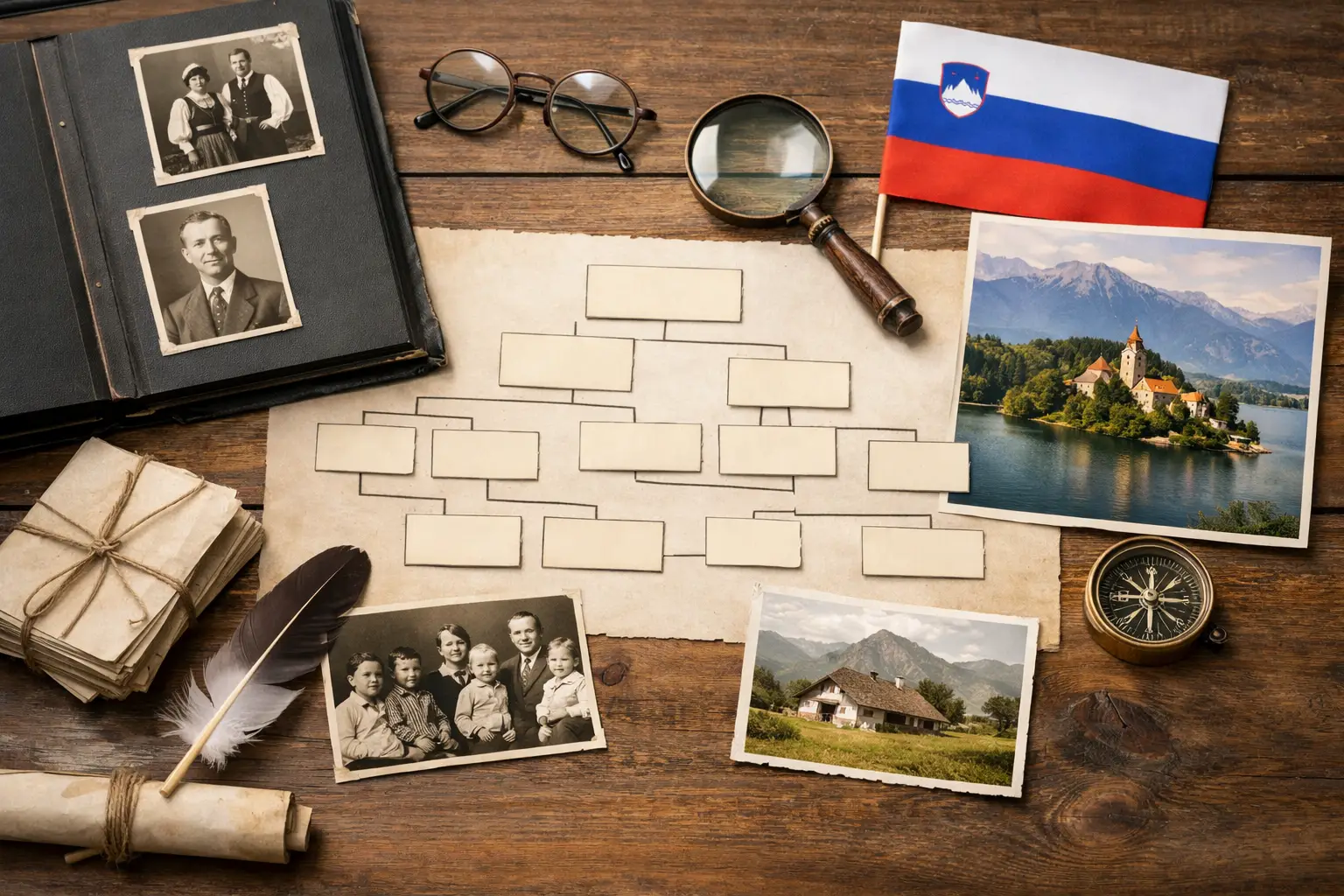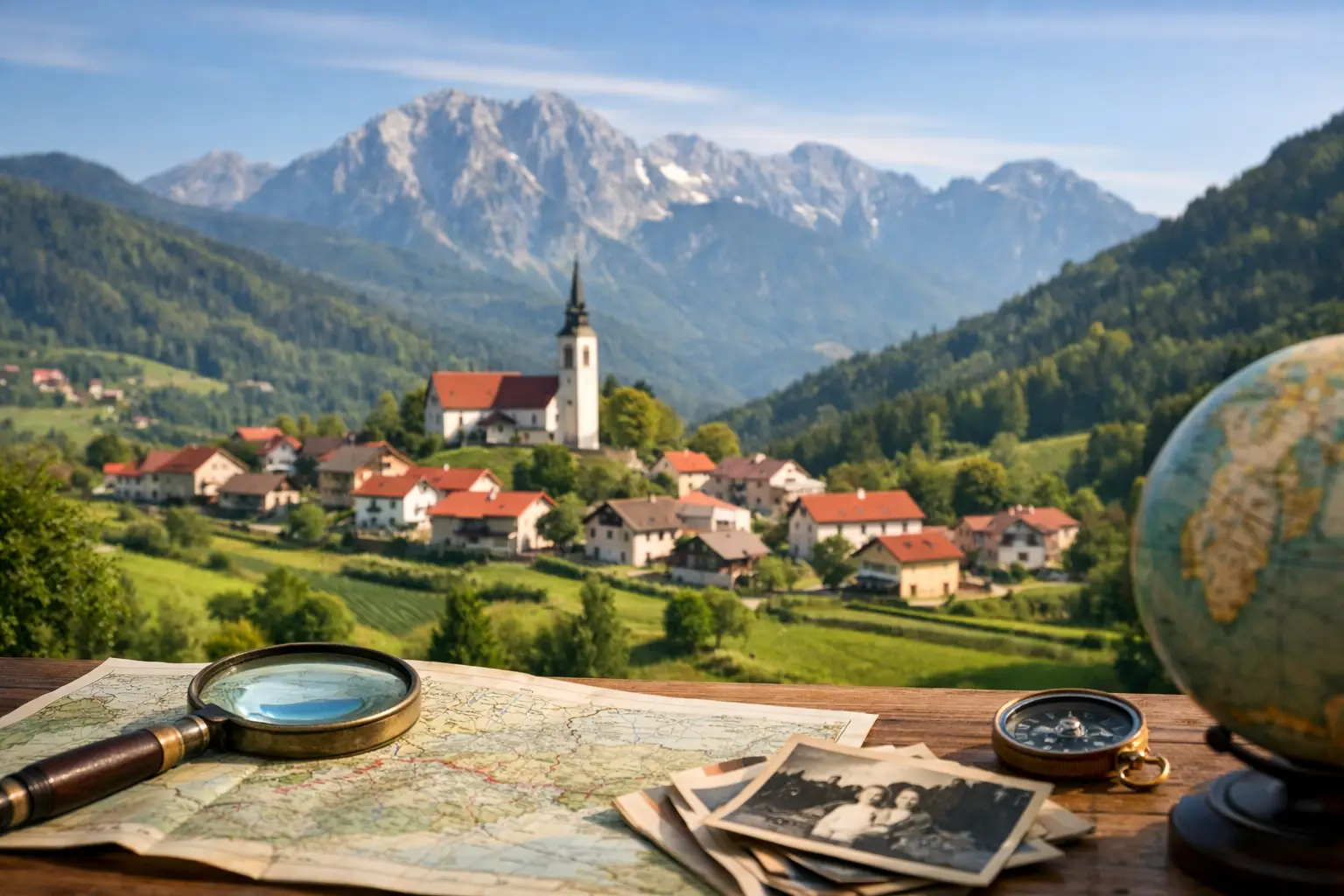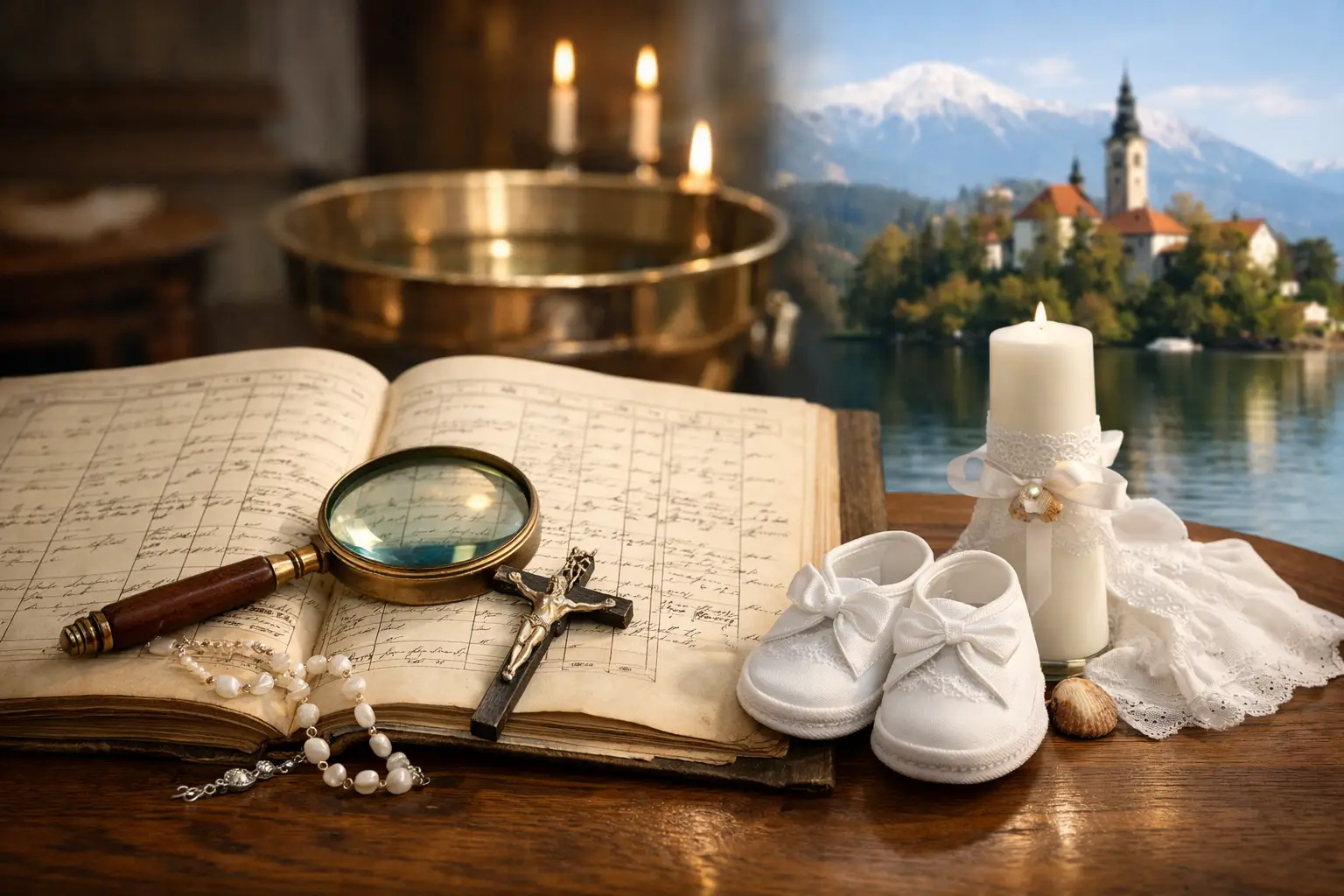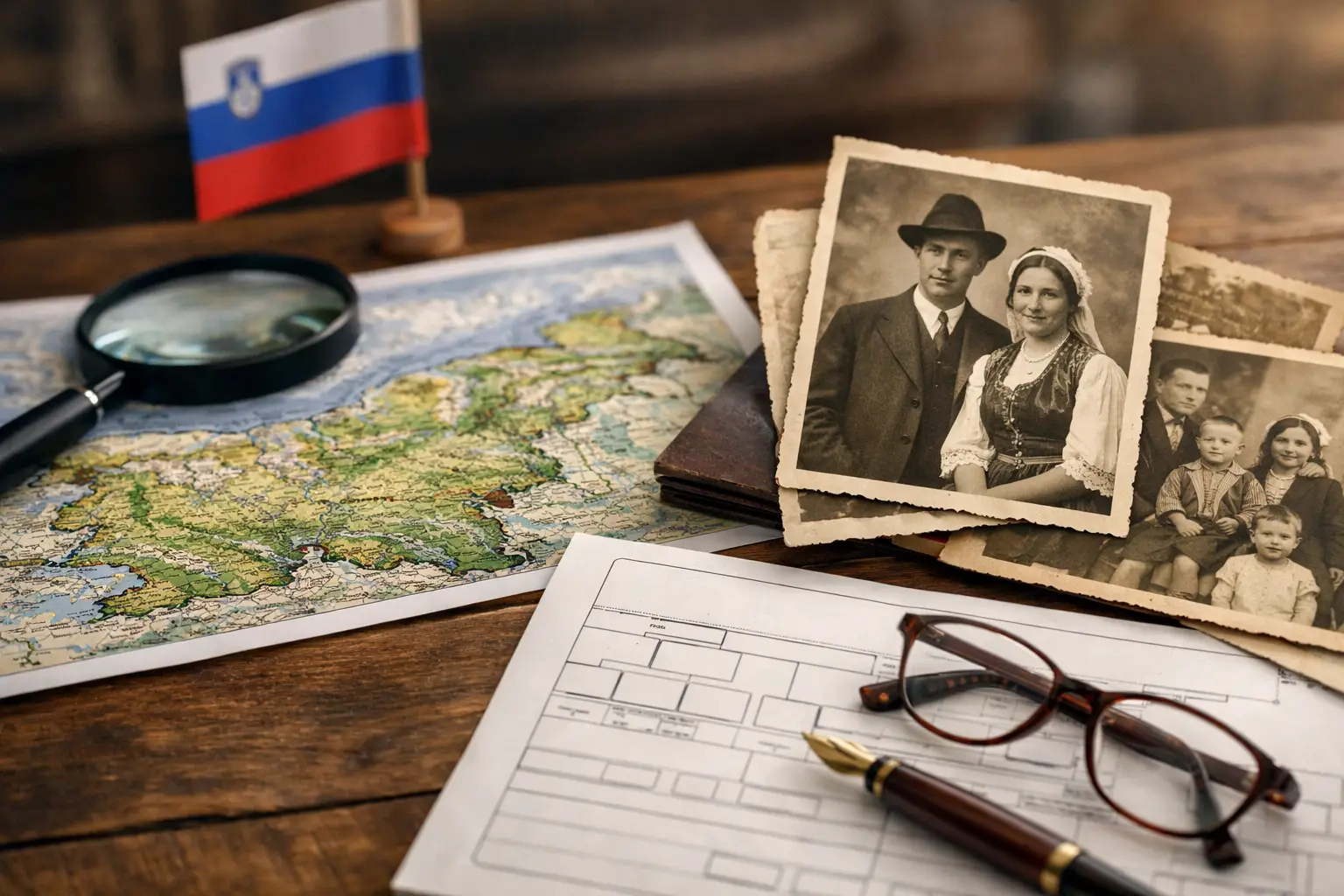
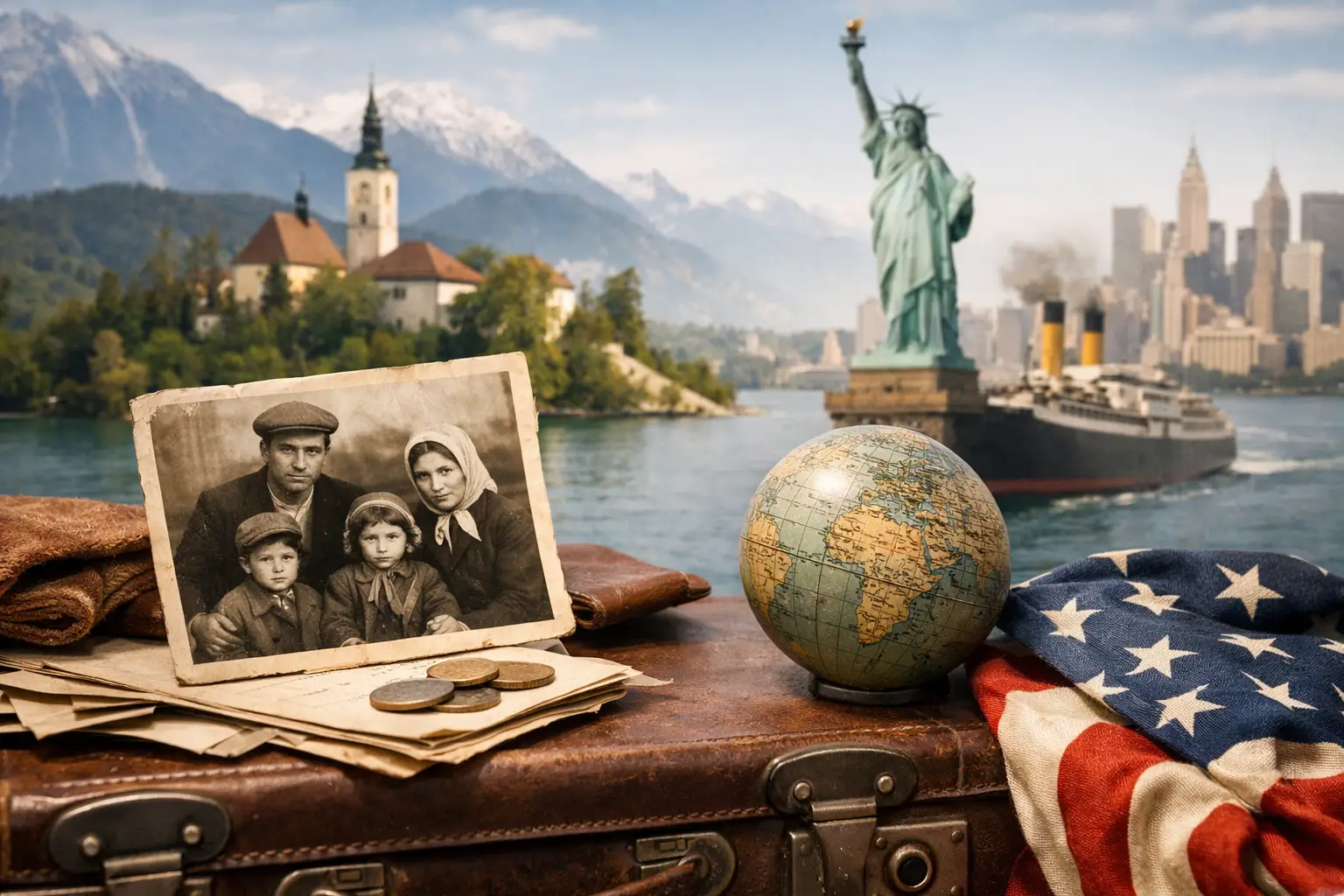


A family story often begins with a sentence that feels too small for what it carries: He left for America. She came over alone. They never went back. If you have asked why did Slovenians emigrate to America, you are really asking something larger – what pressures, hopes, and losses shaped your family before they became your family story.
For many descendants, that question is the doorway to something deeply personal. It is not only about migration statistics or ship records. It is about understanding why a village in Slovenia could no longer hold a future, and why a place thousands of miles away came to represent survival, work, dignity, or possibility.
Why did Slovenians emigrate to America in the first place?
There was no single reason. Slovenians left for America in waves, and each wave reflected a mix of economic hardship, political conditions, family obligations, and personal ambition. Some men left first intending to earn money and return. Some women followed later to join husbands or relatives. Others left knowing they were closing one life in order to build another.
The largest movement took place from the late 19th century into the early 20th century, when the territory of present-day Slovenia was part of the Austro-Hungarian Empire. At that time, many Slovenian families lived in rural communities where land was limited and livelihoods were fragile. Population growth put pressure on farms that were already small. In some regions, there simply was not enough land to divide among children in a way that could sustain future generations.
America, by contrast, was presented as a place of wages. Not easy wages, and not guaranteed prosperity, but cash income. That mattered. A young man from Carniola, Styria, Prekmurje, or the Littoral might not have seen a realistic path to financial independence at home, but he could imagine earning in a mine, steel mill, factory, or rail yard in the United States.
Economic hardship was often the strongest push
When people ask why did Slovenians emigrate to America, the most common answer is economic necessity. Many emigrants came from farming families, but rural life was often precarious. Harvests could fail. Debt could accumulate. Industrialization was changing parts of Europe, but opportunities were uneven, especially for those in smaller villages.
In many Slovenian households, emigration was not romantic. It was strategic. One family member might leave to send money home, pay debts, support siblings, or help finance land, dowries, or a younger brother’s future. This is one reason remittances were so important. America was not only a destination. It became part of the family economy back home.
That said, the experience varied by region and class. Not every emigrant was destitute. Some left because they wanted more than subsistence. They were not starving, but they saw limited room to advance. Migration can grow from desperation, but it can also grow from comparison – from hearing that a cousin in Ohio or Pennsylvania was earning cash every week.
America offered work, but usually hard work
The United States attracted Slovenians because it needed labor. Industrial centers and mining regions recruited or absorbed large numbers of immigrants from Central and Eastern Europe. Slovenians settled in places where jobs existed, especially in Cleveland, Chicago, Pittsburgh, and mining communities across the Midwest and Pennsylvania.
The jobs were demanding and often dangerous. Men worked in coal mines, foundries, steel mills, and factories. Women found work in domestic service, boarding houses, textile settings, or family-run businesses. America was rarely easy, but it could still represent a better chance than the one available at home.
This is an important trade-off to remember in family history. Ancestors did not necessarily leave because America was ideal. Many left because it was possible. The promise was not comfort. It was opportunity mixed with risk.
Chain migration made the journey more likely
One of the strongest forces in Slovenian emigration was not a government program or a poster. It was family. Once one person from a village or parish had made the trip, others could follow with more confidence. Letters arrived. Money for passage might be sent back. A brother, cousin, godparent, or neighbor could offer an address, a bed, or help finding work.
This pattern is called chain migration, but in lived experience it felt much more intimate. It meant that migration decisions were rooted in trust. People did not leave only for America as an abstract nation. They left for a specific neighborhood, a specific boarding house, a specific parish, or a specific relative already waiting there.
For descendants researching today, this is why names, witnesses, sponsors, and addresses matter so much. The migration story is rarely isolated. It usually runs through a web of kinship and village ties.
Political pressures also shaped emigration
Economic need explains a great deal, but not everything. Political conditions also mattered. Slovenians lived under changing imperial and national structures, and these changes affected daily life in practical ways. Military service in the Austro-Hungarian Empire was one concern for some young men. Others were affected by shifting borders, political instability, or the uncertainty that came with the collapse of old systems after World War I.
Later periods brought different pressures. Between the world wars and after World War II, some emigrants left because of political divisions, ideological conflict, or fear of repression. These later emigrants often had a different story from those who left earlier for work. Their motives could be more urgent, more personal, and more difficult to discuss openly within families.
That is why the answer to why did Slovenians emigrate to America depends partly on when your ancestors left. A departure in 1902 usually points toward labor migration. A departure in the late 1940s may point toward displacement, political upheaval, or exile.
Social mobility and personal freedom played a role too
Not every reason fits neatly into economics or politics. Some emigrants wanted room to choose their own path. In tightly structured rural communities, expectations around inheritance, marriage, religion, and social standing could feel fixed. America offered anonymity as well as opportunity. A person could reinvent themselves there in ways that would have been much harder at home.
This does not mean they stopped being Slovenian. In fact, many immigrants built strong Slovenian communities in the United States, founding parishes, mutual aid societies, newspapers, choirs, and cultural halls. They carried language, foodways, devotional life, and village customs with them. Migration changed identity, but it did not erase it.
For many families, this is the emotional center of the story. Ancestors left Slovenia, yet they kept Slovenia alive in kitchens, churches, songs, and surnames. That is often why descendants still feel the pull generations later.
What this history can reveal about your own family
When you begin with the question why did Slovenians emigrate to America, the answer usually becomes clearer once you know three things: the home village, the year of departure, and the first place of settlement in the United States. Those details place your ancestor inside a real historical moment rather than a vague family legend.
A man leaving a small farming village in 1893 may have been responding to land pressure and labor demand overseas. A woman arriving in 1913 may have been joining relatives after years of separation. A family displaced after World War II may have carried silence because the memories were painful. The same ship manifest can mean very different things depending on the historical frame.
This is where genealogy becomes more than record collection. Once you identify the parish, region, and migration period, your family story gains texture. You can begin to see what your ancestors saw: the constraints they lived under, the decisions they faced, and the courage it took to leave.
For descendants who hope to reconnect with those origins, this understanding can be transformative. A village is no longer just a dot on a map. It becomes the place where a difficult choice was made, where grandparents were baptized, where a family line endured before it crossed an ocean. At Ancestry Slovenia, that is often the moment when research starts to feel like returning home.
Sometimes the most meaningful discovery is not a dramatic secret. It is the quiet realization that your ancestors were responding to real pressures with the tools they had. They were making practical choices, painful choices, and hopeful choices. If you can locate those choices in the landscape they left behind, family history stops feeling distant. It begins to feel lived, and deeply human.